Press Conference by Alice Rufo at #MSC2026
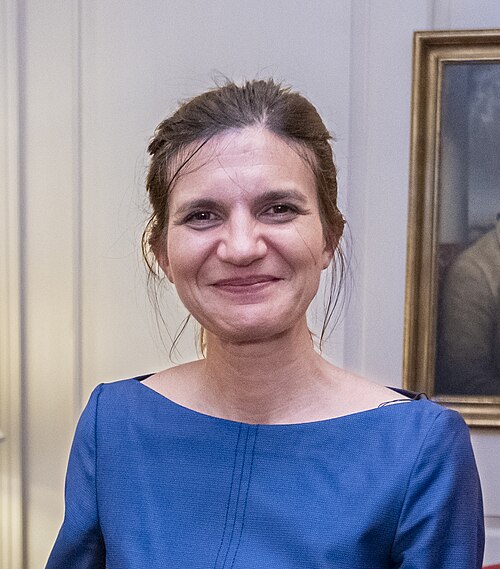 Alice Rufo
Transcription Whisper (large-v3), avec identification des locuteurs. À recouper avec la source d'origine.
Analyse automatique
Générée par IA — peut contenir des erreurs. Méthodologie
Chapitres
Répartition du ton (temps de parole politique)
Propositif 65 %Attaque 10 %Défensif 25 %
Questions et réponses
Taux de réponse directe : 90 % (directe = 1, partielle = 0,5, éludée = 0)
- 4:13OuverteRéponse directe
Quelles attentes européennes sur la dissuasion nucléaire française ?
- 7:00OuverteRéponse directe
La Chine et l'Allemagne ont-elles une position commune face à la France ?
- 11:48OuverteRéponse directe
Quel message sur les relations transatlantiques après le discours de Colby ?
- 16:57OuverteRéponse directe
Inquiétudes sur les interférences américaines en France ?
- 21:52OuverteRéponse directe
Accord sur le partage des charges industrielles du FCAS ?
- 26:26RelanceRéponse directe
Quels obstacles pour finaliser l'EFCAS ?
Temps de parole
- Présentateur68 %
- ?13 %
- Invité5 %
- Invité 23 %
- Invité 32 %
- Invité 42 %
≈ 104,6 interruptions / 10 min (chevauchements et interjections détectés).
Modèle mistral-small-latest · prompt v1 · les citations sont vérifiées mot pour mot dans le transcript ; le taux de réponse directe est calculé à partir des verdicts question par question. Aucun label idéologique n'est produit.
French or English?
Who
doesn't speak French?
Let
them denounce themselves.
Who
speaks English only? Not over... English. English.
English.
It's
okay, you'll learn French, right?
If
you commit to learning French, then you'll speak English.
Okay,
good.
So
thank you very much. We have 40 minutes. This is the press conference of Minister Alice Ruffaut.
Well,
hello everyone. I'll be short as an introduction. I mean, for leaving the room for interaction and your questions. This is a good Munich conference, a good edition. What I take from this day that I think everybody knows now what we're facing. I was thinking yesterday when I arrived there, everything started there. when Putin made a speech, a famous one, where he said that the end of the Cold War and the collapse of the Soviet Union was a terrible tragedy. I mean, from this speech till now, four years of war in Ukraine,
I
mean, we know exactly what we're facing. New imperialism,
hybrid
threats, more and more.
We
know that being tested in the next years in Europe is possible.
So
we know what we are facing. We know what we have to do. Everybody knows. We need to be robust. We need to support Ukraine. We need to rearm. We need to be united. I think
we know
better what is the position of the U.S. now. It's been clearly stated many times.
So
we know that there will be more volatility in the transatlantic relation. I mean, it's been a year
and
we know that they want to shift
in
an accelerated way.
So
we need to do at the same time the support to Ukraine, rearm in Europe, and it's pretty much the same move. And I think we I mean, there is no room for being pessimistic. We need to be to act all day and to be very committed to this agenda.
And
regarding the U.S., I think the question is not being despair or being naive or something. It's being clear, basically.
And
regarding Europe, I think we
don't
be too much pessimistic about it because, I mean, when I look back
four
years ago, I mean, we made
huge
progress and huge things in front of the war in Ukraine.
We
are democracies. We have open debate. We have some,
I
mean, sometimes we disagree,
but
it's a strength
to
discuss and to have debate.
So I
think this is what I get from this first day and all the context I have in the margin. When I look back one year ago, I mean, we, since then,
we
built up the coalition of the willing. We had a strong European move with the SAFE, for example, or EDIP adoption. We have a lot of coalitions being built. We have this loan for supporting Ukraine. It's been one year.
So
we can achieve a lot, but there's no room for being, I think, divided or being naive in front of what we have to face,
and
no room for being pessimistic. We need to continue on this agenda, which is a good agenda,
and
to be confident in ourselves.
And
I start there.
Fabien Zamora from the FP News Agency.
Thank
you for being there. Nuclear deterrence was also discussed during this Munich conference, and the President is set to deliver an important speech in a few days, weeks. What kind of expectation did you sense during your exchanges with your counterparts on that issue? What are
the
other Europeans expecting from France from the President's speech in the coming weeks? MS.
Thank
you for the question. Well, I will not develop too much. I'm sorry to disappoint you. But for obvious reasons, because, yes, the President yesterday said that he's going to make a speech. And, of course, this speech doesn't come from nowhere. We had a lot of consultations with our close partners. The Chancellor has made it public that we had this conversation. What I can tell about that is that there is obviously a European dimension of nuclear deterrence.
There
will be, I mean, the President is going to explain what it means to, as a result of all the consultations we had. And I think not talking about nuclear, because he's going to talk about that,
but
what I think what we can get from that is that, you know, talking about conventional,
for
example. I mean, you know, let's
look
at NATO, for example. NATO
is
a nuclear alliance
with
a very strong conventional cooperation.
What
we face with this uncertainty in the transatlantic relation on the one hand and the threat from Russia on the other hand
is
that we need to build up, to defend Europe strongly.
And
it means, you know, making progress as we did,
for
example, with UK this summer on coordinating better on nuclear.
And
it means doing more
as
Europeans on conventional.
We
are in a situation where the risk would be that while everybody is rearming conventionally,
you
will have more division.
If
you have more division
or
more national solutions, then in the end, you'll have new dependencies.
And
so what the President, I think, pointed out in his speech yesterday night about conventional,
level,
was the fact that we need to make a consistent move at the European level for defending Europe.
And
I stop there because, of course, for obvious reasons, I can't develop on that.
It's
from Phoenix TV, China. Thank you very much for speaking English for my sake.
And that's
a big gesture for a French politician. So I have a question. So we're at a press briefing from the former President of the European Commission, Barroso. And he said, if Europe want to do anything, if France and Germany does not agree, it won't happen. So based on your observation of this year's Munich Security Conference, do you think France and Germany showed a united front that these two countries wanted to deliver? And also this year, the Chinese foreign minister met first the French and German minister together as a trilateral meeting.
I don't hear well. Can you repeat the last part?
It
was a foreign minister meeting.
So the Chinese foreign minister met with the German and French foreign minister at the same time. It's slightly out of the ordinary. I also want to ask if you think France and Germany, when they face China, how to deal with China, and also in terms of foreign relations, in terms of defense, and so on. Does Germany and France on this point also have
shared
the same opinion?
Well,
thank you very much for your question. No, it's not new at all. You know, in 2019, it was at the leader's level, this kind of format. President Xi came to Paris, and he had a meeting with President Macron, Chancellor Merkel at this time,
and
with the President of the Commission. There was, you know, there is a European strategy on China,
and
it, I mean, this format, this bilateral format to meet with China exists, already exists. And I think it's a good move,
because
it shows unity in Europe.
And
coming back to your first question, yes, of course, I think we managed to do so.
It's,
I mean, I'll give some examples from this year. On Greenland, for example, the reaction of France and Germany was very much aligned
in
being very clear on the fact that we should defend the sovereignty of Denmark and Greenland, and that we were ready to support a NATO exercise,
as
Denmark asked for. And we were quite clear on the fact that we would not accept to be blackmailed in terms of coercition for getting territories. We were very clear, and there was a lot of unity at the European level, and obviously between France and Germany and that.
On
the coalition of the willing, the presidency, I mean, this was launched by UK and France, but in the end, it's an E3 commitment. And so we are very much committed all together in this format, in the coalition of the willing formats.
When
I listen to the chancellor's speech or the minister's speech, I mean,
they're
very much committed to European defense, to European security. And when spending more on their defense, they talk about European defense and European sovereignty, which is brave new.
I
mean, 10 years ago, it would have been difficult
because
it would, I mean, we had, you know, this idea that talking about European sovereignty would weaken NATO. Now we can see that it is not the case. We are very much aligned on Ukraine. I mean, the support to Ukraine from Germany is very high
and
very important. Yes, we have some issues on some industrial cooperation, but we are going to make it. And that was, I think, what the president explained yesterday, because,
well,
you're definitely right that,
yes,
we have a responsibility to play, because if we want to defend Europe better,
France
and Germany should be committed in that direction totally. And they are. And we need to showcase that.
Can
I ask a follow-up question? Is it possible?
Can
I ask a follow-up question? There
is no rule.
I want to know that, because this year, both Germany and France and other European countries showed a very strong willingness to build a European defense, independent of many other great powers. But
at
the same time, security is always a sensitive topic. Do you see the possibility of European countries on the topic of defense cooperating with China?
No,
that's difficult. I have to be honest with you. There is still an embargo on the armaments, which is a European one. And, you know, defense is a sovereign competence in Europe.
I
mean, we talk about national defense, security review, and so on. Now we are part of the same alliance, which is NATO.
And
building up a stronger European defense
means
more cooperation, more industrial cooperation, more interoperability among European partners, more sovereignty, for example, in defending our own countries by ourselves taking more responsibilities for our own security.
It
means create, I mean, make it more simple to invest in defense.
And
this is the job done by the Commission. It means
invest
together through European funds or European instruments for developing our own technologies.
It
means, it means a lot, but it doesn't mean that we need to be, to defend ourselves alone.
We
are part of the same alliance,
and
we are committed to our partnership and alliance.
Anja
Willerschöck from the German Tagesspiegel. Yesterday, the President again made a very strong point or case for European initiatives for defense. Yet, EFCAS seems to be hindered majorly by national interests.
Are
you confident that EFCAS will see the light of the day? And if yes, what makes you confident that it will actually materialize? Determination
makes me confident.
Let's
take
a
step back and look at the big picture. The EFCAS project was launched in 2017.
It's
been a long time.
It's
been difficult at each step
from
the very beginning.
And
it's normal because it is very ambitious.
At
this period of time, there was no war in Ukraine. I mean, there was a very difficult situation in Ukraine, but not a high intensity war in our continent.
The
situation is totally different. What is the strategic context today?
I
mean, the U.S. made it clear that
they don't
only want a burden sharing, but a burden shifting.
They
want Europeans to be more capable, to be more responsible for themselves. They want that. We know that all our adversaries, allies, but as well adversaries, are rearming very swiftly and very rapidly.
We
are in front of a big threat. Russia threatening directly
European
countries and invading sovereign countries under a nuclear umbrella.
This
is, we have China rearming very fastly.
Well,
we are in front of a situation where it's a nonsense not to cooperate among Europeans. So if you look at the situation, I mean, projects like the EFCAS
make
totally sense today. It was launched a lot of time ago. I mean, in the beginning of the first term of President Macron. But in the end,
I
mean, it's been ten years or nine years, but it makes a lot of sense.
So
yes, it's difficult to conduct such a project.
But
if,
when
there is a difficulty, and there are difficulties among our industries and companies, we know that perfectly.
And
we can read, I mean, everybody can read the press and see what are the, I mean, the criticism and what is difficult. It's obvious.
But
what is the strategic objective?
What
do we want?
I
mean, when rearming, we want less unity in Europe, less interoperability.
We
want to weaken ourselves, but not by not
taking
our responsibility for common projects.
And
in the end, do we really think that we will be able to be competitive or to be strong in front of
adversary,
but also allies and sovereign? If we don't cooperate,
I
think we can make it.
We
are, we are very important in the world. We have strong economy. We have very big technology. We are, we are very strong and robust leadership, democratic leadership. This is something we need to make something of it. And this is why
we
are going to continue to discuss on the FCAS and we'll, we'll take a decision
at
some point, of course, on the follow up of this cooperation.
But
we, I mean,
we
will not abandon anything. It would make no sense in this period of time,
just
because
it's
difficult.
Of
course, it's difficult, but I'm sure we can make it.
Hello.
Do
we have a microphone?
Yeah. Daniel Michaels with the Wall Street Journal.
If
I'm correct, you had a bilateral meeting with Elbridge Colby,
and
I assume you
were... Very
early in the morning.
Okay. Is
that good or bad?
No,
very good, but very early. Okay.
And
you were at the NATO Defense Ministerial.
Do
you hear him speak?
What,
on the issue of transatlantic... Oh, she wasn't? Okay, fine.
I'm
sure you're aware of what he said at NATO, but I mean, what is your sense? What is the message you take
from
what Colby said in Brussels and here, and how do you assess what that says about the state of US-Europe relations in NATO and on the defense front? Thank you.
Thank
you very much. You know, I've been talking with him for many months now.
Well,
I mean, it's pretty clear. And you can... I read the documents. I mean, the strategy, the NDS, the NSS are very clear.
And
the speech is totally consistent with what is written down in the NDS.
It's
national interest first, America first.
Being
part of an alliance is part of their interests, of the US interests.
First
point. Second point, they want Europeans not only to spend more on defense, they want Europeans to be able to defend themselves and to take the initiative of defending themselves and to take the leadership
in
that direction.
And
I want to focus on China and Indo-Pacific.
We
need to do that.
And, I
mean, when I met him this morning, we discussed Ukraine, the coalition of the willing. You know, we made a lot of progress beginning of January on that.
And,
I mean, the dialogue with the Pentagon was very good and very important on this point because we needed to cooperate with the US on the famous backstop issue. And coming back to this question, I mean, you know, when we launched the coalition of the willing one year ago, many people were, you know, skeptical about that and skeptical about the fact that we would never have any US backstop.
We
were convinced of the fact that if we were ready to take the initiative and to commit ourselves
and
to, I mean, to make this planning altogether and to go back to the US
by
explaining, look, this is what we can do and we need that, we need your backstop on that,
it
will work.
That
would not work if we were just like, we want to be around the table but we are waiting for what you can deliver on Ukraine and for us before doing anything.
In
the end, we did, you know, reverse engineering and it worked.
And
so this morning I discussed the follow-up of the meeting in January of the coalition of the willing
because
it's very important to have this close coordination between us, especially when there are discussions, as you know, between Ukraine and the US on the security guarantee, the bilateral security guarantee and a close coordination between the coalition of the willing on the one hand and the US on the other hand.
So,
I mean, this is reality. This is what we need to do. I mean, it's perfectly clear. And I can hear maybe in the margin of the conference relief or not relief. I mean, this is nonsense. The strategy is very clear. The messages are very clear.
Now
it's a question of determination and willingness and I'm sure we can do it. I'm sure we can, we need to stick to our objective. And the objective is being more robust, more sovereign, because it's being a better ally
to
be more independent in a way.
Anja
Newsboom, bonjour.
I'm
not here.
I'm not at all.
I'm not at all. It's not at all. It's not at
all. So, last year, Jade Evans mentioned how Europe was facing the enemy from within. Rubio was much, was not really striking the same tone. But this year, worries also focus on the role of AFD and how the US is encouraging AFD in Germany. Are you worried about similar interference by the US in France? And second question on FCAS, you were pretty clear.
My
only question remaining is, do you agree with Dassault's assessments on the work, on the workload and how it's shared?
Which one?
Dassault. The fact that Dassault and Eric Trapier in particular are saying they want to retain leadership
on
the construction of the FCAS.
Thank
you.
The
Munich Security Conference is about defense policy and strategy.
It's
not about politics. So,
I
mean, we, there is,
in
politics you have ideologies, you have movements, political parties and so on. And that,
I
mean, fair enough.
But
when talking about security and defense interests,
it's
a state issue.
You
discuss with states, not political movements. Because
when
you are, you know, you are a government or something, you defend not a political movement, you defend your country. And you talk about the interests, the sovereign interests of your country.
And
what I heard this morning was pretty much a speech about that, about what, I mean, about the US strategy
in
the world. And it was quite clear. I don't, I don't see any difference,
you
know, in this speech and what we read in the NDS, for example. I mean, it's quite clear on that point.
Comment,
I mean, I'm not there to comment, you know, the different speeches of the different people that are here for making the, for delivering their speech. I mean, I respect them and I work with them. But, I mean, in the end, it depends. It's for us to take the conclusion and to try and stick to our agenda. Am I afraid of interference in election? Yes, definitely. Because we've already been there
many
times now. And it's not, not only about, I mean, from anywhere.
This
is really, and we are very cautious on that.
Because
in the end, you know, being sovereign is being free. And for being free, you need to protect your democracy. So
we
have all this debate about the free speech and so on. But, I mean,
I
don't want to discuss with boats.
I
want to discuss with people.
And
when talking about political campaign, I mean, we have to have some kind of relation with the idea of truth, of trust, of being in front of somebody who
talks
about what he wants. And avoiding disinformation, interference, and so on. This is a question of sovereignty.
This
is a question of freedom. So we'll be very cautious
on
that. Because this is the European way of being free. On the FCAS, I think I already answered.
I
don't have to agree on that.
I
mean, Dassault
and
many French companies have very good, you know, technical competencies.
You
know, the Rafale
has
some
advantages,
apparently. Because some countries definitely want more Rafale.
And, I
mean, I'm not there to be, you know, on one side or on the other.
You
have a, I mean, when talking about new generation
jet
fighter,
which
we need collectively in Europe, you don't only talk about, you know, the
cooperation
between Dassault and Airbus. Because you talk about a lot of industrial corporations.
And
we, I mean, and there are a lot of corporations that are working very well, very fast and very well.
Of
course, there are difficulties there.
I
know that Dassault is about to build a jet fighter. I mean, look at the Rafale.
In
the end, the responsibility of the leadership of the governments that are clients to these companies
is
to make it work.
Not
to take, you know, to try and find solutions and to take the responsibility of the strategic objective. I'm not the head of a company. You know, I'm in charge of
the
strategy we need to deliver for France, for Germany, for Europe.
So I
wouldn't make the confusion, you know. But obviously,
I
mean, the French industrial basis has a lot of competence. And we need to use that in Europe.
Thank
you. Table Media first and then L'Opinion.
Thank you. Gabriel Boop from German Media, Table Media. Sorry to ask again about EFKAS, but... I'm
sorry.
You're very much interested in this issue. I can hear that.
Yeah. But actually, the solution seemed to be on the table and you had a deadline at the end of last year. Can you maybe tell us what is the crucial point you're trying to solve right now to have a decision in the coming days or weeks?
And
can you give us maybe a bit of a context on the... Because President Macron mentioned in the interview he gave earlier this week
that
if EFKAS should fail, it might also result to a French exit of the MGCS.
So
maybe could you explain to us how this could be understood?
Yes,
I can explain. You know what surprised me in all this period of time?
That
nobody cares about the fact that European project
would
not work.
And
the surprise is that a European leader wants a European project to work. I
mean...
What is very surprising is that
we
spend all days explaining that we need to be more united, we need to build up together our defense and so on. And in the end, you're surprised... I mean, not you especially, but we would be surprised of the fact that Macron is defending a European project. Something is wrong
there. Yes,
we talked about at some point of discussion between the Chancellor and the President by the end of the year. But really, I have to be very honest and pragmatic there. There was a lot of issue in the European Council in December. And so they didn't have time because they need to take the time to discuss that. Because they have a lot... You know, the agenda is something, I can tell you. And they need to take time to discuss.
And
they will, again. And, you know, you need to prepare it through discussion with the companies, through discussion among ministers, vice ministers. So everybody is... DGA, everybody is very much committed. We relaunched the discussion in October. And, you know, we had a new government in France.
But,
look, Toulon, the summit between Germany and France was in September.
We
had a new government in France in October.
We
are in February. That's okay.
We
are going to have this discussion.
And
I think it's not a question of one month or one month and a half.
I
mean, it's a big European project, very important for European defense. You don't give it up in one month. Yeah, I mean, obviously, I mean, why would we... I mean, there is a link.
And
the link is definitely strategic.
Again,
we are not companies. We are states. So when we have a strategy,
I
mean, if you want it to fail, I mean, we would acknowledge that. But really, I have to say,
I
never heard anybody
explaining
to me officially that they would give it up
such
important European projects. But if we were in front of such a scenario, of course, the consequences would be important.
So
I think this is why President Macron told that. But you heard him yesterday. He's very much committed in making FCAS and MGCAS a success.
That
would be a strategic mistake again and again. I mean, this is not a question of only... only a question about industrial cooperation. This is a strategic issue.
Really. We
don't... we're not talking about things, you know, we can comment on who told what to the press or something.
We're
talking about our own defense. We're talking about the generation of... I mean, the next generation of fighter jets to defend ourselves.
This
is very, very much strategic. So it would be a terrible scenario
if
in this period of time, in front of so many challenges,
because
there is a difficulty,
we
would give it up everything.
It
would be... it would be
really
disappointing and it would be something. We are not there
and
we are going to fight
for
these two very important cooperation.
L
'opinion. I will come back to the nuclear deterrence. Sorry. And
I
will
not
answer because
the
President made a speech yesterday and I can't go further.
Listen
to the question. Yeah. Was it planned to make it publicly in Munich
or
was it a surprise to hear this point of the speech of Mr. Mertz?
Surprised
to whom? It's
symbolic to have this news on
this
conference.
Although
the talk will not... You
know, when
the President makes a speech about nuclear deterrence, it's on... I mean, it's in France, basically. So... but I think it was... you know, the Chancellor said publicly that we had this consultation. So I think it's totally normal that the President confirmed.
But
it was not a surprise to me in the end.
Yes.
I mean,
it did. It did many times. And that's a good move. I mean, we are very happy with this move. You know, when the President made his speech in February 20, we... I mean, it's been a lot of time. So,
Chancellor
Mertz made it clear even before being Chancellor that he would answer to the proposal made by France.
So,
I mean, we are there in Germany, so we confirmed that. And... but the President will make his speech later. I'm sorry, I will not give you breaking news on that.
Yeah.
But I follow up on this. Thank you.
The
fact that Chancellor Mertz said,
we
are talking to France about this,
and
it has to be in the framework of NATO.
What
about...
The nuclear
deterrence force.
In
his speech, he said, we are having conversations with President Macron,
and he
didn't say
the
framework.
He
said in the
framework
of the participation within NATO.
But
the French nuclear force, deterrence force, is not NATO.
No, it's not.
So,
is there a problem there?
No.
No.
No.
Okay.
Sorry, I'm short. No.
Okay, good.
We're part of the same alliance. NATO is a nuclear alliance, but nuclear deterrence in France is not part of the... And we're not part... you know we're not part of the nuclear planning group.
So...
I mean,
there
is
no change,
and I don't see the
point.
No,
no.
My question is that there seems to be a kind of contradiction when Mertz says,
we
are having this conversation about... I guess it's about the extension of French deterrence force
within...
with the participation of NATO. So that would imply that France would then...
No. No.
Okay. Okay. There's no problem.
Okay.
And again, another question is about this, again, the speech of Chancellor Mertz, when he had this warning...
I
mean, not a warning, but he tries... he
had
this message to reassure his European partners, apparently, about a powerful Germany.
Mm
-hmm. Saying we will not, you know,
go
back to the mistakes we've made in history, so nobody has to be worried about a
very
powerful Germany.
Is
this something France is worried about?
No.
No. We are very much... I mean, we... We...
It's
re-arming Europe and spending more for defence in Europe. I think we've been
pushing
for that for,
like,
20 years, so that's good. What... Again, it's not only about Germany, it's about all our European partners.
Yeah,
but Germany
will have... He says
they'll have the first... the first
army
in Europe. But...
I
mean, we have... You know, we are...
We
are confident. We have a strong army. We have a strong industrial bases.
And
again,
I
mean,
in
the end, it's not a national issue, and it will not be only a national issue.
If
we want to defend Europe better, we need to think, as Europeans, from the very beginning, on defending Europe. So... And we do.
And
I'm not... I'm not... I'm not German, you know. I'm not... I'm French. And I... And so, in my answer, you can... I mean,
I'm
answering you as European thinking.
Uh... I
mean, what's... The risk there would be that we would...
At
the moment when we need to make this
consistent
move at the European level and among European partners,
we
think, you know, as... Only nationally.
This
would be a mistake.
We
need, from the very beginning, to think as Europeans on the way to defend Europe.
This
is new for everyone, but we need to do it.
Can
you stay
there each time in your media?
Yes.
Laura Kelly, Poeticot. I have two questions. First of all, you mentioned relief from some European countries or officials after Rubio's speech. So are you worried that the momentum for more European independence from the US could kind of fade? And second question, today, the
EU
and Canada officially signed the SAFE agreement. So what role
do
you
see
Canada playing in Europe's security, if any? Thank you.
Thank
you very much.
I'm
not desperate on the transatlantic link, I have to say. We... You know, when I gave the example of the coalition of the willing, I mean, we pushed hard for having the US on board on this backstop issue. We are very much committed in NATO, and we definitely believe that it's very good for the security of Europe to have a strong and robust transatlantic alliance. Now,
I'm
not worried about relief. I mean, that's good if it works.
I'm
worried about denial.
This
is different.
We
need to hear what...
We
need to read the documents again.
That's
very clear.
That's
very clear. What I've been,
I
mean,
experimenting
in the past is that we are looking at... We had many shocks this year. It was...
We
were under pressure many times.
In
the end, the conclusion is still the same. We need to do more and to take more responsibility for ourselves and being more independent and being more sovereign. This is
all
the time the same conclusions.
Look,
for example, at the support to Ukraine, another example. I mean, we are doing
100
% of the support to Ukraine. We buy American equipments, I mean, as the coalition of the willing, as Europeans.
But in
the end, this is...
I
mean, the support to Ukraine is 100% made by the Europeans. So we reacted with true responsibilities collectively.
So
what I'm worried about is that... What I would be worried about is if I see but I don't see it. But if I would see that we
don't
keep... I mean, keep going on this agenda, we need to act fast and to move swiftly
and
to accelerate in that direction.
I
don't see that, but I just mentioned the fact that many times we've been like, okay, that's fine. Let's do as we did before. This will never be the same
as
before. And I don't even know what we're talking about because, I mean,
you
know, it's history.
And
the shift, I mean, began a long time ago.
So we
need to continue on this agenda. And talking about SAFE, I think you give a good example.
I
mean, we are used to here that, you know, SAFE is something that should be criticized
because
it's only for Europeans, that it's close to third countries.
It's
not.
I
mean, being more sovereign as a European doesn't mean that we don't want any partners.
But
we want to be fair play.
And
we want them to be fair play. And in the end, when we negotiate on
fair
basis, of course we need cooperation. And that's the case with Canada.
There's
no more questions. It's the end. Thank you very much for your attendance.
You
look like the sun to me.