Benjamin Haddad on Submarine Contracts and French Anger
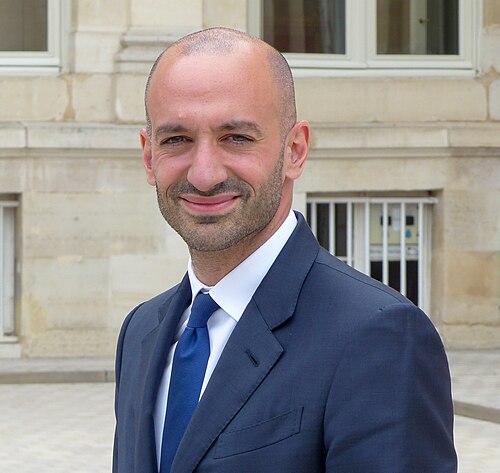 Benjamin Haddad
Transcription Whisper (large-v3), avec identification des locuteurs. À recouper avec la source d'origine.
Analyse automatique
Générée par IA — peut contenir des erreurs. Méthodologie
Chapitres
Répartition du ton (temps de parole politique)
Propositif 43 %Attaque 20 %Défensif 37 %
Questions et réponses
Taux de réponse directe : 100 % (directe = 1, partielle = 0,5, éludée = 0)
- 2:52OuverteRéponse directe
Parle-moi d'AUKUS et des sous-marins.
- 9:36OuverteRéponse directe
Décris les étapes de la réaction française.
- 13:11OuverteRéponse directe
Qu'y avait-il dans le contrat et pourquoi la réaction française ?
- 16:02OuverteRéponse directe
Le consortium français est-il lié à la réaction française ?
- 17:01OuverteRéponse directe
Quel est le rôle de la France dans l'Indo-Pacifique ?
- 22:49OuverteRéponse directe
L'alliance Five Eyes influence-t-elle la réaction française ?
Affirmations vérifiables (citations exactes)
- 29:14Invité politiqueFait
« all of this was done in complete secrecy by a Biden administration that said that they wanted to restore trust among allies »
- 31:05Invité politiqueFait
« the recalling of the ambassador was really once again to make a point to make a statement mostly to the United States but also domestically that France was reacting to this »
- 31:24Invité politiqueFait
« made a point about European in a capable robust European defense alongside NATO »
- 31:55Invité politiqueFait
« I think the US has had such a sort of a schizophrenic approach to European defense »
- 32:30Invité politiqueFait
« NATO as the cornerstone of collective defense especially when it comes to strategic threats such as Russia »
- 36:17Invité politiqueFait
« this Afghanistan crisis and this AUKUS crisis as an opportunity to really rethink how we view the transatlantic relationship »
- 36:32Invité politiqueFait
« the term strategic autonomy is not popular and probably we should drop it »
Temps de parole
- Benjamin Haddad79 %
- Présentateur16 %
- ?3 %
≈ 20,5 interruptions / 10 min (chevauchements et interjections détectés).
Modèle mistral-small-latest · prompt v1 · les citations sont vérifiées mot pour mot dans le transcript ; le taux de réponse directe est calculé à partir des verdicts question par question. Aucun label idéologique n'est produit.
The
following podcast contains advertisements.
If
you prefer a podcast without advertisements,
you
can sign up for our ad-free version at patreon.com slash lawfare. That's patreon.com slash lawfare.
You'll
get rid of the ads and we'll be very grateful.
Right
now, our lives are on our phones. And with our phones full of live-streamed exercise classes, midday work calls, and nightly family video calls, there's no room for fraud calls. Thankfully, AT&T makes customer security a priority, helping block those pesky calls. It's not complicated. AT&T ActiveArmor. 24-7 proactive network security and fraud call blocking to help stop threats at no extra charge. Compatible device slash service required. Visit AT&T.com slash ActiveArmor for details.
We
are 10 months into the Biden administration and clearly we see that something's not completely right with transatlantic relations. There's two ways to think about it. Either we say those are accidents because of, you know, we still don't have a U.S. ambassador to Paris, to the EU, to NATO, or to Berlin. A lot of really talented individuals have been nominated for these positions, but unfortunately they haven't been confirmed yet. But the truth is, I don't think this is only about staffing positions. that this is only about a better coordinating message. I think there's something more structural going on, which is that the U.S.
does have shifting priorities, that Europe is less central to the U.S. global outlook than it used to be, and that this does demand on Europeans to step up their efforts. It's time to have a frank and honest conversation among allies.
I'm
Jacob Schultz, and this is the Lawfare Podcast, September 27th, 2021.
France
is mad.
More
specifically, France is mad about Australia reneging on a deal for French submarines
and
opting to go instead with an American contract.
It's
all part of AUKUS,
a
new trilateral security pact between Australia, the United Kingdom,
and
the U.S. that was announced two weeks ago.
France
recalled its ambassador to the U.S. and otherwise expressed dismay at the development.
So
what gives?
I
sat down with Benjamin Haddad,
the
senior director of the Europe Center at the Atlantic Council,
who
is an expert on European politics and transatlantic relations.
We
talked through the French reaction,
what
might have caused it, and what it all means for the future of transatlantic relations and U.S. strategy.
It's
the Lawfare Podcast, September 27th.
Benjamin
Haddad
on
submarine contracts and French anger.
All
right, Ben, get us started. First, talk to me a little bit about what AUKUS is, and then also what's the deal with those submarines, and what's the relationship between those two things.
Yeah.
Hi, Jacob. Well, so AUKUS is a new alliance, that's been signed between the United States, the United Kingdom, and Australia. It was a surprise move, a pretty shock announcement last week, which comes with a huge submarines deal that the United States and the United Kingdom will provide to Australia, nuclear-propelled submarines. And I think, you know, this is the result of growing Chinese assertiveness in the region, in
the
Indo-Pacific, and a choice by Australia to modernize its submarine fleet that is coming to obsolescence. But, you know, in a broader fashion, clearly bring closer to the United States in the region as a strategic partner as they feel this growing threat. And, of course, for the United States, it has, under the Biden administration, but also its predecessors, put confronting China at the center of its preoccupation, creating new coalitions and alliances in the region. And I think this is a foreign policy success. Now, obviously, this comes at a certain cost, and I think a cost that was overlooked by the Biden administration. Australia already had a deal to build submarines with France, with
a
consortium that included Naval Group, but also some American companies like Lockheed Martin. that's something important to understand, because when you talk about the amounts in some of the press coverage,
only
less than half of that was going to French groups, and it was an international consortium. So France had concluded a deal to provide diesel submarines to Australia in 2016. It was a major contract for the French defense industry. But beyond that, it was really sort of the underpinning of a lot of France's relationship with Australia, a new strategic partner for Paris, and France's strategy in the Indo-Pacific. And the AUKUS announcement really came as a shock for the French defense establishment, French policymakers, and created an earthquake in Paris.
Beyond the commercial nature of the deal and the fact that France lost this contract, maybe we can go into more details about the contract a little later. But I think what's really important for people to understand when you look at the French reaction is that it is really seen as a breach of trust among allies. The United States, UK, and Australia negotiated this agreement in complete secrecy. France had conversations with American interlocutors, with Australian interlocutors in the last few months, where nothing previewed this agreement.
On August 30th, for example, you have a communique, the Australian and the French foreign minister met, and they recalled the importance of the strategic partnership and of the submarine agreement. And for France, it was really, you know, about its Indo-Pacific strategy, where you have close to 2 million French citizens in the region. France has invested heavily in strategic partnerships with countries like Australia, Japan, India, which incidentally are also U.S. allies in the region. France has conducted freedom of navigation operations in Syracuse and the Sea,
has
patrolled the Strait of Taiwan, participates through military exercise alongside the United States, the U.K., Australia, or India in the region. So I think, you know, the surprise in Paris really comes from the fact that
the
Biden administration has put rallying allies, and especially European allies, at the core of its discourse and strategy, has said that it wants to create a transatlantic front to confront China. And so the secrecy which this was negotiated and how it undercuts French's presence in the region, I think, was really the cause of the strong reaction. And really a non-precedented reaction in Paris. Obviously, Macron decided to recall the French ambassador to the United States. This is the first time in 240 years this happens. For the historical anecdote, the French ambassador to the United States was actually recalled once, but under U.S.
demand, under George Washington, Ambassador Genet was seen as interfering in American politics and trying to get the United States to go to war with the United Kingdom. At the time, George Washington asked for him to be recalled, which he was only symbolically because he was at risk of facing the guillotine during the French Revolution if he came back in 1794. So he did ask for asylum. And Alexander Hamilton, who did not like Genet, was kind enough to grant him asylum in the United States. So he did retire and live to his death as a farmer in the United States. But so, you know, that aside, I think it really shows the shock of the reaction.
One last word, and, you know, we can have a conversation about it. I do think that the conversation between President Biden and President Macron a few days ago did do much to assuage some of the wound and start to overcome this. I think the conversation hit all the right notes, which is that President Biden acknowledged that an open consultation among allies could have been beneficial in this case, which is the,
it's
not really an apology, but it's the beginning of a mea culpa, I think, on at least the process and the method in which this was done. The United States acknowledged France's role in the Indo-Pacific as a key partner in the United States, the knowledge as well that a capable European defense alongside NATO was important to transatlantic security. And we can also go into more detail on what that could mean in the next few months, what it could mean for the transatlantic relationship, and then also committed to more U.S.
support in the Sahel, an important counterterrorism operation in which the French take the lead with European partners, but with strong support on intelligence, surveillance, special forces from the United States. So I think that's positive, but look, it's really important for Americans to listen, not underestimate the breach of trust this has created in Paris and the potential long-term impact for the French defense establishment and also for French politics where a lot of the opposition left and right has pressured Macron to leave the integrated military command of NATO. This is really the big conversation right now in Paris.
This will have, I think, long-term consequences, unfortunately, but I think we can now work to overcome this and also rethink the relationship between the
United States and Europe.
So
there's a lot to unpack there. I think where I want to start with is the French reaction to this. So it's the thing that's probably gotten the most attention in the U.S. for good and for ill. Just walk me through, you alluded to the recalling of the ambassador. Just walk me through sort of the stages of France's reaction to this and the particular, right? So in recalling the ambassador, what were the particular themes that were highlighted as like the grievances and the things that needed to be addressed most?
So recalling the ambassador, you know, is a very strong symbolic move you can do in foreign relations to express discontent. France had never done in the United States. It's done it in recent years with a couple of countries with Turkey over Erdogan's insults against Macron with Italy when we saw the populist Italian government interfere in French politics with ministers protesting alongside the gilet jaune. But this is, so it's almost unprecedented and it is unprecedented in the bilateral relationship in the United States. France also recalled its ambassador to Australia. So when the ambassador comes back, so first it's a way to express discontent.
And it's also a way for the president to speak to the ambassador, consult, and think about the next steps in the relationship and how to go from there. I do think, by the way, that the bilateral relationship with Australia will be in a really bad shape for a long time. I think, you know, this is, obviously, the Franco-American relationship is very strong culturally, economically. The two countries cooperate heavily in the Sahel. I mentioned it also in the coalition against ISIS and Syria and Iraq. So this is a really important strategic partnership for France for obvious reasons. So it's not like we can just reset it overnight.
But it does pause this question and I think this is why it was important to send that message to Paris. I would also underscore that, you know, it's important to understand it doesn't come in a vacuum, right? First, you have a cumulative effect after four years of Trump.
But
also, 10 months into the Biden administration, there is a sense of disappointment among many European allies with respect to an administration that has come proclaiming that America is back, that it would put Europe and allies at the center of its strategy. We saw already some protests in August, mostly in Berlin and London over the lack of conservation coordination over the Afghan withdrawal, especially in the weeks that led to the fall of Kabul. The United States did consult with its allies over its timeline of withdrawal when President Biden decided on deal withdrawal leading to September.
But Europeans have also felt that it had very little clout and influence also in the decision-making process in Washington. So that was a first shock. And then you had other irritants in the relationship in the last few months. We have only just announced the lifting
of
the travel ban on European citizens traveling to the United States which really disrupted the lives of individuals, families, and businesses across the Atlantic. Especially in the last few months as the European Union has exceeded the rates of vaccination of the United States, this has really looked at irrational and incomprehensible. And, you know, a nod here to a Brookings senior fellow, Celia Berlin, who's done a ton of work, I think, publicly, but also behind the scene on this ban. And then a lot of the Trump irritants like the tariffs on steel and aluminum and some of the trade disagreements on technology and other things are still here.
So once again, there is also context also that leads to this
decision.
So
that's the contextual factor. And then there's the question of the contract, right? So you mentioned a bit about the contract. So
walk
us through what exactly was in the contract and what about the breach made it feel particularly egregious from a French perspective?
Well,
look, this was a major contract, you know, some estimate all the way to $90 billion to deliver diesel submarines to Australia and not only deliver them, but build them in Australia with Australian workforce over the next decades. Now, Australians have made a few criticisms of this contract rather of the implementation pointing to budget overruns, pointing to delays, pointing as well to the technology that they feel is obsolete, especially in the face of growing Chinese threats. And that technology is the difference between diesel and nuclear, right? Diesel and nuclear. Now, these are not nuclear arms summaries. These propelled submarines are important to understand the distinction.
Now, on the technology piece, it comes as a huge surprise for a lot of French watchers because the French Navy has nuclear-propelled submarines and it was actually an Australian request at the time to convert those submarines to diesel because mostly because of public opinion at the time in Australia they did not want to host nuclear-propelled submarines. So, the technology argument doesn't really hold. When it comes to budget and delays, that is a question. It is actually quite standard in such contracts. It's also largely linked to the sovereignty clause in the contract that Australia had requested that most of these submarines be built, maintained on Australian salt.
for, it's important to note that that clause is actually not part of the agreement between the United States, Australia, and the United Kingdom. As for delays, unfortunately, the new contract will mean that Australia will have submarines much later than it would have on the French contract. So, there will be a few years, maybe a decade, in which Australia will be left without submarines, which would not have been the case with the French contract. So, we'll probably have to lease submarines from other countries. So, you know, from a technical standpoint, I think there's a lot of question about whether some of the Australians' points hold.
What does hold, though, I think, is the political and strategic dimension of this. I think, clearly, the choice that Australia made, the new Australian government, because this is a decision by Scott Morrison, the contract at the time had been negotiated by Malcolm Turnbull, the decision is a strategic one to turn to the United States as its main partner in the region. You can discuss whether it was an either-or, because the United States was already an important partner of Australia and that contract allowed France to get in, but I understand the impetus to get close to Washington in this changing strategic environment,
of
course.
and
you mentioned there's a consortium of manufacturers involved in producing the French submarines. Is it something to do with the composition of that consortium that contributed to how angry the French reaction has been? Is it the case that there's a significant component of that that's state-owned or that it's anything like that?
No, I mean, it is state-owned. Naval group is partly state-owned, but I wouldn't really look to that to explain the reaction. I think, really, look at the breach of trust among allies, look at the secrecy with which this was done. France cared about this relationship with Australia and did not see clear signals that Australia was going to get out of this contract. And then, more importantly, the relationship with the United States.
What's incomprehensible in this is why the United States could not find a way to bring France in a new arrangement, either a new contract, but at least in this alliance, acknowledging the role that France plays in the Indo-Pacific as contributing to a transatlantic strategy in the region.
So
talk a bit about what that role is in the Indo-Pacific, right? So in the U.S. and in this sort of think tank world, there's been all this buzz for a little while now about the Quad, right? And how
in
the U.S. there's this burgeoning alliance between the United States, Japan, India, and Australia to sort of counter Chinese influence in the Indo-Pacific. What role has France played in the Indo-Pacific? And, you know, from a French perspective, what would be
sort
of the ideal level of engagement on these types of strategic issues?
Well,
you know, the question you're asking is really interesting because beyond just the question of the Indo-Pacific, it does pause the question of what the United States expects European allies to do and how we think about our transatlantic relationship in the
next
few years. And that's really at the heart of a lot of our strategic conversations. France has close to 2 million citizens in the region. It's invested heavily in the last few years in a bilateral relationship with India and we see the French doubling down right now with India after losing their contract with Australia, with Japan and with Australia. And that means not only these massive contracts but a lot of political consultation, a lot of think tank consultation. We've seen the multiplication of track 2 dialogues, for example, between France and Australia in the last few years.
The French Navy is present in the region and conducts like the UK, the two main European actors there, freedom of navigation operation of South China and so upholding international law, maritime law in the region and even in the Strait of Taiwan a few months ago provoking Chinese anger. So even though the French maintain their autonomy in the region with their own partnerships and their own operation, you can clearly argue that it does contribute to the global US strategy of propping up democratic allies in pushing back against China in the region.
But to the point about the transatlantic relationship, it is clear that the United States has decided to invest mostly in the relationship with its Asian allies in the region. The Quad is a good example. Some voices have asked, for example, whether some European observers or partners could be brought into the Quad. It is actually unfortunately ironic that AUKUS was announced the day before the EU strategy on the Indo-Pacific was supposed to be rolled out by Joseph Perel, the high representative of the European Union, which, you know, some people have asked me whether this was on purpose. I certainly don't think this was on purpose by the US administration.
I think they just even missed the fact that the EU was rolling out an Indo-Pacific strategy. And did this pose the question of what our transatlantic relationship is about? Does the United States need its European allies to support it in its Indo-Pacific strategy or
do
Americans prefer Europeans to focus on Europe
and
its neighborhood to keep a stable and strong European continent while the United States pivots to Asia and focuses on China with its Asian allies? That's a real question. Another question is, of course, you know, in the broader strategy to confront China, it is possible the United States would prefer its European allies to keep China out of Europe and so focus on building technological resilience, infrastructure on the neighborhood in regions like North Africa or the Western Balkans while the US focuses on Asia.
So this is a conversation we need to have and this is why I think we have to go beyond just a broad discourse on America is back and we need allies to really start having a conversation about burden sharing
as
allies in France, not the one we had under the Trump administration, I suppose, that was really I think excessively focused on defense spending, sort of artificial metrics on 2%, but really ask ourselves, you know, what does the United States not want to do anymore? Where does it need Europeans to step up? And this is why I think the current European debate over European strategic autonomy, which is getting Europeans the means, the capabilities to act on their own if necessary to defend their security and interest, especially in their neighborhood, especially in the areas where the U.S. now for 10 years has signaled that it wants to withdraw and not want to focus anymore is urgent.
President Biden in his speech celebrating the Afghan withdrawal made clear that the United States would now focus on defending its vital national interest when it came to military interventions. This is a completely legitimate stance for the president of the United States to make, but of course it has security consequences for Europeans. What are vital national interests? I do think that upholding Article 5 commitments on collective defense clearly represent a vital national interest in the United States.
President Biden has made it clear he's called Article 5 a holy obligation and, you know, clearly if you had tomorrow an aggression against the Baltic state, this goes at the heart of the entire U.S. security order.
But
if tomorrow you have a crisis in Libya, if you have a crisis like the one in the 90s in the Western Balkans, if you have a crisis in the East Med, does that represent a vital national interest in the United States or should Europeans have the ability to respond on their own to defend their own security? That, I think, is a question mark. Look at the crisis in Syria over the last 10 years that had a considerable impact on EU institutions when it comes to terror attacks and it comes to migration in
a
way that really stressed European institutions. We've had two presidents in a row, Barack Obama and Donald Trump that made clear that they did not see this as a direct challenge to U.S. security interests. So this is, I think, a conversation that we need to have and that debate on the Indo-Pacific participates to it.
Did
you know this podcast is powered by ACAST? ACAST is the home of podcasting.
For
creators looking for freedom to grow their listeners and make money, too.
And
creative brands looking for smart ways to advertise. Podcasters and advertisers in the know know ACAST. It's time you did, too. Visit acast.com to find out more. ACAST for the stories.
So
one of the reactions, I think, in some quarters of the U.S., particularly among foreign policy watchers, is, right, that, like, one interpretation of the French reaction of this, is that the U.S., particularly in recent years and, you know, maybe even more broadly, has begun to focus very publicly on the Five Eyes alliance, right, between four other English-speaking countries, right, with New Zealand, Australia, the U.K., and Canada. And Five Eyes
has
become, as it has always been, but has become increasingly big part of the U.S., you know, geo-strategy and all that. I'm curious how much you think sort of anxieties about the growing role of the Five Eyes in U.S., you know, foreign policy vision has to do with the French reaction here, right? Because there's a way in which that comes at the expense of other transatlantic relationships.
Look,
I wouldn't exaggerate the strategic importance that Five Eyes plays in eyes of American policymakers. I think, you know, especially in the British press, you see a lot of commentary about the Anglophone world and Anglophone values and, you know, it sounds like Western Churchill stuff. I don't really think that animates the Biden administration. I think the Biden administration is focusing on containing China with its allies, especially in the region. Now, it's true that Five Eyes may have played a role in how they fought about AUKUS because of intelligence sharing and technology transfer.
And I do think that there must have been at some point a debate within the administration on how to approach the French question, whether we bring in the French or not in this new arrangement. and probably the intelligence dimension of this and the fact that there's just more region, more trust also with partners like the United Kingdom and Australia did play a role in excluding the French from this arrangement. What it does show, though, is that we might be coming to a phase where the U.S. values flexibility more than anything else. Coalitions à la carte, different kinds of alliances according to the issue.
The mission determines the coalition that the other had said 15 years ago rather than just be constrained with the Transatlantic Alliance. You
do
have interesting new formats that have been created with the EU and especially the Transatlantic Tech and Trade Council which will start next week in Pittsburgh and I think has a lot of interesting work ahead of it. this was a proposal first by the European Union during the transition before the Biden inaugural that the administration picked up on and created after President Biden was trip to Brussels which is really intense to shape common norms and standards on technology, on data privacy, on AI, on supply chain countering this information, really seizing on all of the digital agenda that the EU has been pushing forth in the last few years really as a global norms and rules setter.
I think on issues like this the US does see clearly the value of the European Union that's an innovation in the last few years but I think on other issues especially on security and military issues there will be probably more flexibility according to the challenge.
I'm
curious there have been lots of reactions in the US so maybe more cynical reactions to how France has responded to this and one of them
and
I confess that as someone who didn't have the full backstory on this but you know is pretty interested in French politics and you know French
foreign
policy developments in general one thing that I noticed and I think other people noticed is that there is a there's a presidential election coming up in France right in
it
might be nine months eight months at this point and I'm curious to what extent
you
feel like one that this is something that's a legitimately salient political issue in France like this
either
one the relationship with the US and two the submarines in particular and two
to
what extent
political
pressure regardless of the direction that it's coming from might have influenced the way that this got handled in France
I
think this is a very heated political issue but I think the reaction would have been the same at any time in the mandate and in this case Macron handled this very responsibly if you look at some of the heated rhetoric that came from both the traditional right the far right the far left you know anecdotally it's a center-right Republican president Nicolas Sarkozy who brought back France into the NATO integrated military command in 2008 and his party is now calling for leaving the integrated military command you know something I would like to underline as well that's really important is that
the
people in the French political and defense establishment who have been promoting this Indo-Pacific strategy in this partnership with Australia India and Japan in the last decade are usually the most Atlantises pro-American of the bunch and see this also as a way to contributing not only to defending French national interest but also to being good allies and so I think this also is part of the shock this will play in French politics it is playing
currently
to be honest NATO is not necessarily popular in France a country that has a strong military sovereign tradition so you know this might have longer term consequences
part
of I think what's been interesting for me is in the United States defense contracts are not something that have any particular political salience right I don't think elections in the US are not won and lost on defense contracts and I think in general there's more of an apathy toward foreign policy issues among
the
electorate explain to me you did say that this is something that is very politically contentious in France does that just have to do with
the
NATO factor sort of what are the dimensions on which this this plays out in French politics I
think it's really the trust among allies I think it's it's really you know the idea that all of this was done in complete secrecy by a Biden administration that said that they wanted to restore trust among allies I wouldn't say I've been surprised but it has been interesting to note that this has played in French politics this has been a subject of conversation among people now look I mean in France like elsewhere like in the United States of course domestic factors and jobs and growth and housing and all these issues will be much more central during the French presidential election but look keep in mind that you know it depends what you call foreign policy right for example the European Union is not a foreign policy issue in France and it's not in most European countries it's deeply intertwined with national debates about values and national identity and sovereignty you could argue you
could argue
that to a large extent the last French presidential election between Emmanuel Macron and Marine Le Pen was mostly contested on the vision of Europe the vision of the European Union France's role in it and it might be the case next time if it's Macron against Marine Le Pen or Éric Zemmour another far-right candidate rising very fast right now and so in this broader debate between nationalism and European Union between openness and closeness the relationship with allies in the United States and NATO also plays a factor
and
so to the extent that that plays a factor right the reaction just gaming out the administration's reaction in France right the reaction interpreting it through that lens right the pulling of the ambassador and sort of the general posture of you know grievance and of being legitimately angry that contributes to that view in what sense in the sense that it's
it's
sort of an effort to reaffirm how important alliances can be to France or is it walk me through that
yeah
well I think the recalling of the ambassador was really once again to make a point to make a statement mostly to the United States but also domestically that France was reacting to this and now I think the real question in the next few months is how do we build upon this I mentioned earlier in the conversation they made a point about European in a capable robust European defense alongside NATO now it's I think a good opportunity to have a serious conversation about how the United States can embrace a more ambitious strategic Europe within the transatlantic relationship we have a good window of opportunity for this in the first semester 2022 when France will hold the rotating presidency of the European Union for six months incidentally at the same time as the French presidential election and I think defense issues will be as it always is very high on the agenda of the French presidency for a long time I think the US has had such a sort of a schizophrenic approach to European defense on the one hand calling its European allies to spend more on their capabilities and military budgets but on the other hand always finding something to be reluctant about when it came to European defense initiatives that were seen as potentially duplicating NATO as or pushing the United States out of transatlantic security I think it's really time to overcome these fears I think there's a serious conversation to be had about the complementarity between European defense especially in European neighborhood and NATO as the cornerstone of collective defense especially when it comes to strategic threats such as Russia the two must go hand in hand it is really important because look this is first and foremost the responsibility of Europeans of course it is about investing in capabilities about putting more emphasis on common projects of course and putting the political will when it's needed
but
the US does have agency also in how Europeans think about this and you know I sometimes have conversation with American policymakers say well we're never going to oppose what Europeans want to do that's not entirely true and you do have
first
you have a lot of technical hurdles on third party access to project and things like this but beyond that there's a broader political and strategic message I think that the Biden administration can convey especially to the most Atlanticist members of Europe countries like Germany countries in Central Europe that have usually echoed some of the American reluctance of European defense because they were worried about upsetting Americans because they were worried about hurting the alliance if you have a strong signal that comes from Washington and says we need you to do this we need you to step up because now we have other priorities we're shifting away so we need you to be able to secure yourselves in your own neighborhood I think that could go a long way for a lot of France's partners in the European Union and there will be strong expectations in Paris for this next few months but don't do it for Paris I would say this is important for European and transatlantic security this is in the interest of the United States
to
close you mentioned that France's relationship with Australia for the most part is really damaged in a real way that might be enduring but the US by contrast you have more optimism for what the long term prospects might be so you sketched out a few things there but where do you think putting on your forecasting hat how do you see this evolving between the US and France in the coming months even over the course of the week there's been some sort of getting back together what's your sense of how this is going to evolve in the coming months obviously choices on behalf of the Biden administration and choices
among
folks in Europe will have something to do with that but curious what you think
yeah
well as you said I think we all have agency on this as analysts and think things we can come up with proposals on how to especially step of the effort on defense cooperation as well in the Sahel and the Indo-Pacific I hope that American policy makers have heeded the message and the French as well but look let's take this moment as an opportunity right we are 10 months into the Biden administration and clearly we see that something is not completely right with transatlantic relations there's two ways to think about it either we say those are accidents because of you know we still don't have a US ambassador to Paris to NATO or to Berlin a lot of really talented individuals have been nominated for these positions but unfortunately they haven't been confirmed yet I'm really glad that Karen Donfried was confirmed on Thursday to be the assistant secretary of state for Europe so
but
the truth is I don't think this is only about staffing positions or this is only about a better coordinating message I think there's something more structural going on which is that the US does have shifting priorities that Europe is less central to the US global outlook than it used to be and that this does demand on Europeans to step up their efforts it's time to have a frank and honest conversation among allies so let's use
this
Afghanistan crisis and this AUKUS crisis as an opportunity to really rethink how we view the transatlantic relationship with a much more robust and ambitious European partner at the core of it as I often tell my American friends I know that the term strategic autonomy is not popular and probably we should drop it just to be able to make progress on concrete projects
but
the truth is the opposite of autonomy is weak and dependent and you don't want allies that are weak and dependent so I would say let's move away from the Franco American conversation that's not that interesting it's interesting for me as a French think tanker in Washington of course do you think about this transatlantic relationship going forward let's not try to go back to normal let's not try to just erase the Trump years and you know how do we think strategically in a way that makes sense for both sides I think we have we may have an opening now in the next few months
and
that is all the time we have Ben thank you so much
thanks
for having me
the
law fair podcast is produced in cooperation with the Brookings institution
your
podcast is produced by Jen and your music is performed by Sophia Yan
I
was your audio engineer this week
please
rate and review the law fair podcast if the podcast service that you listen on allows you to do so and if so and if not please do share us widely share us on Facebook share us on Twitter
and
think about recommending lawfare podcasts the people in your life
would
love to learn more
and
thanks as always for listening
stories