FELNET Briefing Benjamin Haddad 5 9 22
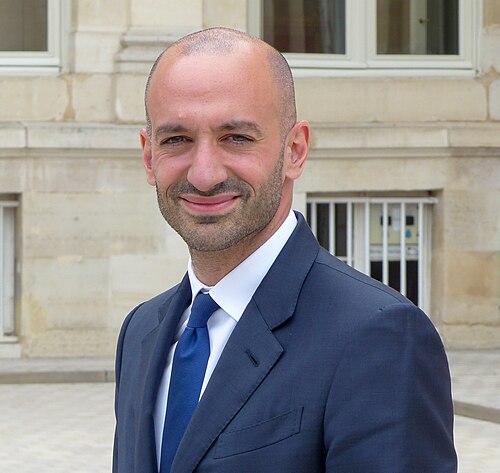 Benjamin Haddad
Transcription Whisper (large-v3), avec identification des locuteurs. À recouper avec la source d'origine.
Analyse automatique
Générée par IA — peut contenir des erreurs. Méthodologie
Chapitres
Répartition du ton (temps de parole politique)
Propositif 85 %Attaque 5 %Défensif 10 %
Questions et réponses
Taux de réponse directe : 100 % (directe = 1, partielle = 0,5, éludée = 0)
- 1:54OuverteRéponse directe
Pourriez-vous partager votre analyse de la victoire d'Emmanuel Macron ?
- 5:57OuverteRéponse directe
Quelles seront les priorités d'Emmanuel Macron dans les mois à venir ?
- 9:34OuverteRéponse directe
Que présagent les résultats politiques français pour l'avenir de la France et de l'Europe ?
- 14:40OuverteRéponse directe
Comment l'Europe change-t-elle à la suite de la guerre en Ukraine ?
- 17:31OuverteRéponse directe
Quelles seraient les implications de la situation entre la Russie et l'Ukraine pour Israël dans la région ?
Temps de parole
- Benjamin Haddad79 %
- Présentateur17 %
- ?4 %
≈ 30,7 interruptions / 10 min (chevauchements et interjections détectés).
Modèle mistral-small-latest · prompt v1 · les citations sont vérifiées mot pour mot dans le transcript ; le taux de réponse directe est calculé à partir des verdicts question par question. Aucun label idéologique n'est produit.
Good
morning everybody, good afternoon, we are very happy to have this meeting today, so I will be short in my presentation as our guest today will have to leave 15 minutes earlier, and you will understand why in a few minutes. So if you were to say that French President Emmanuel Macron
was
re-elected on Sunday April 24, despite the second lowest turnout in more than 50 years in France,
the
far right represented by Marine Le Pen broke the threshold of 40%, more than 40%, by the way, of the vote for the first time in the history, Emmanuel Macron's victory ensured that France will remain part of the West and NATO for the foreseeable future, which is very important for us for sure. Yet the strong showing by Marine Le Pen's far right Nationalist Party is deeply troubling,
and
we could add, and we should add, that also the move of the extreme left with Jean-Luc Mélenchon, but I think our guest today will speak about that, is very troubling too, it's a very special situation that we are facing now in France.
To
help understand the stakes of the French election,
we
are happy to welcome a very good friend of us, Benjamin Haddad, who is the senior director of the European Centre at the Atlantic Council, he is an expert in European politics and transatlantic relations.
Before
moving to the Atlantic Council,
he
was a fellow at Hatchan Institute in Washington, DC, and he was always a good friend of LNED, and I should add, that since Thursday evening,
he
is now running also for the election in the French Parliament to be a member of the National Assembly, and it's very, very happy to have him with us today. Benjamin, I prepared for you five questions, and then we will have time to move to our audience, and I'm sure that we'll have, they will have tens of questions to ask you, you will do your best
to
answer as many questions as possible. The first question is, could you share with us in fewer your analysis of Emmanuel Macron's victory?
Yeah,
first, look, I'm really delighted to be here with all of you. It's a crazy few days for me as I'm starting my first run for office, and the parliamentary election will be in mid-June. But it was really important for me still to have this conversation with Felnet, because, as you said, Arieh, I've been a longstanding friend and supporter of the incredible work that you guys are doing all across Europe to promote better understanding dialogue between European democracies and Israel.
And I think you've been very successful at it, and I think we've seen the changes when it comes to support for Israel after the wave of terror attacks, when it comes to the question of the Iranian nuclear program, and we'll talk about other issues. But I think the evolution that we've seen in the last few years is largely due to the terrific work that you're doing. And so it's always a great pleasure to be with you, Arieh, to see you, Larry, and everyone to have this conversation. Let me say a quick word on Emmanuel Macron's re-election.
Just to give some historical context to show how historic actually this re-election is, Emmanuel Macron was the first French president to be re-elected in 15 years.
He's
actually the first French president in 50 years to be re-elected when holding parliamentary majority.
And
he won with 59% of the votes against Marine Le Pen, over-performing polls before the election. So this is a very strong showing. Some people, a lot of people voted for him out of support for his platform. Some people also voted for him,
and
I think that's a warning to him, that's a warning to our majority,
to
bar Marine Le Pen from being elected president.
And
that's something that we'll have to hear.
He
still needs to get a parliamentary majority in the upcoming legislative elections in mid-June.
But
Arieh, you said it, and I think it's very important,
the
fact that
the
extreme left of Jean-Luc Mélenchon and the extreme right of Marine Le Pen showed such a strong showing in the first round. And Marine Le Pen had a historic vote support with 41% of the vote in the second round is a warning. It is a democratic warning for France. The next five years will be tough. There's a lot of anger. There's a lot of tension in the country. We have seen this with the different crisis that France has come through in the last few years, especially the Yellow Jackets crisis. So I think he will need to answer, I think,
the
strong demand you have on economic issues, on social issues, on environmental issues also coming from the left. That's going to be
a
big priority for him, all the while developing his European agenda that has been really core to his political message identity and platform ever since he became not even president, but a candidate at a time of war striking the European continent back. And he was today giving a speech on his vision of the European Union. Maybe we will say a bit, a bit more about this, but I'll I'll I'll
stick
I'll stay here there. And yeah, back to you for the second question. Yes, the second question
would be the continuation of what you said, because, as you said, it's the first time in the history of the fifth republic that the president is reelected means that nobody knows what is to be reelected in France. So how do you what do you feel about what will be the priorities of Emmanuel Macron in the coming months? And we know that when you are on the in a position for five years, it's very fast. So you have to act very quickly. So how do you see the priorities of Emmanuel Macron this time?
Yeah.
So look, I think one big priority of Emmanuel Macron ever since he became president in 2017 has been reforming the French economy, has been making sure that we stay competitive, that we have a labor market that's actually open to all. That was the first thing he did in 2017 is reforming the famously rigid French labor market. We've seen unemployment drop dramatically in the last five years, despite covid, despite all the crisis that we've been through.
We
have the lowest unemployment numbers since 15 years to the point that it hasn't even been an issue in the campaign when it was the preeminent issue of French politics for the over 30 years. He's always put growth and innovation at the core of his message. So I think we'll continue to see this momentum for reform. You know, one big item is reforming the pension system in France and making sure that it stays sustainable in the long run. We have one incredible chance in France that we have very high life expectancy. But it also means that we have to reform our pension system so that everyone can still benefit from full pension. So that's I think going to be a big, big priority.
A second big priority will be the environmental transition. He said that his prime minister, he will appoint his new government next week. We'll have a new prime minister. He said his prime minister will have the environment as a top priority. So I think we'll see this very high on the agenda. And then the third one, and maybe I should have started with this, but I said that earlier is going to still to going to be Europe. He, you know, has I think a strong European record. We had the COVID recovery package that was a historic step forward in creating more integration at the European level with Angela Merkel last year.
But I think as we see Russian aggression on Ukraine, we really need to step up our defense efforts, both individual member states. But at the European level,
step
up our effort in terms of energy independence. Actually, France is a very good position on this. France depends on Russia much less than other European partners. It's much more energy independent, largely thanks to nuclear energy. So it's been France has been pushing in the last few months with more sanctions, embargo on oil. And I think down the road we'll go, we'll get to at some point an embargo on gas. But we need everyone on board on this. Obviously, Germany is more dependent on Russian gas than we are. We, I think, get 18% of our gas from Russia. Germany is more like 55%. So we need to push on diversity from suppliers. We need to push on renewables.
And I would say also at the European level on investing in nuclear energy. So I think that at the European level is going to be a huge priority. And then, you know, how do we make sure that we secure our neighborhood? You have the European relationship with Ukraine, but you also have Georgia, Moldova, the Western Balkans.
So
how can we get Europeans to act and think like a power?
I
think that's,
you
know, if you were to ask me, what would be Emmanuel Macron's legacy in one sentence? I think that would be really at the top of it.
Thank
you. And my third question is, what do French politics portend for the future of France, Europe? And for sure,
relation
with Israel is what is so important for us. And I will add, how do you think it will connect with the Abraham Accord also?
That's
a great question. First, I think we've seen actually a blossoming of the relationship between France and Israel over the last few years. And largely due to the fact that, you know, the relationship between France and Europe, by the way, in Israel,
is
not mostly about geopolitical issues. It's about trade. It's about innovation, tech, the environment. You know, I always say that anecdotally, something that's very interesting is the first two French ministers of Macron in 2017
who
visited Israel were the economics minister
and
the minister for digital issues.
And
that says something about how Israel is viewed right now as a hub for innovation, as a startup nation in in Europe, as a model for a lot of how Europe also should should act on this. I think that's been really a key factor. And we're going to continue to see, I think, a strong deepening of the relationship when it comes to that. Another aspect is, of course, that France, as you all know, has been struck by Islamist terrorism in the last years. We had a major wave in 2014, 2015, but we've also had a lot of traumatic terror attacks in the last few years, like Samuel Paty, the history professor who was beheaded by a jihadi terrorist. That was a huge trauma for the French population.
So I think there's a sense
of
bonding between France and Israel over these issues. I think that is really key in addition to, of course, a lot of exchanges and partnerships on intelligence, for example.
Another
aspect is Iran and President Macron. I actually interviewed him for the Atlantic Council last year and asked him about JCPOA and Iran. France supports the idea of a new agreement on nuclear issues with with Iran. France was against
the
US withdrawal from the JCPOA. But I think France has also held a pretty tough position within Europe, within the E3 on these issues. And when I asked President Macron last year about this, he said, you know, a new agreement ideally should also include ballistic missiles.
We
should also have a serious conversation about the sunset clause. We should also address Iranian malign influence in the region, its support for terror groups like Hezbollah and others. And we should also make sure that we consult with allies on the agreement. He had mentioned two allies, Israel and Saudi Arabia, on this. I think these are really some of the core pillars. Then you ask about the Abraham Accords. And I really think that that can be a big priority for the for the next few years. I'll be honest, I think that France, Europe, actually, the European Union
has
been late in understanding the tectonic shift that the Abraham Accords represented, maybe because it came from Trump, maybe because it didn't follow the plan that Europeans had fought through in in the region.
But
I think now a few years in the making, we see that this wasn't just a piece of paper or political ploy that there's something much deeper at stake between especially the UAE and others support in Israel. And that there's, I think, momentum to be built, especially, I would say, on the non political issues, economic relations, trade, tech. I was in Dubai in November and visited the Bolsh Halifah Tower in the elevator. Everyone spoke Hebrew around me. I mean, in terms of tourism, I think you had 200,000 Israeli tourists in the UAE in 2020. I mean, this is absolutely historic and this is where you can play really an interesting role.
I mean, if you think about, for example, getting some form of trade agreement between the European Union and the countries of the Abraham Accord, if you can think about what it means in terms of investment for the environment, investment in in tech, I think this is really where France could be a leader in the next few years. I think France and Macron
can
probably have a more agile, a more creative and innovative way of thinking about the region in Europe and be a driver. Other countries in Central Europe, you know, I think I think I've been very at the forefront of this. You know, when I go to the Czech Republic, for example, they're very enthusiastic about the Abraham Accord. So I really think that could be a great opportunity for President Macron in Israel in the next five years.
And we will go back a little bit about what's going on in
East
Europe. And
my
next question is, how is Europe changing as a result of the war, Russia's war in Ukraine? I don't know if you have the opportunity to listen to the speech of the President Macron for the European Day, because today is the European Day in Europe. It's 9 of May.
It's
also the day of celebration of Vladimir Putin for the victory in the in the Second World War. But how do you see this? What is your assessment about the changing Europe?
Yeah,
look, I think this is this is a historical moment for Europe and war is back on the European continent. And I think we have to draw the consequences from it. The first thing we've seen really in the couple of days that followed the war was a lot of European countries deciding to rearm. It's going to be a slow generational movement. But you see Germany announcing a hundred billion euro investment in one year to update its military equipment, going back to more than two percent of defense spending. I mean, remember the debates we had with Trump at the time over this.
And now that we have European countries moving, Poland announcing that it's moving to three percent, Finland and Sweden announcing that they want to join NATO. So in the way we think about military issues, it's a it's a technic shift in Europe. And I think it's an opportunity to build up also more European coordination cooperation. Sorry to get a little technical on this, but
if
you add
the
defense budgets of all 27 members of the European Union,
we
are the second military spender in the world after the United States.
Does
that really translate in operational capabilities in presence on the ground? Of course not, because you have so many redundancies, so many problems of coordination that, you know, you have duplications on a lot of equipment. So I think that's a big challenge at the EU level is to make sure that we can also not only increase our defense budget, but do it together so we have more capacity to act.
And
then we need to, you know, think like a power. We need to understand that we are in a world where you have countries like Russia, like China that think in terms of power politics that use energy relations, not as normal trade where you trade a utility, but as a as leverage, as a tool of power and influence over our democracy. So it's completely updating our software. And I think that's something that he really wants to push with his agenda of European sovereignty. Let's think like a power. I think that's that's really core to his to his message on the European Union.
And
so
a but
I
know that it's a subject that you know very well. What would be the implication of the situation between Russia and Ukraine for Israel in the region? How do you see that the move in this on the strategic arena, according to that?
Yeah,
well, so first, something I forgot that I think is really important. Of course, Emmanuel Macron also supports sanctions on Russia and more sanctions. He supports weapons delivery to Ukraine. That was actually a big deal during the election. I think that played a role in the campaign. Both Marine Le Pen and Jean-Luc Mélenchon on the far left were seen as pro-Russian, were against sanctions against weapons delivery. They sort of adapted their tune as we went because the French population is largely supportive of supporting Ukraine. But I think that that that was a key dividing aspect in this campaign. I think Macron, you know, has been very supportive of Ukrainian sovereignty.
What does this mean for for Israel? Look, I think Israel is in is in a difficult position on this, right? Because Russia is present in Syria. I think Israel has been able to both at the same time be a very strong ally to the United States, but at the same time managed to have sort of a constructive, de-conflicting relationship with Russia
on
its on its border. We've seen Naftali Bennett, I think that was very positive, try to play a mediating role between Ukraine and Russia at the beginning of this conflict. He visited Zelensky and and Putin, try to
convey
messages. I think all these diplomatic channels are very important. Macron is trying to do the same. Right now, Russia is closed to diplomacy. I think there's no seriousness on on Moscow side to have a serious diplomatic conversation. We've seen Zelensky, on the contrary, say, you know, for example, that he's flexible on Ukraine's NATO application if he were to get security guarantees from Western countries. We've seen him even say that he's ready to give more autonomy, more decentralization to Donbass. Right now, Russia is not open to this, but I do think Israel could continue to try to play an
official
or unofficial role as a back channel with other countries like like France, but also Turkey. The only way we can achieve this, though, is by continuing to support Ukraine. The only way that at some point
Russia
realizes that there's no other option
than
either stop its aggression
or
even go to some form of ceasefire and diplomatic process is because it feels stuck on on the ground. And so it's because we've given Ukrainians the means to defend themselves. And so this is why I think
continuing
sanctioning and continuing weapons delivery is really important. One last thing I would add on European rearmament. I really think this is positive for Israel.
I
think that,
you
know, seeing Europeans
take
security matters seriously,
think
in terms of threat, in terms of risk, will, I think, automatically mean that you'll see a stronger relationship with Israel as well. Because, you know, for a long time, the European Union was built on this idea of overcoming transcending relations of power, replacing them with law, economics, diplomacy. I've written a lot about this. And on the one hand, the European Union is when I think one of the most successful political projects in history. We've managed to replace war on the European continent with this kind of technical cooperation.
But
sometimes it's also poorly prepared Europeans in understanding the rest of the world, that the rest of the world, unfortunately, still works
in
terms of
military
relationships, in terms of conflict, in terms of power politics.
And
so seeing war back on the European continent, I think, awakens Europeans also to how other countries like Israel have been dealing and facing with a hostile environment. And so my guess is that we'll see a stronger form of intellectual convergence also between Jerusalem and European countries, if that makes sense.
Thank
you
very
much. So.
Thank
you very much.