Jeffrey Gedmin and Benjamin Haddad on Syrian Airstrikes and Russia
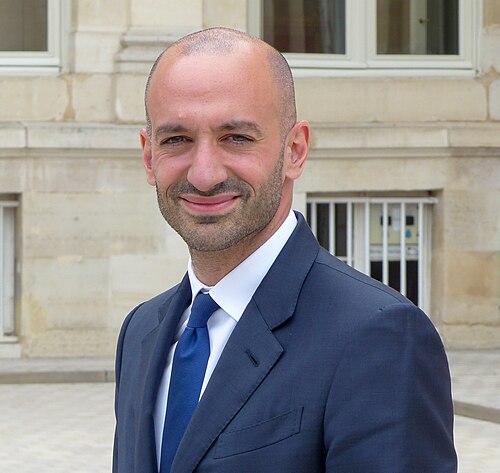 Benjamin Haddad
Transcription Whisper (large-v3), avec identification des locuteurs. À recouper avec la source d'origine.
Analyse automatique
Générée par IA — peut contenir des erreurs. Méthodologie
Chapitres
Répartition du ton (temps de parole politique)
Propositif 30 %Attaque 40 %Défensif 30 %
Questions et réponses
Taux de réponse directe : 93 % (directe = 1, partielle = 0,5, éludée = 0)
- 1:17OuverteRéponse directe
Qu'attendez-vous de ces frappes et leur signification géopolitique ?
- 2:23OuverteRéponse directe
Pourquoi la France doit-elle soutenir ces frappes ?
- 4:37OuverteRéponse directe
Comment décririez-vous les relations actuelles entre Trump et Poutine ?
- 8:16OuverteRéponse partielle
Comment les États-Unis séparent-ils leur politique étrangère selon les pays ?
- 10:29OuverteRéponse directe
Quelle est la politique de Macron face à cette crise ?
- 13:26OuverteRéponse directe
Que signifie l'unité transatlantique sur ces frappes pour la politique russe ?
Affirmations vérifiables (citations exactes)
- 2:40Invité politiqueFait
« It was very important for the United States and Europeans to react together to this use of chemical weapons against civilians by the Syrian regime because we had set a red line. »
- 2:51Invité politiqueFait
« You remember that the Obama administration had set that same red line against the use of chemical weapons but did not act upon it in September of 2013. »
- 3:11Invité politiqueFait
« I think when Russia decided to intervene in Ukraine, for example, they remembered that the Obama administration did not act on its own red line. »
- 4:01Invité politiqueFait
« During his campaign, he said, why can't we get along with Russia? We need to cooperate on Ukraine and Syria. »
- 4:12Invité politiqueFait
« It's not working. And on the contrary, the administration has taken steps to send javelins to Ukraine, to implement new sanctions, to expel Russian diplomats after the Skripal assassination attempt in the UK. »
- 6:44Invité politiqueFait
« We've wasted so much time, because since 2011, we've said Assad must go, we've set a red line on the use of chemical weapons, and at the same time, there's been so little European and American reaction to the massacre in Syria. »
- 7:21Invité politiqueFait
« Iran got more involved, especially through its proxies like Hezbollah. Russia got directly involved in 2015 and managed to change the balance of force in favor of Assad. »
- 7:57Invité politiqueFait
« We could isolate Assad financially. You still have some of his backers that have money in London and in Europe. »
- 11:34Invité politiqueFait
« The case he's been trying to make to Donald Trump is that the transatlantic alliance is important. »
- 11:56Invité politiqueFait
« The French are very assertive militarily. They have troops in Africa. They're very involved in the coalition against ISIS in Iraq and Syria. »
- 12:14Invité politiqueFait
« The French have known Assad for a long time, and they know how brutal his repression has been. »
- 12:51Invité politiqueFait
« The Red Line incident in 2013 was a big subjective division between the French and Americans, because at the time, President Hollande wanted to strike Syrian chemical facilities, and Barack Obama is the one who changed his mind at the last minute. »
- 16:12Invité politiqueFait
« These are not isolated crises. This is part of a broader pattern of Russian aggression against the European or transatlantic security order that was built after the end of the Cold War. »
Temps de parole
- Benjamin Haddad37 %
- Présentateur31 %
- Invité28 %
- ?4 %
≈ 37,6 interruptions / 10 min (chevauchements et interjections détectés).
Modèle mistral-small-latest · prompt v1 · les citations sont vérifiées mot pour mot dans le transcript ; le taux de réponse directe est calculé à partir des verdicts question par question. Aucun label idéologique n'est produit.
On
a read
that the United States followed through on, on April 13, the US, together with its allies France and the United Kingdom, launched airstrikes on Syrian chemical weapon facilities in response to the alleged use of chemical weapons by the Syrian regime.
The
move has been supported later by Germany, though Russia claims that the attack will exacerbate the humanitarian catastrophe on Syria. What we also know from US military officials is that the military advised Russia on airspace that would be used in the strike, but it didn't pre-notify them of that. The situation is unfolding, and at this stage, we would like to discuss not that much details of the attack and the military actions, but what it all means for further US-Russia relations and the relations between President Trump and his European counterparts as well, what impact it may have on this part of the world.
And we are happy to have here Jeff Gedman, senior fellow at Georgetown University and analyst on Russia as well, as well, the Benjamin Haddad, who is the fellow at Hudson Institute and is a key expert on US-France elections, and we are happy to have you both. You're always based in Washington, D.C. and now in Kiev. So probably just to start, what would you say on the, Jeff, maybe you would start on the way expectation that probably there would be the strike, but really what it all means in general for geopolitics, and what expect?
Well, I'm happy to start, and I don't think we know, for a number of reasons, because it's early,
because
we have an American president who is early in his administration, 14 months or so, because we have an American president
who
has been exceptionally,
let's
say, volatile and unpredictable
in
any utterance having to do with Russia. And I would say, what I'm keenly interested in, by the way, if this was a retaliatory punitive strike
that
could possibly affect
the
behavior of a barbaric criminal regime, I applaud that.
I'm
equally and probably more interested in whether this emerges as an element
of
a strategy
on
Syria that's serious and sustainable,
and
I don't know if it is or not. We don't know if it is or not.
Ben,
you actually had written recently a piece that France has to support the attacks in the response of the chemical weapon use. So, what do
you
would say?
Yeah,
well, I agree with Jeff.
I
mean, first, I think that it was very important for the United States and Europeans to react together to this use of chemical weapons against civilians by the Syrian regime
because
we had set a red line. And you remember that the Obama administration had set that same red line against the use of chemical weapons but did not act upon it in September of 2013. And it sent, I think, a message of weakness, a message of lack of determination to the Syrian regime, to its backers in Iran and Russia, and I think it reverberated around the world. I think when Russia decided to intervene in Ukraine, for example, they remembered that the Obama administration did not act on its own red line. So, I think, first, it was a very important message to send to our adversaries, and it was important to increase the cost to the Assad regime. I agree with Jeff.
It's not clear today if it's in a broader strategy in Syria, if the administration wants to take further steps maybe to fight against Assad, isolate him, and fight against his backers. But I think it's a good first step.
And
the second thing I would say, to come back to your question on the geopolitics of this, is that
it
is a further step in the confrontation between the United States and Russia. And it's particularly interesting because this is a president, Donald Trump, who, as you know, was elected with a very pro-Putin message. You know, during his campaign, he said, why can't we get along with Russia? We need to cooperate on Ukraine and Syria. And what you've seen over the last few months is that this cooperation does not exist. It's not working. And on the contrary, the administration has taken steps to send javelins to Ukraine, to implement new sanctions, to expel Russian diplomats after the Skripal assassination attempt in the UK.
So this is a new step, I think, in the realization from Donald Trump and his administration that you need to confront Russian aggression.
And
Jeff, to what extent really you have this, you know, how would you describe today's relations between the President Trump and the Russian President Putin? Because, of course, a lot of people see particularly those strikes as probably the sign that, indeed, there is a confrontation, there are the sanctions. Though there are the people who would say, in fact, it could be different, it's not just that much about the president, it could be not systematic. So really, how you would explain currently these relations?
Well,
it's the difficulty with life so often. Two things can be true at the same time. So we've seen the application of tough sanctions,
and
now we've seen some toughness and military action in Syria.
And
that's true,
and
that's a different face for Donald Trump, and it's a tough hand vis-à-vis Vladimir Putin.
We've
also seen the face of fondness, of affection, and even admiration for the Russian President, for whatever reasons. It seems a little bit complicated and bewildering to me. We also, I think, want to note
that
while the president is the commander-in-chief, and that's vitally, centrally important, no administration is a monolith,
and
we have now an incoming and new national security advisor. We have now incoming and new secretary of state. They won't define everything, but they will endeavor to shape
the
view of the United States and the views of the president to some extent. So I would say it's too early to tell whether now this is the emergence of Donald Trump hawk visa Russia, or whether this is a momentary interlude, but something is changing, something is moving in some way, I think.
But also, you know, what impact it would have on Syria. We can say that it's too early to say, but in general, we see that the Assad regime is, in fact, pretty stable, and what's happening within the last year is not really that it's not winning. It looks like the Syrian regime is becoming more and more stable in Syria.
Yeah, I
agree, and we've wasted so much time, because since 2011, we've said Assad must go, we've set a red line on the use of chemical weapons, and at the same time, there's been so little European and American reaction to the massacre in Syria. And I think, you know, probably in the United States, people were wary of what happened in Iraq, and you were, you know, and Barack Obama was elected in 2008 on a program of withdrawal from the Middle East. Same thing, Donald Trump also was elected on a very isolationist platform. So I think there was not a lot of political appetite to get more involved in Syria, but we've wasted so much time.
And Iran got more involved, especially through its proxies like Hezbollah. Russia got directly involved in 2015 and managed to change the balance of force in favor of Assad. I think these strikes are important. Once again, they're a first step. They're an important message of credibility, especially after we said that we would intervene if chemical weapons were used. Are they going to change the situation itself in Syria? Of course not. So the question now is, is it only
a
one shot and we send a message, or is it part of a broader strategy? I do think we should get more involved. I do think there's a lot we can do, including non-militarily. We could isolate Assad financially. You still have some of his backers that have money in London and in Europe. We could go after these kind of funds. There's a lot we can still continue doing if we wanted to be more aggressive in prosecuting this conflict. But unfortunately, we've been very shy in doing this so far.
And Jeff, how is the United separate the foreign policy towards different countries? Because we always, at least always in Ukraine and also in Eastern Europe, in the Baltics, we look at the U.S. policy towards Russia
on
what they are doing in this region. And at the same time, there could be some negotiation over Iran or over
Syria.
So in that regard, how it could be, you know, where to look, what to look at, you know, speaking that, you know, that could be a different story on U.S., Russia, you know, actions over Syria and something else here.
Well, here's the context in which I would like to see this. Russia has emerged as a pretty effective global troublemaker, okay? Vladimir Putin is an individual who leads a country that has a relatively weak hand,
but
he plays it very strongly. We argue at times about whether he's a master strategist or a tactical opportunist. The bigger issue is he is a man with a vision.
He
wants Europe weak and divided.
He
wants spheres of influence,
and
he wants to build Russia up by cutting America down.
I
would like us to have a comparable vision. We want a Europe whole and free. We want a Ukraine that's independent, sovereign, democratic, and chooses its own alliances and associations.
And
I think we want a global, multifaceted strategy vis-a
-vis
Russia
that
exacts a price
for
every instance where Russia aggresses and pushes back and sets the agenda wherever we can. Ukraine,
other
areas in Eastern Europe, Syria. You can go through a list of things,
but
they should feel our agenda pushing at them. We don't wish any ill will toward the Russian people, but we don't want to revanch this Russia. We want to normalize, cooperative Russia.
And
he doesn't play that game. So I would like to see whatever we do in Syria, and Syria is so important, so important, but in a broader context that pushes Russia aggression back on all fronts and modifies very bad behavior.
And,
Ben, would you explain to us President Macron's policy in this regard? Really, he supported the strikes. Yet, kind of, especially here, we know that there are more or less a good relation with President Trump, though while there was an election of the French president, there was some kind of idea of not the anonymity, but the fact that Macron presents a different idea, something totally different. He is against populism. He is against what sometimes President Trump represents. So what that could mean for this alliance of France and the United States?
Yeah. No, you're absolutely right. He was elected on, I would say, almost the opposite platform as Donald Trump. He, if you say that Donald Trump is in favor of protectionism and closeness, he was in favor of open societies, free market, he's a big supporter of European integration. But at the same time, he is a pragmatic in foreign policy, and he does believe that you need to cooperate with allies, and especially with Donald Trump. And I think the case he's been trying to make to Donald Trump is that the transatlantic alliance is important.
You
know, Donald Trump is someone who's very critical of Europeans because he believes that Europeans should do more for their own defense and security. You know, he's always talking about burden sharing. And he's not wrong. It is true that Europeans could invest more in their own security and border control. And this is something that the French have long said. The French are very assertive militarily. They have troops in Africa. They're very involved in the coalition against ISIS in Iraq and Syria. So this is also something paradoxically on which Trump and Macron can agree, which is that, you know, he does want also Europe to be, Macron wants also Europe to be more autonomous.
Now, when it comes to Syria, the French, including with Macron's predecessors, Nicolas Sarkozy and François Hollande, had a very tough position on Syria. I think there's no trust between French leaders and Assad. The French have known Assad for a long time, and they know how brutal his repression has been. Europeans have been the first victims of terrorism that spread out of Syria, and that is a direct consequence of the repression of the Assad regime. So I think the French have been, especially at the forefront, having a more proactive reaction to the conflict in Syria.
And the Red Line incident in 2013 was a big subjective division between the French and Americans, because at the time, President Hollande wanted to strike Syrian chemical facilities, and Barack Obama is the one who changed his mind at the last minute. So I think there's always been this strong position that President Macron continued as president, and I think it's very important as a show of transatlantic unity
that
France, the United Kingdom and the United States were together in these strikes.
And Jeff, indeed, if you follow with the other countries, so Theresa May had, you know, the United Kingdom supported the strikes, as well even Germany, which is usually very critical in that regard, wasn't critical. So really what does it mean, the whole strikes for the unity of the transatlantic community, and is it like just the one, you know, like one situational unity, or that could also mean for kind of further relations also on the, you know, the policy towards Russia, not just on Syria,
but like... Well, it's a good sign. I don't know if it's sustainable. We have a moment now across the West
where
the watchword is not unity, not internally, and not across national boundaries. And in an instance like this,
that
the UK and France and the United States could cooperate and lead together, I think is extremely important. That Germany that can be sometimes dovish or reticent about these things is supportive, is extremely important. And I think we have to be mindful
that
we do have enemies, adversaries,
who
are going to see this,
and
they're going to now work to chip away and weaken and fracture and divide. I mean, Vladimir Putin and others will not stand idly. If we could find this as a moment
for
Western leadership
to
remind ourselves that there is a transatlantic community of interests
and
also values,
and
we are united by far more than separates us, and put some political energy behind this
around
other projects too. Maybe Ukraine, for example, and assisting Ukraine. But right now we've got – this is a photograph,
and
we're in a movie, we're in a film, and something came before and something has to come after. The photograph we have is very heartening, it's encouraging, but it's a still shot. It's still one photograph, one frame.
And
my last question for both of you. You know, we're in the region where people could afford earlier not to care that much what's happening in the Middle East and what are the U.S.-Series relations. And I'm not speaking just on Ukraine, but the whole region of Eastern Europe. Yet today, still with the escalation, there are concerns. You know, that Russia had shown
enough
of strength and courage to do the things which before were not tolerated, and in the end they were tolerated with annexations, with kind of the things, with actual fighting. So really, do you think, what could be the concerns, you know, realistic concerns on that kind of escalation, and could you put for this region, for audience who is here, this kind of the Middle Eastern escalation
and
its meaning to this
place?
Well,
first I would say these are not isolated crises. This is part of a broader pattern of Russian aggression against the European or transatlantic security order that was built after the end of the Cold War. When you look at the behavior in Ukraine, when you look at the behavior, the support for these massacres against civilians in Syria, this is also a consequence of the fact that the United States and Europeans withdrew and they didn't want to push back against this form of Russian aggression and Russian-Iranians in the Middle East. So I think
if
we start pushing back, if we start increasing the cost for intervention like we haven't done in the last few years, I think it will start sending a signal, including in different places. As I said earlier,
I
think
one
of the reasons why Russia felt it could intervene without any pushback in Ukraine in 2014 was because it saw that we didn't follow our own red lines the year before in Syria. And I think now if we show that we're serious and we're ready to confront, we're ready to go after the money that is still hidden in European capitals,
that
we're ready to confront after assassinations like the one that happened in Salisbury recently
and
against these acts in Syria and Ukraine, I think it sends a signal that we're back and we're taking this seriously.
Well,
what I appreciate about what Ben just said was he's talking about something that's global and a strategy that's multifaceted and pushing on different points. To your question, Talia, I think we should be very sober, we Europeans, Americans. This is a long game now. Number one, will Russia respond or retaliate? Absolutely. When, where, and what method, we don't know, but Russia will not be idle. Is this a long game in terms of
we
needing to allocate resources, military and financial and diplomatic, and risk and sacrifice and endure setbacks? None of this is going to turn around in 2018. There will be no claiming victory in 2019. If we want to reorder this relationship, set the agenda and put it into Russian revanchism, we're talking about some years, but it's been suggested, a global approach with a multifaceted strategy.
Yeah,
there is something to add from my side following the conflict in Syria as well, that
in
the end, the situation of the people in Syria isn't getting any better with the whole thing which is happening. So, you know, the weather strike, there was the answer, but indeed it's still the very, very gruesome situation all over the country.
Thanks
a lot for the discussion. I'm very happy to have you here in Kiev.
So,
Ben Haddad, who is the Hudson
Fellow,
and Jeff Gadmin, a Fellow from Georgetown University. and
you're
in
the lobby here
today.
Thank you.