Présidentielle : les Français "rejetteront l’extrémisme" et Le Pen, affirme Benjamin Haddad
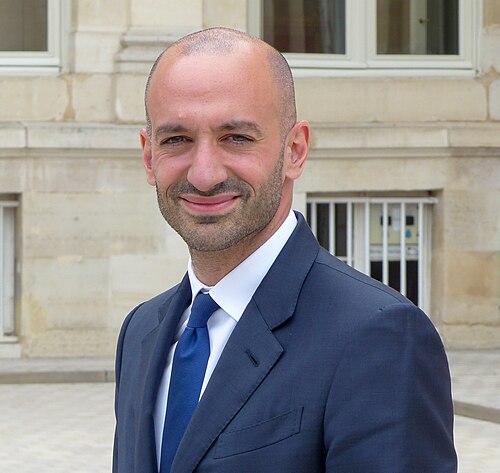 Benjamin Haddad
Transcription Whisper (large-v3), avec identification des locuteurs. À recouper avec la source d'origine.
Analyse automatique
Générée par IA — peut contenir des erreurs. Méthodologie
Chapitres
Répartition du ton (temps de parole politique)
Propositif 65 %Attaque 20 %Défensif 15 %
Questions et réponses
Taux de réponse directe : 100 % (directe = 1, partielle = 0,5, éludée = 0)
- 0:31OuverteRéponse directe
What do you think this all means regarding Russia's attack on Leipzig airport?
- 1:35OuverteRéponse directe
Are we at war with Russia?
- 2:18RelanceRéponse directe
Would you say the security situation is vastly different from a year ago?
- 3:29OuverteRéponse directe
Do you think NATO would be unified enough to respond directly to a Russian attack on Estonia?
- 5:15OuverteRéponse directe
Can the Europeans do anything to intervene or help in the Strait of Hormuz situation?
- 6:21OuverteRéponse directe
France came to the position that frozen Russian assets should be used to pay for Ukraine. Is that still your position?
Affirmations vérifiables (citations exactes)
- 0:33Invité politiqueFait
« it's very important that we reiterate our full solidarity and support for the German authorities and German people. »
- 0:39Invité politiqueFait
« And it's one more episode of Russia's hybrid warfare against Europeans. »
- 0:44Invité politiqueFait
« But we will never be intimidated in our support for Ukraine. »
- 0:50Invité politiqueFait
« This is the first test for European security. »
- 0:59Invité politiqueFait
« Remember where we were just a year and a half ago, after the Oval Office meeting between President Trump, President Zelensky, Vice President Vence, when many people thought that Europeans would stand aside as Ukraine would be forced into capitulation by a deal signed by Russia and the United States. »
- 1:14Invité politiqueFait
« On the contrary, we've taken ownership of our own security and defense. »
- 1:20Invité politiqueFait
« This is why President Macron announced new interceptors that will be sent to Ukraine. »
- 1:54Invité politiqueFait
« you know, it's not war, but it's certainly not peace. »
- 2:26Invité politiqueFait
« I think we've known for a long time that we were facing a threat coming from Russia. »
- 2:31Invité politiqueFait
« we just need to listen to the constant questioning of European security, of the European security architecture coming from the leaders in the Kremlin. »
- 3:42Invité politiqueFait
« When you look at the discussions we've had with the United States over the last year, you can see that the U.S. is in NATO. »
- 3:55Invité politiqueFait
« We had a successful NATO summit, actually, this year. »
- 4:47Invité politiqueFait
« We're in a different place than we were just a year ago, for example, when it comes to Ukraine. »
- 5:27Invité politiqueFait
« we were looking for a de-escalation of the conflict that can create the conditions after the war to have an international coalition where France will take its part to support the freedom of navigation in the Strait of Hormuz. »
- 8:17Invité politiqueFait
« France has been a major target for foreign disinformation and interference. »
- 10:00Invité politiqueFait
« I'm quite confident that the French, like they've done so many, many times, will refuse extremism. »
Temps de parole
- Benjamin Haddad71 %
- Présentateur25 %
- ?4 %
≈ 21,2 interruptions / 10 min (chevauchements et interjections détectés).
Modèle mistral-small-latest · prompt v1 · les citations sont vérifiées mot pour mot dans le transcript ; le taux de réponse directe est calculé à partir des verdicts question par question. Aucun label idéologique n'est produit.
Joining
me this afternoon is French Minister for EU Affairs, Benjamin Haddad. Minister, thank you very much for joining us on Euronews.
Thanks for having me.
Now,
this week we really had a development when it came to Russia-European relations because Berlin formally attributed an attack at Leipzig airport to Russia. This is a development because countries have held back from directly blaming Russia. What do you think this all means?
Well, first,
it's very important that we reiterate our full solidarity and support for the German authorities and German people. And it's one more episode of Russia's hybrid warfare against Europeans. But we will never be intimidated in our support for Ukraine. This is the first test for European security. And we've only accelerated and increased our support for Ukraine at the European level in the last month. Remember where we were just a year and a half ago, after the Oval Office meeting between President Trump, President Zelensky, Vice President Vence,
when
many people thought that Europeans would stand aside as Ukraine would be forced into capitulation by a deal signed by Russia and the United States. On the contrary, we've taken ownership of our own security and defense. We know that the next winter will be very difficult. This is why President Macron announced new interceptors that will be sent to Ukraine. This is also why we're working towards the production under license of capabilities like the SCARP, the Storm Shadows, and working also with the Americans on the Patriots.
I
suppose it's very hard to define the situation we're in now. Because up until now, you've had these sort of below-threshold hybrid attacks. But as we heard from Mark Rutte, the Secretary-General of NATO, and Kaya Callas,
these
attacks are becoming much more kinetic, much more frequent, much more violent and reckless. Are we at war with Russia?
Well,
you know, it's not war, but it's certainly not peace. And this is why we need to continue to increase our effort, first to bolster our defense against these hybrid attacks. We know that we're in a world that's much more geopolitically dangerous. We have adversaries and rivals. And this is why we need to continue to increase the coordination on the defense and security capabilities of Europeans. But
would you say, though, the situation we're in now is, let's say, vastly different, even the security situation a year ago, that we're getting much closer to that confrontation?
I think we've known for a long time that we were facing a threat coming from Russia. And by the way, we just need to listen to the constant questioning of European security, of the European security architecture coming from the leaders in the Kremlin. So I think, you know, the most important thing is
stay
calm, stay the course, continue to invest in our security and defense, continue the support for Ukraine, continue the pressure and the economic pressure that we're putting on Russia. You can see, by the way, what's happening on the battlefield with Ukrainians showing incredible ingeniosity and innovation on the battlefield with drones, you can see the success of the long-range tracks. They're bringing also the war to Russia with the impact that it's having, including on the Russian people. And,
you
know, a few weeks ago, we had this U.S. assessment that it was possible, more closer, that the Kremlin might target NATO in some way, in some small way, that may require an Article 5 response, because so, up until now, it's been below Article 5.
In
that case, let's say a part of Estonia was targeted in a very specific way.
Do
you think NATO would be unified enough to respond directly? Would the United States be behind them?
When you look at
the
discussions we've had with the United States over the last year, you can see that the U.S. is in NATO. We had a successful NATO summit, actually, this year.
We
see all the members of NATO increasing their defense spending, which I think is good for the alliance. It's also good to bolster the European pillar of NATO. This is something we support. If you want a more balanced, a more mature security relationship, where Europeans can take ownership of their own security and defense, this is something that the U.S. presidents have been demanding. But the truth is, this is also something that we want. So we should,
you
know, read the writing on the wall, draw the conclusions from this, but at the same time continue to work with our American partners. Look at what we did this year, you know, the G7, where President Trump was invited, and then the dinner in Versailles. We've seen, I think, a good reconvergence, realignment on the question of Ukraine, announcements from the United States on the production of patriots on
their license. But
the problem is that was a big getaway from the
NATO summit, but it hasn't emerged. But
let's be honest. We're in a different place than we were just a year ago, for example, when it comes to Ukraine. President Zelenskyy was in Washington recently for a visit that I think was successful. So once again, I think
the
best thing you can do in life is focus on what you control. And this is why I'm talking about the efforts that Europeans are undertaking for their own security and their own defense, and then continue the work that we do with the United States.
The Strait of Hormuz is obviously something that the Europeans were not involved in, in terms of the Israeli-U.S. war in Iran.
But
can the Europeans do anything to intervene or to help this situation? Because it has such an impact globally, but also in particular in Europe, because we get so much gas and oil through that strait.
We
said very clearly that when it comes to the situation in Iran and the Strait of Hormuz, we were looking for a de-escalation of the conflict that can create the conditions after the war to have an international coalition where France will take its part to support the freedom of navigation in the Strait of Hormuz. And then what's really important afterwards, and this is what was agreed, by the way, at the time in Versailles, is to set the condition for diplomacy to deal with the Iranian nuclear program, which is a security threat for the entire region.
So we can't, but there's no influence there for the actual de-escalation part. That just has to happen between the parties that are involved, really, though.
Well, I mean, once again, you know, this is not a war that was started by Europeans. We will be ready to take our part, really, to lead to the freedom of navigation and to diplomacy to handle this nuclear issue.
So
the frozen Russian assets, most of them are held, as we know, in EuroClear, in Belgium. France came to the position after a while that we should be using them to pay for Ukraine. It shouldn't be up to European taxpayers. Is that still your position?
We asked the Commission to look, especially technically, on what we could do with them, because this is where, you know, both technically and legally, we could not find unanimity and consensus. And it is clear that these assets will remain where they are, as long as there's still the Russian war of aggression against Ukraine ongoing, and Russia refuses to pay reparations. So we're open to having, you know, the debate on what to do next with these assets.
Ceuta is another issue, because migration, once again, being instrumentalized, is something that's been happening for the last few years, but again, it's been escalating. Do you think that Spain was given the right amount of solidarity by the European Union, by the Commission, and by member states?
Well, we have been in support of Spain.
Yeah.
And I think the Spanish authorities have clearly taken the measures to be able to respond to this situation, despite the emergency and the dramatic humanitarian nature of this crisis.
Look,
I'm absolutely convinced that the best way to deal with these extraordinary complex issues of immigration is to do it through European cooperation.
But do you think, though, that Spain was given a hard time unnecessarily? Within moments of the whole thing happening, barely, you know, Italy had suspended unilaterally Spain from Schengen.
As I
said, this is not the approach that was taken by France.
Yeah, indeed. Do you think it was a bit out
of bounds?
Well,
what I can tell you is that France has shown solidarity with Spain and that I think Spain has been effective in answering this crisis.
You
have a big election next year. And, you know, in the past two or three election cycles, we've been saying this, but this even is
even
more pivotal, let's say. First of all,
are
you concerned about interference in the election?
You know, France has been a major target for foreign disinformation and interference. We've seen episodes, remember, when President Macron was attacked on a video when he was going on the train to Ukraine. The rule should be very clear. What's illegal in the real world should be illegal in the virtual world. And this is the criteria that presides in these instruments.
Marine Le Pen goes from strength to strength, it appears, despite the fact that, you know, she has a conviction for misuse of funds, which is something you would imagine voters would be something they would put them off. What have you guys done wrong?
You
know, I think you see the rise of the far right and populist everywhere in Europe. And we should take this with a lot of humility. And our first responsibility, first, is to continue to deliver on results. All the issues that we're discussing here today, from migration and security, from competitiveness, prosperity, from defending the security of Europeans against foreign threats.
We
have a lot to continue to do and to continue to deliver and function.
And
then I will tell you something. You know, this will be, as every election, a tough election. It's still a long way to go. And
I
never trust the polls because when I personally started supporting Emmanuel Macron in 2016, he was far, far behind. He
was a newcomer then. Absolutely. But
I know something for sure. The French are deeply pro-European.
The
French are proud of the role that their country is playing on the European stage. And Marine Le Pen, for a long time, has been the candidate of Brexit. She's been the candidate of leaving the Euro. It's still far.
But
I'm quite confident that the French, like they've done so many, many times, will refuse extremism. I am saying this with a lot of humility because I think a campaign, you know, you need to campaign. You need to go meet the French. You need to listen to voters. You need to respond, propose a platform. We need to unify around a candidate because right now we have a lot of talents in the center, but we have a fragmented political offer.
So
I think by the end of the year, we will have one candidate that can rally the center and the center-right. And then we will make a case. Once again, France has shown repeatedly, the French people have shown repeatedly, that they have said no to extremism, euroskepticism and populism.
At the same time,
they're
getting stronger. And they did ever so well at the European Parliament elections. I
think, you know, you have a broader sense of maybe loss of control in globalization. You have a world that's changing very rapidly where a lot of the certainties that we had in the 90s and the 2000s are crumbling. You know, trade is being weaponized as a tool of pressure. You see the rise of China and the subsidized overcapacities that are coming to our markets,
that
are destabilizing our industries. You see our traditional alliances that are being questioned and a war of Russian aggression on our continent. And so
when
you have all this transformation, uncertainties, and a lot of the pillars on which we had built our systems, our European Union, our transatlantic alliance that are being questioned, Yes,
I
think, you know, these periods of transition
paved
the way very often for radical answers. I don't think they're the right answer. I don't think that in a world where you have the pressure from China, from the U.S., the threat coming from Russia, we would be stronger going it alone. I don't think we'd be stronger looking inwards.
Benjamin Haddad, EU affairs minister for France. Thank you very much for joining us on Euronews.
Thank
you.