France 'not sending any vessels to the Strait of Hormuz', Defence Minister Vautrin says
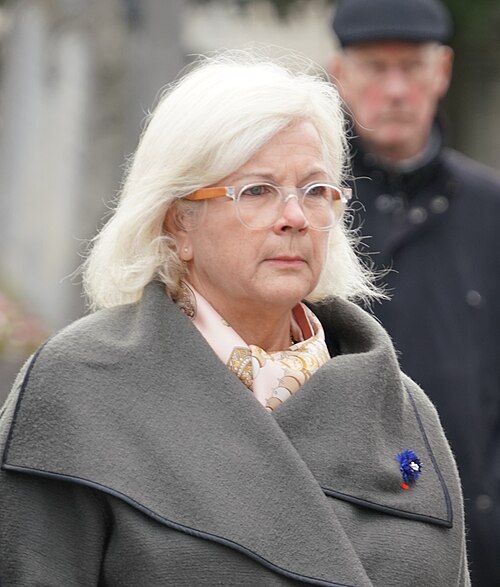 Catherine Vautrin
Transcription Whisper (large-v3), avec identification des locuteurs. À recouper avec la source d'origine.
Analyse automatique
Générée par IA — peut contenir des erreurs. Méthodologie
Chapitres
Répartition du ton (temps de parole politique)
Propositif 60 %Attaque 10 %Défensif 30 %
Questions et réponses
Taux de réponse directe : 88 % (directe = 1, partielle = 0,5, éludée = 0)
- 0:39FerméeRéponse partielle
Do you share this assessment that Iran's military capabilities have been considerably weakened and the regime's defeat is imminent?
- 1:28OuverteRéponse directe
What is the ultimate goal sought by the U.S. and Israel: regime change or weakening?
- 2:22OuverteRéponse directe
Are you worried Donald Trump will end the war too quickly for economic or political reasons?
- 3:43FerméeRéponse directe
Do you consider Iran's warning as a direct threat against France?
- 4:35FerméeRéponse directe
Did France provide any intelligence to Israel or the Americans against Iran?
- 5:56OuverteRéponse directe
What if France is attacked by the Houthis? What does France do?
Affirmations vérifiables (citations exactes)
- 0:53Invité politiqueFait
« we see that indisputably the Iranians have used many missiles, many drones »
- 1:01Invité politiqueFait
« I am not in a position to say that they have no reserves left »
- 4:04Invité politiqueChiffre
« We have 400,000 French nationals there »
- 6:54Invité politiqueChiffre
« The Strait of Hormuz is 20% of world trade »
- 16:16Invité politiquePromesse
« to increase the military budget of France to increase our capacity »
Temps de parole
- Catherine Vautrin71 %
- Locuteur non identifié17 %
- ?12 %
≈ 27,1 interruptions / 10 min (chevauchements et interjections détectés).
Modèle mistral-small-latest · prompt v1 · les citations sont vérifiées mot pour mot dans le transcript ; le taux de réponse directe est calculé à partir des verdicts question par question. Aucun label idéologique n'est produit.
Bonjour and welcome on Tête à Tête, here on France 24. Our guest today is the Minister of Armed Forces and Veterans Affairs, Catherine Votrin. Hello.
Good morning, Marc Paredman.
We are at the Hôtel de Brienne, in the office of General de Gaulle, at a time when there is once again war. We'll talk about the war in Ukraine, but now obviously the war in Iran. According to the Trump administration, the Iranian regime's military capabilities have been considerably weakened and the regime's defeat is imminent. Do you share this assessment?
Well,
I
would be more reserved. That is to say, what we've seen since the beginning of this war, which started on 28 February and we are now the 13th of March, we see that indisputably the Iranians
have
used many missiles, many drones,
yet
I am not in a position to say that they have no reserves left.
I
can say that, yes,
a
lot of their stock has been used, but to say whether we're near the end of the war, no. The other thing is to know what the ultimate goal by the United States and Israel is, and at this point, we don't know what this final effect is.
When you ask them, what do they say, regime change, or are they trying to leave the regime in place but greatly weakened?
That is precisely where it's very interesting to try to have the most precise answer, because one of the questions is the following.
The
ultimate goal sought by the U.S. and Israel is the United States wanting
to
take
out the supreme leader. Yes, that was done on the first day, but there's also the
issue of the
possession of nuclear
weapons by Iran. Has this effect been reached? We have no certainty of this, and there were other possible consequences they wanted. We don't know where they are. Does Israel have the same ultimate goals, or does it want to go further than the United States? That's one of the questions we have. Are
you worried Donald Trump will decide to end the war too quickly, for economic reasons, the price of oil, for political reasons, the mid-term elections, and ultimately that the situation could be worse than it was before February 28th?
Well, you know, I think words have a meaning, and President Macron, when he addressed the French people, said immediately that what we wanted was to have a diplomatic track prevail, because no one would want a war. That's the first thing. Second point, if the Americans were to decide to withdraw, would this mean that immediately the Israelis would stop? We don't know. So you see, there you have two countries that
went into war,
and we
don't know if they have
the exact same wishes. So if the Americans were to stop, would the Israelis stop at the same time? That's still a question we have.
Iran's deputy foreign minister on France 24 warned European countries, among others, that all those who in any way support what he calls the war of aggression
by Israel and Iran against
his country
would face Iranian retaliation. Do you
consider this as a direct threat against France?
You know, France's position is extremely clear. France, immediately from the first minute of this war, said what our priorities were. The first priority is the protection of our nationals, protecting our French nationals. We have 400,000 French nationals there.
Second
point is protection of our assets. We have embassies, we have military assets, we also have companies there in that region. The third element is the ability to respond to the requests for assistance of those countries that are being attacked. So in any and all of these cases, we are only in a defensive position. In other words, France is not participating in this war.
Did
France provide any intelligence to Israel or the Americans against Iran?
We in no case are participating in this war.
That being said, France has deployed significant military assets in the Eastern Mediterranean, in the Red Sea, especially the aircraft carrier Shalde Gold, but also frigates. What happens, for example, in
the Red Sea, there are two frigates, if I'm not mistaken,
if the
Houthis,
the Yemeni rebels proxies of Iran, hit a French frigate. What does France do? Does it stand by? Does it respond in Yemen against Iran?
As
you know, there is a European operations that's now in the Red Sea,
Aspides
operation, and France is part of the operation Aspides. And as we speak now, we have a frigate and we have deployed a second one. So we have Languedoc and Provence in that area, and they are there precisely to anticipate and to guarantee freedom of navigation because that is very important. Around the Red Sea and Babel-Mandeb, as we speak, there are navigation activities and we want this area to continue to have freedom of navigation. That's France's strategy today.
But what if France is attacked by the Houthis? What if a missile strikes a French frigate?
France, at this point, I repeat, is in a situation that is exclusively a defensive position.
Well,
clearly, the critical area is the Strait of Hormuz. France is not present in this area until now.
France
is not present as we speak. That's right.
This is as we speak.
Every time, this is a way of speaking, but things are changing.
But
it's not excluded.
Well,
I'm very clear and firm on this topic. At this point, there is no question of sending any vessels to the Strait of Hormuz. The French president said it again in Cyprus on Monday. He explained very clearly that our thinking was this is a diplomatic mission. Why? Because the Strait of Hormuz is 20% of world trade and this Strait interests many in the world. The Indians are very interested in it. as are the Asians, Europeans as well, and of course, all the Gulf countries for reasons of export, namely of hydrocarbons, but also import. So all these countries depend a great deal on import that come through the Strait of Hormuz. so today,
there
is not a single ship in the Strait of Hormuz. So for world trade, this is a very important issue.
Well, there are a few vessels, but some have been hit.
Indeed. Do
you know who
is behind those strikes?
No,
no.
Do you have an idea? I
do not know who is behind these strikes. We have only open sources that we are all listening to. It
seems to be Iran,
no?
There are comments being made, but these comments have not been checked. that is why I am saying open sources.
I
am reading the same sources as you.
Well, you have other sources.
But
what we do know is that there is a potential for mining it. There
you have information of possible mining of the Strait.
Here again, there are open sources saying there is a possible mining of the Strait. These elements show us the extreme danger of the Strait of Hormuz. Hence, the impossibility of navigating being in that Strait.
So the idea
is to form a
new coalition. There was already a military operation
between 2020 and 2024 precisely for the same reasons. It was called Agenor. So the idea, if I understand, because
you mentioned Asian countries, it wouldn't be just a European mission, it would
be
a
Euro-Asian mission.
Well, the idea is really to talk to all those who are users, if I may use that expression, and all those who are concerned by the traffic in the Strait of Hormuz so that
everyone
could use means to discuss, to open up the discussions. Because once you open up a track for discussions for a diplomatic solution, there is a topic with regard to the ship owners, the insurance companies that are insuring the
ships, so that
then there could be the reopening of the Strait of Hormuz that would gradually enable navigation to resume. And I want to be very precise on this point. This is a topic that we can only talk about with regard to weeks and months. Unfortunately, in the days to come, I don't think we will be able to have any traffic going through the Strait of Hormuz, given the important consequences.
You mentioned the French military assets, especially in the United Arab Emirates. There's also a presence in Jordan.
Have
you decided to beef up security measures to protect them? In addition, there are also French interests. We see lots of missiles and drones flying in the
area.
Well, of course, there are obviously protective measures of all of these military assets. If I take the case of the United Emirates, our military assets are in the UAE's assets, so we want to protect them as much as we can. We have Rafale jets, and you can understand it's important for the crews and for the planes themselves that they be protected. There are the families. You know that in the Emirates, we have military families living in the United Arab Emirates, and, of course, there we have taken protective measures for them.
So you mentioned the 400,000 French citizens living in the area, in Israel, Lebanon, the UAE. The president spoke about the need to protect them. We know the French foreign minister is managing all this.
Yes,
indeed. But is there also an emergency evacuation plan with the military component just in case the situation continues to deteriorate, for instance, in Lebanon?
Well,
there are several elements. If we are talking first about the first approach, this is what we've been doing since 28 February. Since then, there have been two elements. First, there were residents, and also, this was the school holiday period, and many French people went
on vacation to the Emirates or other
countries of the region
without forgetting that a place like Dubai is a hub. And so, the work that's been done has been done by the foreign ministry in partnership with the transport ministry and the ministry of armies. And so, the idea was to repatriate the most
vulnerable minors,
those
who are ill,
and
we used
military
aircraft that were taking
equipment
and
coming back empty so they were able to repatriate citizens. And then, we worked with, namely, countries
of the Gulf. I'm thinking
about the United Arab
Emirates,
which
very
quickly opened their airspace so that flights could go to different countries, and we ensured that destinations like Paris would be big enough to take those wanting
to be repatriated. Another thing,
if we needed to quickly be able to accompany some citizens from Lebanon, we have a fleet close by in the region, we have helicopter carriers that have a capacity to evacuate. So, we have capacity,
if need
be,
to
quickly evacuate.
I
want to turn to Ukraine now. Its president, Volodymyr Zelensky, is scheduled to meet President Macron in Paris this Friday. the
Ukrainians are demanding more anti-aircraft capabilities to face the Russian bombing campaign. And
they feel that they could be the collateral victims of this conflict in the Middle East because all the resources they need are actually being sent to the Gulf. Do you share their concerns? their
concerns?
Well, I
hear their
fear,
but I want
to say something very important
to
them for Ukraine but also for Gulf countries. When France signs an agreement for partnership, it's reliable. All the countries there know that we have an agreement. We've been there since the first day. Since 2022, February 2022, France has been by Ukraine's side. And if Zelenskyy is coming tomorrow, it's because we will be working with him and we will look at all the elements that we are in a position to put at Ukraine's disposal. When I speak of elements, I mean capacity and you're right. One of the main lessons of conflicts in Ukraine and in the Middle East is that this is essentially air combat with drones and missiles. These are the two main elements and that's important.
You have to draw conclusions in terms of capacity and the topic here is that, well, today in Ukraine, France has its capacity.
That's
not enough
for Ukrainians.
We are not the only ones. Fortunately, you know that Europe has mobilized itself considerably. To be very concrete, the issue will be how the United States, namely because you know many European countries with the exception of France, France chose sovereignty. It chose to produce its own missiles, its own fighter jets, to have sovereignty. And there, we are looking at this important point. Other European countries have decided to buy from the US.
And
the question which will come up is, will the Americans continue to export in the same way at a time when they have used, namely missiles, in significant quantities. That is one topic. Last week, President Zelensky, by the way, proposed an exchange. He says, I know how to produce effectors. Effectors make it possible to stop missiles. I can exchange the effectors for patriots. But I have to say that for the time being, as far as I know, he has not had an answer. But we, the French, we continue to do what we can.
And this is an issue, including for industrialists to increase their production capacity because unfortunately, we are in a world that is becoming ever tougher where we have a greater number of conflicts. So we have to have, indeed, more capacity to obtain missiles because missiles cannot be produced overnight. This is the very spirit of what the President of the Republic and my predecessor, our Prime Minister in the National Strategy Review by updating the military planning law to increase the military budget of France to increase our capacity.
So you see how this concept of updating the military planning law is so important and it will be discussed just after the municipal elections when Parliament resumes.
Catherine
Vautrin, thank you very much for being our guest here on France 24
and thank you all for watching
it. from the Hôtel of Brienne
to Paris. Thank you.