Europe, « dernier évangéliste » d’un ordre commercial bafoué, selon Benjamin Haddad
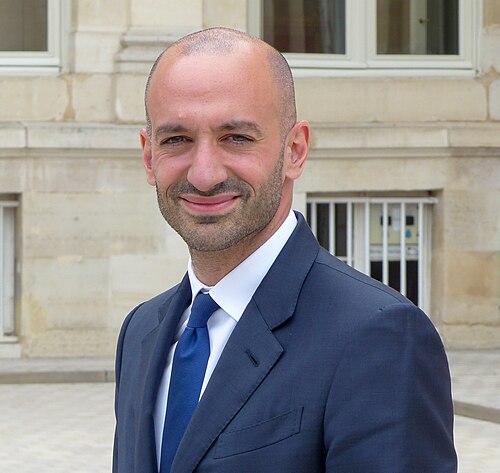 Benjamin Haddad
Transcription Whisper (large-v3), avec identification des locuteurs. À recouper avec la source d'origine.
Analyse automatique
Générée par IA — peut contenir des erreurs. Méthodologie
Chapitres
Répartition du ton (temps de parole politique)
Propositif 60 %Attaque 20 %Défensif 20 %
Questions et réponses
Taux de réponse directe : 100 % (directe = 1, partielle = 0,5, éludée = 0)
- 0:16ComplaisanteRéponse directe
Minister, really good to have you with us.
- 0:31OuverteRéponse directe
Is it now time for Europe to really get seriously involved in peace talks, including speaking to Russia?
- 1:39RelanceRéponse directe
If Russia is being weakened, isn't that an opportune moment for Europe to step in and say it's time to talk?
- 2:27OuverteRéponse directe
Doesn't it make sense for Europe to prepare for that time, including thinking of who could speak to the Russians?
- 3:08OuverteRéponse directe
How do you receive the German Chancellor's proposal on associate EU membership for Ukraine?
- 4:59RelanceRéponse directe
Does France have ideas about how a swifter integration of Ukraine could look?
Affirmations vérifiables (citations exactes)
- 0:44Invité politiqueFait
« we've seen over the last few days is one more criminal escalation from Russia against Ukraine's civilians. »
- 0:46Invité politiqueFait
« the truth is, it's also a sign of the utter failure of Russia's war of aggression against Ukraine. »
- 1:47Invité politiqueFait
« President Macron has always said that when the time is right, we should have our own channel of communication with Russia because there's no reason to let the Americans alone at the negotiation table when, first and foremost, it's the security of Europe that's at stake. »
- 2:01Invité politiqueFait
« Russia is not engaging seriously in diplomacy. It's not interested in the ceasefire and peace. It continues its escalation. »
- 3:26Invité politiqueFait
« France supports Ukraine, Moldova's EU candidacy. »
- 3:31Invité politiqueFait
« the immediate step, I would say, looking at the June European Council, is the opening of the first cluster of negotiation on fundamentals »
- 3:47Invité politiqueFait
« Ukraine and Moldova are ready to open the first cluster. So first, let's do this. »
- 3:59Invité politiqueFait
« there's no shortcut. It's a long, it's a demanding process. It's about the fight against corruption, the independence of judiciary, the protection of minorities »
- 6:33Invité politiqueFait
« we need more investment capacities for Europe to strengthen our strategic autonomy in all the key strategic areas. »
- 6:57Invité politiqueFait
« it cannot rely solely on the contribution of the member states because there's not the fiscal capacity for this, let's be honest. »
- 7:11Invité politiqueFait
« a sine qua non condition for us for the adoption of the budget is having an ambitious package of own resources. »
- 7:46Invité politiqueFait
« we also did it just a couple of months ago with the 90 billion loan to Ukraine. »
Temps de parole
- Benjamin Haddad76 %
- Présentateur23 %
≈ 7,6 interruptions / 10 min (chevauchements et interjections détectés).
Modèle mistral-small-latest · prompt v1 · les citations sont vérifiées mot pour mot dans le transcript ; le taux de réponse directe est calculé à partir des verdicts question par question. Aucun label idéologique n'est produit.
My
guest today on 12 Minutes With is France's minister-delegate for Europe, Benjamin Haddad. Minister, really good to have you with us.
Thanks for having me.
So I need to start by asking you about the situation in Ukraine. Russia is now threatening further strikes on Kyiv after we saw those horrendous attacks over the weekend with the hypersonic Oreshnik missiles.
Is
it now time, do you think, for Europe to really get seriously involved in peace talks, including speaking to Russia?
What
we've seen over the last few days is one more criminal escalation from Russia against Ukraine's civilians.
But
the truth is, it's also a sign of the utter failure of Russia's war of aggression against Ukraine.
Russia
is losing ground on the battlefield, and we see Ukraine's incredible innovation when it comes to drones, for example, on the battlefield. It's losing ground diplomatically, and it was hoping for a long time to divide Europeans, that we will weaken our resolve. We've seen exactly the opposite, and we see Russia losing ground everywhere diplomatically. You know, I was just in Armenia recently for the European political community, where we also had the EU-Armenia state visit. One more country like Moldova, like Sweden and Finland that joined NATO, that wants to get rid of Russia's tutelage and get closer to Europeans' norms and standards.
This is the reality of Russia's war of aggression against Ukraine.
If that is the case, as you say, and Russia is being weakened by Ukraine's resistance, isn't that then an opportune moment for Europe to step in and to say, it's time to talk? I know President Emmanuel Macron has previously called for this.
No, you're right. President Macron has always said that when the time is right, we should have our own channel of communication with Russia because there's no reason to let the Americans alone at the negotiation table when, first and foremost, it's the security of Europe that's at stake. Now, you have to look at the reality, which is that Russia is not engaging seriously in diplomacy. It's not interested in the ceasefire and peace. It continues its escalation. So I think the key now is to continue to provide our support to Ukraine, is to continue to increase the pressure on Russia economically.
So
just for clarity, I understand you're saying now is not the right time. And if so, doesn't it make sense for Europe, nonetheless, to be preparing for that time, including thinking of who could do this role, who has the credibility, the clout to speak to the Russians?
No,
look, I see that this debate is going on in the media and the commentary. And you're right that once again, you know, Europeans need to take matters in their own hand. And so there's no reason why we should let others negotiate on the behalf of Europeans, of the European security architecture. So Europeans should be ready also to have their own diplomatic track, as President Macron has said repeatedly. But I would say our priority now, clearly, is to continue to support Ukraine, to continue to increase the pressure on Russia.
In
the meantime, Ukraine is pushing for swift progress on its enlargement path. The German Chancellor, Friedrich Merz, has recently proposed, of course, this kind of concept of associate EU membership, participation in talks, but no real votes. How do you receive his proposal?
Well, first, look, you know, France supports Ukraine, Moldova's EU candidacy. And the next step for me, the immediate step, I would say, looking at the June European Council, is the opening of the first cluster of negotiation on fundamentals, which, as you know, has been weaponized, instrumentalized by Viktor Orban before, for electoral domestic reasons. Now that he lost the elections, I think, you know, it should be based on the own merits. And each country should advance based on its reforms on the integration of the ITQ communitaire. Ukraine and Moldova are ready to open the first cluster. So first, let's do this. And then it's important that we continue this work on the reforms.
This is why, by the way, we've always said there's no shortcut. It's a long, it's a demanding process. It's about the fight against corruption, the independence of judiciary, the protection of minorities, et cetera, et cetera. Now, with that being said, you know, France was the country initially that pushed, you know, a few years ago for a more gradual form of accession where you integrate certain blocks of policies. And I understand also the need to send a message, to send a signal to the Ukrainian population that we want Ukraine down the road to be a member, a full member of the European Union.
So we're ready to work also on how to, I would say, complete, how to perfect that gradual integration. And I think opening the debate and opening the conversation on this is positive.
But Ukraine would say this is part of our security guarantees. This is actually about securing our future. And there are active efforts from the US, for example, to broker peace talks where these kind of details will be discussed.
So
I'll ask you again, does France have any ideas right now about how this kind of swifter integration of Ukraine could look? Are you open to some of the ideas that have been floated here in Brazil?
Well,
first, a couple of points on what you mentioned in your question, because you talked about the US diplomatic track. But let's be clear, it's not up to either the US or Russia or any actor external to the EU to decide who gets a membership within the European Union. That's a negotiation, a track, a reform process of Ukraine with the Europeans. And we're there to support Ukraine. We're there to accompany Ukraine. There is no shortcut for this accession. This is precisely, by the way, why the public opinion support the enlargement process in the candidate states.
It's because they know that it's synonymous with anchoring the rule of law, anchoring liberal democracy, with ensuring checks and balance, ensuring the fight against corruption. We've always been in support of more gradual accession where you don't switch off and off the light when you get in, but you progressively integrate certain blocks of policy. And that's work that we can shape, that we can work on with Germany, with our partners, with the European Commission.
I
want to ask you about the EU's long term budget, which is under negotiation right now. And there's clearly a rift between the more frugal, let's say, states who want a smaller budget and those and an increasing number of countries who say we need more own resources and we need more joint borrowing.
Where
does France stand in the middle of this? And can you mediate between these two camps?
Look,
it's very clear when you look at the historical situation which we're in right now, that we need more investment capacities for Europe to strengthen our strategic autonomy in all the key strategic areas. When you think of defense, space, AI, quantum, green tech, this budget, you know, because when you're going to look at it through an accounting perspective, at the end of the day, it's a political and strategic conversation about the kind of Europe that we want for the next decade. In this context, yes, we need an ambitious budget. And it's true that it cannot rely solely on the contribution of the member states because there's not the fiscal capacity for this, let's be honest.
So this is why, and France has said this repeatedly, a sine qua non-condition for us for the adoption of the budget is having an ambitious package of own resources. I think what's important is own resources that they don't weigh on European companies or household more than actors that are external to Europe and protect our single market and that they don't duplicate national resources already existing. And then you mentioned common borrowing. Yes, look, you know, we did it in other critical moments for Europe. We did it, of course, during COVID with Next Generation EU for the first time.
We managed to overcome a taboo and pull together common debt to be able to invest into the recovery of our economy. But let's be honest, we also did it just a couple of months ago with the 90 billion loan to Ukraine. And once again, we borrowed on the market with safe liquid assets from the European Union. There's actually a lot of demand on markets for assets coming from the European Union, which is a reliable, trusted financial partner. And I think when you look at areas like defense, like space or like AI, where we're under investing, we're under leverage compared to the US, for example.
This is where it would make sense indeed to once again borrow on the markets and inject investment massively to support our own innovators, our own companies.
Your
president, Emmanuel Macron, has been pushing for this, of course. In February, he did say at the previous summit, which was held here in Belgium, that there needs to be a plan now to kind of revive Europe's competitiveness by June. That's really around the corner. It's next week.
So
has progress been made in terms of convincing others that euro bonds, joint borrowing is the way to go? And if not, could France move along with like minded countries, despite not having the support of the 27? And
I think when you have a core group of member states that want to move forward, that want to deepen their integration and cooperation on these issues, then, you know, at some point, we should be able to move forward and create momentum for others to join. Now on your first question, has there been a plan and a move? Yes, because the commission actually proposed a plan that's drawing on the Draghi and Letta reports called One Market, One Europe, that precisely gives, I think, an ambitious legislative agenda for the next couple of years
to
deepen a single market, whether that's on reducing our internal fragmentation with the saving investment union, the 28th regime, whether that's on simplifying our norms. And we need to accelerate the work that we've done with the different omnibuses, whether that's on investment. And we mentioned on the MFF, we need to protect our industry more. You know, let's not be naive. The Americans do it. The Chinese do it. We're facing tariffs from the US. We're facing more aggressive trade practices coming from China with subsidized overcapacities on steel, on EVs that are coming and they're having a very destructive impact on our industry.
And
that means also tougher measures against China to address these overcapacities that you mentioned?
Yes, because at the end of the day, you know, we're for trade, but we're for reciprocal trade, fair trade on a level playing field. But we can see that the time is running out. It's 10,000 jobs that are destroyed, 10,000 manufacturing industrial jobs destroyed every month in Germany because of the competition coming
from China. But do you German counterparts
see this as a serious threat? Are you confident that seeing it in the same way as you're seeing it?
Look, I think there's a realization that's coming across everywhere in Europe. For a long time, you know, we thought that it was safe to export to China. And now we see, on the contrary, that you see a technological know-how that's increasing in China with the support also of the state. And that at the end of the day, you know, we have 450 million people. We have a strong single market. There's every reason to be optimistic about the power that a single market can represent, but only if we're able to leverage it.
And we have all the tools at our disposal, whether that's safeguard clauses, whether that's tariffs, whether that's by European clauses that we can put with the industrial accelerator, for example. So now the key is not to be naive, look at what others are doing and protect ourselves as well. You know, look at the US. The US, they didn't have to wait for Trump to do the Buy America Act. They didn't have to wait for Trump to do the Inflation Reduction
Act, which is a massive- So has Europe been moving too slowly,
Minister, on this?
Yes, I
think so, because I think that we're still maybe sometimes the last evangelist of a religion that no one is practicing anymore. You know, the religion of unfettered free trade, of the WTO, which clearly China and the US have abandoned a long time ago. So, you know, the commitment to this international law, international trade law, it's important, but you have to be strong to be respected. You have to be able to defend your interests as well. And you have to be able to use all the tools that you leverage, especially to impose just very basic principles of fairness and reciprocity.
Okay. Minister Adat, thank you so much.
Thank you.
Thank you.