A conversation with Jean-Noël Barrot, French Minister Delegate for Digital affairs
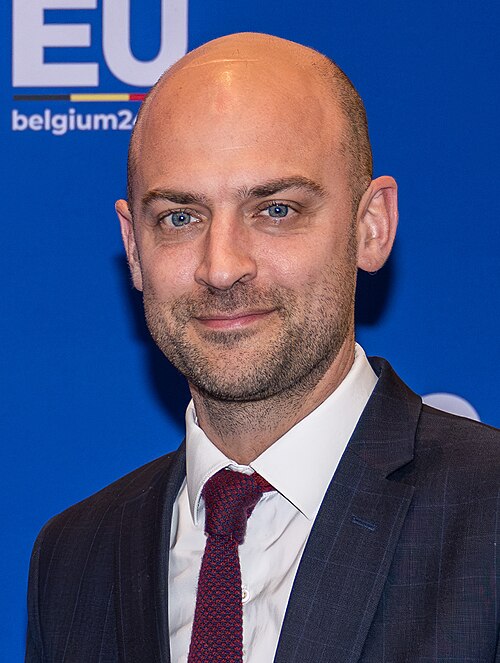 Jean-Noël Barrot
Transcription Whisper (large-v3), avec identification des locuteurs. À recouper avec la source d'origine.
Analyse automatique
Générée par IA — peut contenir des erreurs. Méthodologie
Chapitres
Répartition du ton (temps de parole politique)
Propositif 85 %Attaque 8 %Défensif 7 %
Questions et réponses
Taux de réponse directe : 95 % (directe = 1, partielle = 0,5, éludée = 0)
- 20:00OuverteRéponse directe
Question sur le Digital Markets Act et les critiques de protectionnisme américain
- 23:13OuverteRéponse directe
L'approche réglementaire est-elle la bonne pour créer un écosystème tech européen fort ?
- 25:16OuverteRéponse directe
Si vous me parlez d'IA, que me répondez-vous ?
- 25:50RelanceRéponse partielle
Quels sont les deux aspects de votre réponse ?
- 26:24OuverteRéponse directe
Pourquoi le reste de l'Europe est-il si mauvais pour les startups ?
- 28:03OuverteRéponse directe
Que s'est-il passé lors du scandale FTX l'année dernière ?
Affirmations vérifiables (citations exactes)
- 47:37Invité politiqueChiffre
« we decided to hire 4,000 digital counselors that were paid by the government »
- 50:29Invité politiqueChiffre
« there are two million children that are exposed each month to pornographic content »
- 50:36Invité politiqueFait
« at 12 years old »
Temps de parole
- Jean-Noël Barrot78 %
- ?12 %
- Présentateur3 %
- Locuteur 53 %
- Locuteur 22 %
≈ 77,5 interruptions / 10 min (chevauchements et interjections détectés).
Modèle mistral-small-latest · prompt v1 · les citations sont vérifiées mot pour mot dans le transcript ; le taux de réponse directe est calculé à partir des verdicts question par question. Aucun label idéologique n'est produit.
Bonsoir, Monsieur le Ministre, dear Jean-Noël.
So
I'm very pleased to welcome you at the School of Public Affairs for this masterclass.
And
I'm very pleased that you accepted to discuss the digital agenda with our students. In a sense, I'm not very surprised you accepted our invitation, because there are four good reasons to accept our invitation. You're obviously the best place to discuss this issue, as the Minister in Charge of Digital Affairs. Second is that you're here at home, in the sense that you're a professor of the university and in front of international students. A third reason is that you're a friend of the School of Public Affairs. You're part of the committee, the strategic committee of the School of Public Affairs. And fourth, we're friends. So there are four good reasons for you to accept.
Still, I'm super thankful that you accepted our invitation. So the masterclass is going to blend two dimensions, the European dimension and the digital dimension. And in fact, there are students coming from two policy streams here, the Master in European Affairs and the Digital Affairs. So we're going to blend these two dimensions. Last point
is
that I'm also very pleased to welcome and introduce Valérie Peugeot,
who
is going to moderate the discussion with the students. And Valérie is the new scientific advisor for this policy stream on digital affairs and public policy. So thank you again, Jean-Noël. And Valérie, the floor is yours for a short introduction.
It
will be very, very short as we run
late.
So, dear Mr. Barraud, Mr. Minister, I would like also to thank you really warmly for being with us tonight. Just to introduce who is in front of you. All the students here are a member of the School of Public Affairs. Some are specialized in public policies, those European affairs. And we have a group of students, those who are sitting in front of you, who have taken a specialization in digital issues. And they will be interacting with you when we all have questions and answers later on. So I had a little introduction that I will skip. And I just give you the floor straight away. Thank you, Mr. Minister.
Thank
you, Philippe. Thank you, Valérie. Thank you, all of you, for being here and inviting me.
Sorry
for being late.
I'm
very happy to discuss with you topics around the EU digital agenda and how France looks at it. For a long time, in the digital
area,
as in other areas, what has happened in Europe is that there was a single principle that was enormously frustrating.
This
single principle was the country of origin principle. Sorry to start with this technical thing, but I'm sure you're technical people. But it's very important to understand that. It was said by the e-commerce directive of 2000. And it basically says that any member state
that
would like to impose some rules on services that are provided by a company that is established in another member state
cannot
do so
unless
the country where the company is located also imposes the same rules.
This
has generated enormous frustration. Why? Because this has led
to
regulatory dumping.
You
remember fiscal dumping with a number of companies locating in Ireland, locating in Luxembourg to benefit from better fiscal conditions.
As
you probably know, we've just put an end to that with a minimum corporate income tax of 15% that is actually going to be implemented in French fiscal law as the budget law was presented this morning by my boss, the Ministry of Economics and Finance.
So
everybody has in mind the fiscal dumping. Fewer have in mind the regulatory dumping, which led a number of big tech companies to establish presence in countries where,
you
know, the regulation was likely to be softer, like Ireland, for instance. And then enormous democratic frustration
because
we use those services
in
our daily lives. We complain every day about their monopolistic nature, about the fact that social networks bear no responsibilities, and so on and so forth.
But
we have no say because these guys are located
outside
of
France, and
therefore we cannot impose rules on them based on the country of origin principles.
And
we just put an end
to
this for a wide array of services after five years of hard work
and
the political impulse of France.
we've
put an end to this principle
by
establishing common rules in a number of digital domains.
And
this is great because we're finally going to be,
or
we have finally succeeded in setting, you know, demanding rules that big tech need to abide by. And I'm going to give you examples. But I wanted to start with this idea that for 20 years people have been super frustrated in France in particular
about
the fact that they could not do anything about big tech.
And
that thanks to the current commission, the current parliament, and thanks to France in particular that chaired the EU last year,
we've
been able to pass a number of regulations that unify
the
digital market in a number of areas,
and
therefore raises
the
level of rules that big tech have to comply with.
I'm
not saying that France was successful in raising the bar as high as we would have liked.
But
obviously, the bar is now much higher than it used to be when they were all settled in Ireland
with
a bar that was relatively low.
Let
me give you two examples of how we've been able, at the European level, thanks to France's and President Macron's commitment to make things change, and how we've been able to impose a higher bar.
One
is about
fair
competition.
One
thing that everybody complained about was that big tech
have
or implement sort of unfair commercial practices to establish their domination on certain markets.
Let
me give you two examples.
One
is that when you buy your iPhone or your Google phone,
you're
going to have a browser,
a
personal assistant that is going to be pre-installed.
So
good luck if you're the developer of a European browser
or
a European personal assistant
when
any EU citizen that buys an iPhone or a Google phone has these things already pre-installed.
It's
impossible.
Another
example
is
self-preference.
Well,
the most commonly used browser tends to show when you or not the browser, sorry, the search engine. The most commonly used search engine tends to favor when you look for a video, for instance, videos that come out of their sort of their other companies or the companies that they are linked to.
I
hope you're following me.
The
most well-known browser starts with a G and has a video service that is linked through the same corporate group that starts with a Y.
But
when you're the French video platform that starts with a D, then people have to scroll down to the last pages of the search before they find the same video coming from a company that is not linked
to
the search engine's company. This is self-preference. I'm going to move up results from my own companies and move down results from competing companies.
So
these are practices that were already illegal in Europe.
But
the thing is
that
the way they were treated is that competition authorities would investigate those matters. It would take years
and
then years down the road competition authorities would sanction
the
companies
but
the European companies that were trying to compete and that sued in the first place were already dead
a
couple of years down the road.
And
so what we did
is
set up an act, a legislation, a European legislation that's called the Digital Markets Act
that
lists 26 unfair commercial practices
and
that says
these
were already illegal
but
now we won't wait for competition authorities to investigate and see whether or not those practices happen. We're going to forbid those 26 practices ex ante
and
this is going to make a huge difference.
And
so next year
if
we convene again
then
those of you who will have bought or recently bought a smartphone
will
have had the choice of their browser of their search engine of their personal assistant.
Those
of you who value the French video service that starts with a D will not have to scroll down for pages and pages before they find the video.
You
will be able
to
chat with your friends that use a messaging service that starts with a W
without
having to download this messaging service.
So
let me say it in maybe for those that have already lost. You will be able to communicate with people that are on WhatsApp
without
having to download WhatsApp.
And
the list goes on for 24 other practices
that
used to be implemented by those big tech to establish domination markets and that will now be forbidden and of course there are sanctions associated to violation of these new rules
and
the EU commission will be able to charge up to 10% of global turnover or global sales
in
fines the first time around and 20% of global sales in case a digital company breaches those new regulations for a second time around.
So
that's a very important thing and even for those of you who are studying or are going to study competition law this is a revolution. It's the first time in history
that
competition is going to be enforced ex ante
rather
than exposed through investigations by competition authorities. The only domain where there was competition policy applying ex ante was the control of merger and acquisitions but that was the only case where competition authorities would look at things before they happen. Now the EU commission will look at things before they happen.
So
one frustration that goes away. Another frustration
and
I was the reason why I'm late is because I was the prime minister detailing our plan against cyber bullying and bullying in schools.
One
thing that was super frustrating over the past 20 years is that we've seen those big platforms take no responsibilities for the contents that were stored on their services.
And
the reason for that is that we set up the rules this way. Okay? We we assume at the beginning of the internet that when there were going to be platforms the platforms had nothing to do with the legal or illegal nature of messages that were sent through those platforms or products that were sold through those platforms. It was the responsibility of the person who sends the message
or
the person who sells the illegal product.
But
of course 20 years later this does not hold any longer. Everyone here knows that TikTok, Facebook, Instagram play a role in the way we see the messages.
And
everyone assumes
that
Amazon should have a responsibility when there are illegal products that are sold on the platforms.
And
so there was huge frustration because all those companies are located in a country that was not bothered by these questions. Okay? And so here again
the
commission, the parliament, and France pushed very hard to take another piece of legislation, the Digital Services Act
that
completely changes the situation. And that creates new obligations that
have
come into place
on
25th of August of this year
for
these big platforms. they are not going to be considered as traditional media editors. You know, media editors as a director of the publication and if there is something illegal coming out of the publication the director of the publication can be held legally responsible. So we are not going as far as that.
But
what we are saying is that those platforms they have to have in place signaling processes so that users can easily signal something that they see and that is illicit.
They
have to moderate these contents. When they see illegal content they need to signal it to local authorities.
They'll
have to share their data with researchers. They'll have to audit their algorithms. They'll have to provide an algorithm that is not based on your personal data and this is actually already in place. If you look at LinkedIn, if you look at Instagram, if you look you can now choose an algorithm that is going to push content to you that is not based on your personal data.
But
most importantly and here lies the revolution associated with this digital service act,
they
will have to analyze and correct
the
systemic risk
that
their services cause on people's health.
And
here we think obviously
of
the case of youth and children and early exposure to social networks and inappropriate content.
The
harm they cause on information and therefore the fight or the actions that they need to take to avoid this information on their platform.
And
the harm that they can cause on public safety.
And
here again, I was mentioning earlier sort of the revolution in terms of competition policy that is implemented by this EU regulation. Here, it is a revolution in terms of the liability of those big platforms. But it because it will not be only about illegal messages.
It
will be about how the service in itself can cause harm to public health, to public security, or to public speech.
Now,
of course, it will be up to the EU commission to investigate whether or not the platforms comply with these new rules.
The
EU commission will have the power to charge fines up to 6% of global sales.
That's
300 million euros for Twitter, 600 million euros for TikTok.
And
if those platforms breach the rules once again,
the
commission,
it's
a tricky procedure, but the commission has more or less the right to ban those platforms from the EU.
So
that's another important dimension of what
Europe
and France have achieved over the past five years.
I'm
not going to go any longer. I'm sure we'll talk about AI and stuff, but I wanted to mention those two pieces of legislation. I would like to finish with one word.
I
said earlier that if France
pushed
so hard for these two legislations to emerge,
it
was to put an end to this democratic frustration
caused by
the country of origin principle.
But
there is also another reason,
which
is a more positive reason, why it's important to take such regulations in Europe. It's not only to deal with big tech that are not, in their huge majority, not Europeans. It's also to provide our own digital companies with a single digital market. Because the way we look at regulation, at least in France, the current government and the current president,
is
not a way to mitigate risk or to over protect our citizens.
We
believe that innovation goes hand-in-hand with regulation, because innovation cannot happen
in
small fragmented national markets. Innovation can only happen when the European market is unified.
And
when we take those regulations on competition, on social platforms, and maybe we'll talk about what we're doing now on AI,
we're
also setting unified playground
for
European startups, and that's the best thing we can do to help them grow and then compete with the big tech giants coming from outside the US.
Thank
you very much.
Thank
you very much, Mr. Minister. So I will ask the students here to start with their questions. I think they have prepared quite a lot of questions, so there are many of them, so please
go
ahead.
Thank
you very much for everything you've said. It was indeed very interesting. So my first question is going
to
be about the Digital Markets Act, and when deliberating on this, American politicians and American experts were very dissatisfied that this piece of legislation actually targets only
non
-European countries, and
they
accused this of having a protectionist bias. So my question is, do you think we'll see more transatlantic clashes in regulating digital affairs,
and
how the elections in the US and in the European Parliament might affect this policy domain?
Well,
the American elections will have no effect on the DMA. We are the largest market in the world. We are the largest Western democracy. We don't take orders from the US. Now, it's true that there is a threshold
above
which digital companies are going to be subject to the Digital Markets Act. And hopefully, someday, I mean, there is at least Zalando, that is, Zalando is a European company that is subject to?
No,
it's not.
To
the DSA?
To the DSA.
So far, no European company is subject to the DMA, but hopefully it will come.
Now,
it's interesting that you would say that, you know, this thing with protectionism.
Because,
of course, on the European scene, French political leaders are seen, you know, whichever is their political background, as super protectionists. And sometimes, we make propositions and we fail to convince other member states
who
are not on the same line as we are, who have different relationships than we have with non-European countries and superpowers.
But
what's very interesting with the DMA, and with the Data Act, which is a regulation that is now being discussed, and that applies the same principle of ex-sante enforcement of competition in the cloud sector, that is hugely concentrated in the hands of three major players,
is
that
member
states in Europe, a lot of member states are always very suspicious when it comes to protectionism,
and
I respect that, of course.
But
when you tell them it's not about protectionism,
it's
about competition, then everyone agrees. Because competition is deeply rooted in the DNA of the European Union.
The
founding act of the EU, the European Community for Steel and Coal, was basically based on a level playing field for German and French companies. So at the very root of the EU is fair competition.
And
so when you bring competition to the table, you find consensus across member states, even those that are
typically
very hostile to any sort of protectionist measure.
Mr. Minister, thank you for coming.
I
think a lot of what you said touches on my question, but you mentioned notably how the EU is looking to tackle the topic of competition, about self preference, about basically helping European businesses compete with American ones or ones from other parts of
the
world.
My
question for you is I wonder if that approach
that
is very regulation-led
is
the right approach to create a strong European tech ecosystem. I mean I look at Europe,
we
have potentially good companies, we have a lot of startups, you mentioned Daily Motion, they came around the same time as YouTube, there is European tech talent, but I wonder if this tendency of policy makers such as yourself to maybe focus on regulation before putting in place the right conditions for increased financing or enabling companies to just grow
in
the same path or same way that American companies do, if that's the best way to move forward considering how Europe has fallen behind on that topic and how these regulatory answers that you're providing on some level are responding to
trends
that are being imposed on them by American companies. Shouldn't Europe be the one imposing its companies on other
regions? So
it's a very valid question and in fact
when
we regulate with the DMA and the DSA we are doing this in a defensive mode rather than an offensive mode because we don't own the technology.
So
it really depends, you know,
on
what topic you're going to ask your question. Ask me about AI. I will tell you that our priority is to own the technology and by the way there was a very two very important announcements today about AI and France. One is the acquisition of major computing resources by a French company and the second one was the the release of a French grown model large language model that is better than any of its peers.
So
if you ask me about AI, I will tell you that privacy, property rights, extreme risk, disinformation and so on, all this
I
don't want to
care
about until I own the technology because I want to regulate in an offensive position. When I own the technology, I set the standard. If I don't own the technology,
I'm
going to be subject to the standard that's going to be imposed just like you said by giants and I'm going to regulate you know, like a loser basically.
Now, in
terms of,
so
that's the first answer to your question. the second answer is again,
innovation
and regulation go or can go hand in hand in Europe
because
startups in Europe, when you ask them why don't you grow as fast as, you know, the US, so they will say, you know, the classic stuff, the money and so on, but you know, a lot of them will tell you I have to leave to the US or to other regions of the world because I started in France and expanding in
and
the rest of Europe is horrible because there are legislations that are very different in one country in every country and so
I'm
not saying that, you know, unifying the digital markets will be enough but we should unify all markets but unifying digital markets for digital companies or digitally oriented companies is a way to stimulate innovation and you know, and that's counterintuitive because often one sees regulation as detrimental to innovation but I believe and we've seen that, we've seen that very clearly for cryptoassets for instance. Cryptoassets, they were not regulated in the US
but
in Europe we adopted a legislation, so cryptoassets are not very popular these days but still. Five years ago France
and
I was the rapporteur of this legislation, France decided to create a legislation for platforms, you know, cryptoassets platforms.
And
we tried at the time to strike the right balance between enough flexibility to facilitate innovation, make France a sweet spot for those who want to develop such activities but also enough protections against addictions, against exposure of minors, against, you know, money laundering, terrorist financing and so on.
And
it turns out we struck the right balance because Europe,
the
EU, based their unified regulation on our regulation. But I don't want to talk about France, I want to talk about the EU. When the FTX scandal happened last year, some of you remember, it was a big scandal involving cryptoassets. Everybody panicked in the US
and
because in Europe we had a unified framework, a number, a large number of leading players in the field, they moved significant sort of chunks of their operations in Europe, in particular in France because France had been at the origin of this European framework.
And
so when you create
through
regulation a unified framework, you become more, you become more attractive market. And the third answer to your question about competition.
So
here again, there is a little bit of a tension.
In
France, politicians, they typically say, I'm tired with this competition policy in Europe that does not allow us to have big mergers, to have big players, and so on. Okay?
Well,
the academic research is not going to confirm such an insight. Competition can in many ways be favorable to innovation. It can lower prices, but also stimulate innovation.
But
people in France, you'll have a hard time to convince them that the Brussels competition policy is good. Until now,
why? Because
when competition policy is not turned against French players, but turned against the big tech, then it becomes a way to open up markets, I'm thinking about the cloud market, that are completely closed
to
new players, newcomers. Why? Because cloud companies,
they
will heavily subsidize a new customer, they will prevent a new customer firm, they will prevent the customer firm from having several cloud providers, and when the customer firm wants to change cloud provider, they will charge enormous fees.
So
of course, there are three dominant players in the field, and it's almost impossible in Europe for a French or European company to enter in this market.
So
when we are going to apply competition policy exante, when we are going to forbid
the
fines that they charge when you want to switch to another provider, when we are going to impose that there is interoperability that you as a firm can have several providers.
And
when we are going to regulate those heavy subsidies that they provide to their customer firms,
it's
going to open up the market for French and European players.
already
mentioned that you could elaborate a little bit on that.
And
what do you see as the major priorities that the EU should focus in the future in terms of digital policies? And do you have any specific policies, digital policies in mind that the
France would like to
promote
on an EU level? for
sure.
So
the AI Act,
another
example of how regulation can stimulate innovation and investment,
which
again is kind of counterintuitive. You've probably heard like, I'm no AI specialist of course, but you've probably heard like me a number of debates about autonomous vehicles.
And
the fact that at some point it was becoming very tricky because when the autonomous vehicle, the autonomous car shoots a person walking in the street, who's going to pay?
Who's
going to be responsible?
And
this is a very tricky
question
to solve.
And
until it is solved, it generates huge uncertainty for those who want to innovate in the field.
Am
I really going to invest and innovate in this field
if
there is huge uncertainty about the liabilities in case things turn wrong?
And
it's true for autonomous cars.
It's
true for those who develop medical devices based on AI and stuff like that. It's true for a number of activities.
And
so here what the regulator can do
is
clarify the liabilities. And by clarifying the liabilities, then you dispel the uncertainty and you generate interest for innovation and investment.
And
that's the initial purpose of the AI Act.
The
AI Act says one simple thing. We should regulate or we should impose some
audits
and disclosure requirements on the developers of AI systems,
depending
on what are the use cases of those AI systems, depending on what those
AI
systems will be used for.
and
so the AI Act is just a list
of
use cases for which
AI
systems are forbidden. Social scoring,
global
surveillance,
and
so on. Then a list of activities that are considered as high-risk use cases
for
which the incorporation of AI systems is subject to relatively substantial audits and transparency requirements. Examples is mobility or health because, of course, there are human lives at stake.
And
so if you want the liabilities to be well established,
the
person who develops the AI model that is then included in the manufacturing of the car that eventually shoots the person walking in the street should
audit and
be transparent about its AI system so that the liabilities can be split. And then there
are
less risky or no-risk use cases
such
as leisure, video games, and so on, for which the developers of the AI systems that are associated with these things are not subject to any sort of disclosure or transparency requirements. And France pushed a lot to
keep
this thing technology neutral, risk-based. It really depends on the risk downstream.
And
France also pushed so that we have sandboxes, namely, for young companies, small companies, the ability to develop AI systems, AI models, without having to do the audit and disclosure part too soon. Otherwise, it's too heavy to bear for a startup company.
Perfect. So
the commission, the EU commission, published its legislation.
The
council, so the governments, they basically agreed with most of what was inside.
And
in December of last year, we voted, I was there, we voted on a general approach, meaning the position of the council. It was relatively close to the position of the commission.
And
then the legislation went to the parliament, to the EU parliament.
And
it arrived on the desk of MPs
at
the same time when something else arrived on the same desk of the same MPs,
and
this something else is called chat GPT.
And
so those MPs, they had exactly the same reaction as I would have had
as
an MP, which is, this thing is super risky, it's completely crazy, we need to regulate as fast as we can. Oh, and we have an AI act that's coming to parliament, well, let's regulate it
using
the AI act.
And
so what did the EU, the MPs do? They said, so we have this thing that is technology neutral, that is really based on the risk
of
the use case for which AI is used, whichever, you know, whichever category of AI model
is
used. It doesn't really depend. And they said, let's impose on the developers of large language models, of foundational models, of generative AI models,
the
same heavy disclosure and audit requirements
that
we were, that the the act imposes on AI system developers when they are used for high risk use cases.
So
if you develop a generative AI model
for
video games, I don't care, I'm still going to impose on you the disclosure and transparency requirements.
And
I disagree with that. And we disagree with that. And we are going to push as hard as we can
for
this addition to the
AI
act coming from the parliament to get out of this legislation. Why?
Well,
for the reason I mentioned earlier.
My
first reaction when I saw chat GPT was to say this is very risky, very crazy, and so on.
But
if we want to regulate smartly
generative
AI,
we
need to own generative AI.
So
anything that comes in the way of France and Europe owning this technology,
I
will
do
everything I can to get it out of the way.
And
there is now a piece of this legislation that is now in the hands of the trilogues, the negotiation between the council, the EU parliament, and the EU commission.
And
the only thing that I will say
when
we next meet is that I want this piece of the legislation gotten rid of. And we'll go back to regulation when we own the technology.
If
I may ask, can you elaborate a little bit on what you mean when you say we have to own the technology? How are you going to own the generative AI?
Well, France
is very well positioned
to
be a leading country in the generative AI revolution.
For one
main reason, there are other reasons, but for one main reason is that
we
have the greatest talents in the field. Most of the leaders in the labs, including of big tech companies on the AI labs of the largest big tech companies are French.
And
what we've seen over the past couple of months is that these French people that were trained in our top universities
but
that were then hired by the big tech companies. These people are leaving
the
big tech AI labs
to
create their companies in France.
I
mentioned
a
few minutes ago that we had two major news
this
week because I think one was today the other one was yesterday
and
this is very promising. We also have even more promising signals
one
of which is that the founder of GitHub
GitHub
is the library of code
that
any developer in the world uses.
Well,
the founder of GitHub is creating its own generative AI company. This company is called Poolside.
This
company raised 126 million euros even before it was actually incorporated
and
this company was incorporated
in
France.
So
the founder of GitHub
who
is between the US and Canada decided to come to France
to
launch his generative AI company with enormous ambitions of course.
You
know, given the
breadth
of GitHub. So
what
we really want to achieve is to have leaders in, you know, of course, not only in the field of LLM developers
and
we have at least
with,
if I include poolside we now have at least three or four companies
that
are direct rivals to OpenAI. And
I
should also mention that when Sam Altman was in Paris, he tried to,
let
me not say discourage, but he tried to hire
those
French guys companies that were setting their own generative AI business for wages
that
I'm ashamed to share with you. So there is this that's happening, but it's not only this. Then, you know, generative AI, it's those that develop the models, but then those that do the inference, those that provide the computing power, and so on, and so forth. and we need to have an ecosystem where we are free, we are independent, we, not that every piece of every GPU is built in Europe, no, but that we own the technology, we own large language models, we have our own, or we have French or European based
large
language models.
It's
very important for a variety of reasons, for sovereignty, for independence, for what that's what I was saying, but also because since these models are going to play an important role in many dimensions of our lives,
for
companies, for administrations, and so on,
it's
unthinkable
to
have or to implement models that would be trained on the Anglo-Saxon cultural patrimony and language. We need models
that
are trained based on the French heritage, both in terms of language and culture.
I
think there's another question here. Thank you, Mr. Minister. I have a question about digital inclusion faced with the increasing digitalization of administrative services as well as private ones. What is France and Europe's strategy to ensure that those photos from the digital world are not feeling excluded and that it doesn't generate even more inequalities?
So
that's a very good question. Let me maybe share with you some numbers on the digital divide in France. One third of French citizens are, how can I translate that in English, éloignés du numeric. so let's say that half of the French citizens are digitally enabled or digitally impaired,
either
because they are not connected to the internet, either because they don't feel competent in using more. This is, and all the numbers I'm going to share are based on a very detailed report that was published by the Credoc, that I asked to the Credoc and I was published earlier this year.
And
that I confirm myself because as a colleague of Philippe Martin, I like to run regressions myself. So I obtained some data on another sample and I confirmed the results I'm going to share with you.
So
30% of people are digitally impaired.
This
is not a generational fact.
There
are digitally impaired people
at
every age of the life
cycle,
whatever. This is a social fact
because
blue colors are overrepresented among the digitally impaired
as
well as those with low levels of education as well as those with more modest income
as
well as those that live in small rural areas rather than the Parisian hypercenter.
Most
importantly,
and
pay attention to what I'm I'm going to say because I'm happy to hear students at Sciences Po care about digital divide, but you should care about digital divide
because
those
30
% or this third of French citizens that are digitally impaired do not vote any longer.
The
abstention rate
or
the abstention rate of the digitally impaired is much higher
than
the abstention rate of those that are digitally competent. So it's not a generational fact. It's not that all people don't know how to go on the internet.
It's
something that is converging
with
social divide
and
that requires an answer.
So
far
I
think we've done more harm than good.
I
think that when we've digitalized public services
we've
been guilty of digging the digital divide further
and
we have no excuse
because
in other countries of the world
digital
infrastructure, digitalization of public services have led to more inclusion
rather
than more exclusion.
Take
India for instance and if you're interested in you know digital democracy and digital inclusion you should know
about
the ADAR initiative in India. India because there was very strong political will has created
two and
soon to be three sets of public infrastructure for digital identity
for
payments and the third one I don't remember
but
for digital identity and for payments those public digital infrastructure that were forced upon
everyone
there was huge political will by Modi and so on
they
allowed hundreds of millions of Indian citizens to access public services as well as commercial services
when
they were until then completely prevented from accessing those services because they had no
ID
because they had no payment means
so
what I'm saying here is that we've as you know as the administration in France but in all other Western G7 countries
have
done a lot of harm
because
they had a lot of bureaucracy it was already very complicated
to
pay or to do stuff to do what you have to do with the administration with pen and paper
but
then the only thing we've done is to digitalize bureaucracy
and
this has become even more difficult for a number of our citizens
and
we need to correct that so the first thing we've done was 2021 during the stimulus plan where we decided to hire 4,000 digital counselors that were paid by the government and that were sent
with
municipalities with associations with agricultural chambers and so on to help people deal with digital skills
and
that's good and now we're sort of furthering this initiative by setting up local governance of the digital inclusion policy so that in every area in the country there is one
person
one you know yes there is not one person but one institution that leads this digital inclusion policy and coordinates the efforts that many people today are doing to fight against digital device so that's good but then
it
will not be enough
and
I have great hopes that the generative AI revolution can help us sort of catch up
on
what we've
not
succeeded in doing with the digitalization of public services
my
vision
even
though it's not up to my ministry to achieve that my vision is that in some years from now when we have our own models that are robust and so on when we have put the regulation and so on
anyone
can be able to access their rights and public services with the simple instrument that everyone knows how to play
your
language
this
will require political will because we'll have to streamline
the
bureaucracy in order for people to communicate and to access their rights only with their language
but
I think we can catch up on India on Ukraine on Estonia that are much ahead of us in terms of bridging the digital divide with technology
Thank
you very much I think we have to stop here I'm afraid because some people are waiting for the room
so
it was a pleasure I'm sure there are many other
No I cannot let you go
before
I answer question I think which was or maybe one previous question which is what's most important in terms of the EU agenda for the digital
and
I tell all of you and I invite you to join our efforts which is the protection of children online
this
is our big fight
this
is the president's fight this is my personal fight
in
France we have what 70 million people living in our country there are two million children that are exposed each month to pornographic content
at
12 years old
half of
young boys are exposed each month in my country in our country to pornographic content with enormous consequences on their health on their affective development and so on so we're taking legislation I'm actually going to go to parliament next week it's going to be an intense fight
but
even if I pass the legislation in France I will be fought against by
the
majors of the pornographic industry and so
at
the same time that I'm passing legislation in France I'm trying to convince
my
colleagues from other EU member states
to
follow my lead so that when the pornographic giants go to the European courts to fight against those new rules that we want to impose on them
that
France is not alone but that as many countries as possible in Europe join forces with us so if you're from other EU member states please tell your government to join forces with me
thank you
very much
I
feel really sorry because I'm sure that many of you had questions in their head but we have to leave the room now thank you again Mr Minister it was a great
interaction