Is America Back To America First? - Briefing with Benjamin Haddad
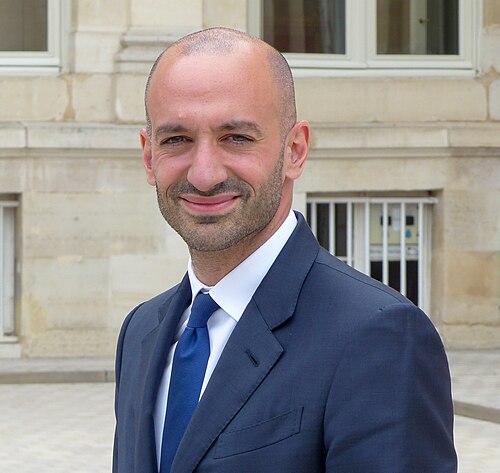 Benjamin Haddad
Transcription Whisper (large-v3), avec identification des locuteurs. À recouper avec la source d'origine.
Analyse automatique
Générée par IA — peut contenir des erreurs. Méthodologie
Chapitres
Répartition du ton (temps de parole politique)
Propositif 75 %Attaque 10 %Défensif 15 %
Questions et réponses
Taux de réponse directe : 100 % (directe = 1, partielle = 0,5, éludée = 0)
- 2:03OuverteRéponse directe
Is America truly back, especially from the point of view of Europeans as well?
- 18:40OuverteRéponse directe
Comment évaluer la notion de "stratégie européenne" ?
Affirmations vérifiables (citations exactes)
- 4:11Invité politiqueFait
« One of the few areas of bipartisan consensus in Washington is the primacy of the strategic competition with China. »
- 4:47Invité politiqueFait
« I think this agreement is, in many respects, a strategic win for the Biden administration. »
- 8:08Invité politiqueFait
« He's very explicit about the fact that the United States will only intervene to defend what he calls the vital national interest of the United States. »
- 8:49Invité politiqueFait
« Would that cover tomorrow a crisis in the Western Balkans like we had in the 1990s when the United States had to intervene to stop genocide in Bosnia on European soil? »
- 13:57Invité politiqueFait
« The fact that we're almost a year into this administration and we still don't have a U.S. ambassador to Paris, Berlin, London, to Warsaw, to the European Union or NATO. »
- 15:04Invité politiqueFait
« I am relieved to see that after some hesitation, the administration has decided to embrace and build upon the Abraham Accord. »
- 17:03Invité politiqueFait
« Iran has pushed forward on nuclear enrichment and it's now increased concern in the Middle East or in the United States that Iran is very close to become a threshold nation. »
- 22:07Invité politiqueFait
« I think it's urgent that Europeans step up more for a long time. »
Temps de parole
- Benjamin Haddad85 %
- Présentateur12 %
- ?3 %
≈ 21,2 interruptions / 10 min (chevauchements et interjections détectés).
Modèle mistral-small-latest · prompt v1 · les citations sont vérifiées mot pour mot dans le transcript ; le taux de réponse directe est calculé à partir des verdicts question par question. Aucun label idéologique n'est produit.
Le
plaisir d'introduire à vous aujourd'hui Benjamin Haddad, qui est un ami ami et collègue. Il est le senior directeur de l'Europe Centre de l'Atlantic Council, qui est en D.C. Il est un expert en politique européenne et transatlantique relations. Et avant d
'écrire
à l'Atlantic Council, il était un collègue à l'Hudson Institute,
qui est
en D.C. Il a passé beaucoup de années en Amérique, mais il est en français, donc
il
est l'embodiment des relations transatlantique. Il a
été
très part de notre famille depuis longtemps.
Il
était
aussi
très engagé avec l'Alnet en France, quand il était en Paris.
Et
quand il était à l'Atlantic Council, il était en train d'être avec moi. Nous avons créé l'U.S.-E.S.-E
.S.-E
.S.-E
.R
.E
.L
.E.
qui
est toujours en train et un grand succès. Donc, merci beaucoup pour ça. Et je pense que tout
le
monde doit savoir que vous avez joué un grand rôle dans le cadre de
l'amélioration
et de l'amélioration. de l'amélioration. It's a question that many people have been asking, considering recent events since President Joe Biden took office. We've seen, you know, the U.S. withdrawal from Afghanistan.
We've
also seen the submarine deal that the U.S. closed with Australia and the U.K., very much to the discontent of the French. And I'm sure Ben can tell us all about that because he's been following that really closely. So I wanted to ask you, Ben, let's start with the main question. Is America truly back, especially from the point of view of Europeans as well?
Well,
thanks, Vascolyne. And thanks, everyone, for tuning in. It's always great to be able to talk to LNets, to see some friends like Larry and others. I'm a big fan of the organization, Vascolyne, as you mentioned, and I think it's been tremendously impactful in changing the narrative on Israel and Europe. I've seen it very closely in France. And I think, you know, the work that the organization does in reaching out to policymakers, bringing parliamentarians, I've always thought that was very, very critical to Israel, has been incredibly impactful.
And now that we're traveling again, I'm actually hosting myself a bunch of delegations of MEP, so I'll leave afterwards for lunch here in Washington at the Atlantic Council
for
the delegation from Europe Entolument. Look, it's a really interesting question. And I'm among those who have been critical of the Biden administration using this discourse of America's back because they think it's been creating undue expectations, both in Europe, but also elsewhere, that we were really going to sort of turn the page radically of the Trump administration. And I think what we're seeing right now is actually a lot of continuities with some of Trump's policies, of course, with a very different narrative and discourse, sometimes for bad, sometimes for good. I'll go into more detail.
But I think especially Europeans are realizing that maybe some of the things that they attributed to Trump's personality, because they focus so much on specific rhetoric, discourse and scandals, tweets, were actually part of a broader shift
in
US foreign policy, much more structural, that started before President Trump, and that continues after him. And I'll talk a few about a few of the aspects of this.
One
of this is, of course, one of the few areas of bipartisan consensus in Washington is the primacy of the strategic competition with China. And you see this clearly in the AUKUS deal, the nuclear submarine deal that the United States concluded with Australia and the United Kingdom, mostly with Australia reinforcing the US strategic presence in the Indo-Pacific that was done at the expense of the existing contract between France and Australia, we can go into more details. I think this agreement is, in many respects, I
think this agreement is, in many respects, a
strategic win for the Biden administration, I do think it could have done in a much better way to forewarn the French or maybe include them in a new arrangement.
We see this agreement.
We see this, of course, with some of the priorities of the administration and the relationship with the European Union, the creation of the Transatlantic Tech and Trade Council, which is this structure for dialogue to shape common norms and standards on both sides of the Atlantic, on supply chains, on AI, on microchips, on data privacy, all to sort of build a common front with Europeans to face China. So this is really, I think, something that we've seen already with
the
Trump administration all the way started from the pivot to Asia that was announced
by
the Obama administration. The Obama administration announced it but couldn't really implement it because it's caught back
to
both the Middle East with the rise of ISIS in Syria and Iraq in 2015, 2016.
And,
of course, the aggression against Ukraine by Russia, which led to the US to send back some troops in Central Europe, but you could see the intent was already there. You had this, of course, with the Trump administration, but I think President Trump was seeing this with a more narrow focus, very focused on the trade numbers with China, which led to the phase one trade agreement with China. Now, I think the Biden administration has a more global approach, which includes technology, which includes trade, which includes working with allies, mostly in Asia, but also with the creation of the Quad, for example, but also in Europe.
That's the first line of continuity that we see, I think, between both administrations. The second line is a consequence of this one. It's a pivot away from Europe and also the greater Middle East and also I think a really a very low appetite in the United States that you see on both the left and the right to intervene militarily in areas around Europe that could have security consequences for Europe. And I think you see this with the withdrawal from Afghanistan, which has shocked many Europeans and I would say beyond Europe. I was in the Middle East recently in the Gulf and I heard the same kind of criticism for both the withdrawal and the way it was implemented.
I think it's been surprising for a lot of people. What's been particularly shocking for policymakers, especially in Germany and the United Kingdom, where both countries still had troops in Afghanistan, was also how little consultation there was with Washington, especially the modalities and the timeline of the withdrawal. And I think Europeans have felt quite powerless to influence, especially the timeline in Washington. But what's really interesting when you listen to
President
Biden's speech after the Afghanistan withdrawal, and I really think for those of you who haven't listened to it, it's worth listening to it. I think it's a very
explicit
sort of doctrine speech of foreign policy. First,
he
calls the Afghanistan withdrawal an extraordinary success, which, you know, for those of us who have watched could be led to question that. But beyond that,
I
think it's really interesting. He's very explicit about the fact that the United States will only intervene to defend what he calls the vital national interest of the United States. It's a completely legitimate statement for an American president to make, of course. But if you're European, you have to wonder, would that encompass a crisis in Libya, a crisis in the Sahel and the Eastern Mediterranean with Turkey? Would that cover tomorrow a crisis in the Western Balkans like we had in the 1990s when the United States had to intervene to stop genocide in Bosnia on European soil?
So, of course, it leads to, I think, a welcome debate in Europe over the question of strategic autonomy, which is just the ability for Europeans to develop their own military capabilities and their ability to intervene to defend their security and interest if the United States is not engaged. I do not think
that
Biden's approach to this endangers NATO. I think NATO is at the core of this administration's vision only because if the U.S. were not to fulfill its defense commitment to NATO allies, I think if, you know, Russia were to threaten the Baltic States, for example, I think that would just endanger the entire U.S. security architecture in the world with consequences in areas like Taiwan or the South China Sea. So I think, you know, Biden called NATO Article 5, the article of collective defense,
a
holy obligation. And I think he will stick to this. But as a European, I'm more worried about threats and challenges that go sort of beyond Article 5 or Russia, like regional crisis in the Middle East or North Africa
that
could have an impact on Europe. That's not, by the way, that's
not, by the way, a
theoretical debate, because it's happened already. If you look at Syria, where you've had clear continuity between Obama and the Trump administration that decided not to intervene to push out Assad despite all the rhetoric. This is obviously a conflict.
This is obviously a conflict
that had major consequences on the European Union with the migration crisis, with the rise of ISIS and terrorist attacks
in
Europe and Europeans have felt powerless to respond to it and to shape the environment in Syria. So I think this is what's leading to this
very
slow strategic awakening in Europe. And I think here a welcome conversation. And then I think a third aspect of continuity is a growing emphasis on domestic politics from American presidents. I say this with some caution because, you know, sometimes in Europe, you'll hear people talking about isolationism. I think that's really not an appropriate term to describe U.S. foreign policy, either under Trump or under
Biden.
The U.S. is not isolationist.
It
has, on the contrary,
a
pretty ambitious
foreign
and military policy. But it's true that I think you see
a
broader connection between, a deeper connection, rather, between domestic
politics and
and
domestic
politics, economics, especially, and foreign policy. And the administration is going to put this at the core. The whole discourse about foreign policy for the middle class and the idea that, you know, U.S. engagement abroad, especially with trade deals, should trickle down to the U.S. middle class, making sure that U.S. leadership works for Americans. I think here Biden's heeded the lessons of 2016 and the sort of disconnect maybe sometimes between the foreign policy elite and
the
rest of the U.S. territory and the consequences maybe they had on desindustrialization, for example, on the Rust Belt with trade deals
with
China. So that's something that I think this administration has in mind. So making sure that foreign policy works for Americans.
And
the reverse is true, which is that U.S. investment in its own country will also help U.S. foreign policy, will help U.S. leadership abroad. And so if you look at the debate we're having right now
on
the infrastructure plan, what's been so interesting for me to watch is how this administration has often used the competition with China to justify investment in infrastructure in the United States. Whether it's Secretary of Transportation or President Biden himself, they often, you know, have used China to say we need to invest in innovation and high speed railway and green tech in social security, you know, sort of strengthening American homeland to better project power abroad. So I think that the connection between the two is really interesting,
you
know, and I do also think that domestic politics play a role in U.S. foreign policy on another front. I've been asked recently by journalists, you know, whether the fact that Biden can't get to a deal on infrastructure is hurting his leadership abroad with Europeans. And I don't think that's the case because I don't think actually people are paying that much attention to the day to day inside baseball of congressional delegations and West Virginia and others. However, something else that is playing, I think, a negative role is the partisan gridlock that's preventing ambassadors from being confirmed.
And
the fact that we're almost a year into this administration and we still don't have a U.S. ambassador to Paris, Berlin, London, to Warsaw, to the European Union or NATO. And it's, of course, also the case to Israel, the UAE, to really a lot of strategic partners. I think that is hurting U.S. leadership. And I think that is also contributing to
some
of the crisis we've seen on AUKUS, for example. You know, if you look at the ambassadors that have been nominated by the administration, you have a lot of talented individuals, very experienced who could contribute to translating both sides. And the fact that you don't have them in their positions right now and you won't have them, I think, for another few months is not helping in that conversation or dialogue. So
that's
a few points where I see, I think, some continuity. A couple of other points on beyond Europe,
on
the Middle East that I think are interesting. I am relieved to see that after some hesitation, the administration has decided to embrace and build upon the Abraham Accord. There's been sort of a conversation about how to call it, the normalization agreements Abraham Accord. I think that's, you know, that shouldn't be deprived. We shouldn't lose too much time in semantics, although I'm French and we love debating concepts and theories rather than practice. But I hope Americans don't fall into that trap themselves and really built upon these agreements.
And that's something that with Pascaline and others we've been discussing, I think it would be there could be a potential good opportunity to bring in Europeans on this as well. Europeans were initially reluctant to embrace the Abraham Accords. I think for two reasons. The first one is that it sort of broke with their own intellectual software that you first had to have Israeli-Palestinian agreement before building on regional peace. And I think some in Europe, especially in Brussels and Berlin, are still, I think, quite maybe cautious about these things. But also the second thing is that it came from the Trump administration.
And I think some in Europe rightly saw this as a way to circumvent or avoid maybe the Palestinian issue. I think the Biden administration has an opportunity to build upon this regional, this new regional momentum and dialogue, but also to help maybe find solutions and constructive momentum on the Palestinian issue and others. And here I think Europeans should embrace this and see how this can be used for positive momentum. And the second issue, I think, on which, you know, is not really covered, neither in Europe, I would say even in the United States, but might come back very quickly to the fore is, of course, the question of Iran. And Iran has pushed forward on nuclear enrichment and
it's
now increased concern in the Middle East or in the United States that Iran is very close to become a threshold nation. We've seen President Biden, with just the three European members of Boris Johnson, and Mary Macron, and Angela Merkel discuss this in Rome during the G20. And I think that's something on which we'll quickly need to have a serious transatlantic conversation to figure out next steps and plan B's if Iran doesn't go back seriously to the negotiation table. So here's just a few thoughts, a little chaotic, but then I'd love to answer any question you have.
Well,
you've basically answered all my questions
in
one go, even without asking
them, which
is great. I love it and I actually already learned a lot from your intro. This explains why there is no
U
.S. U.S. Ambassador in Paris because we're preparing for the trilateral and there is only an acting charge d'affaires. And I was wondering, you know, when these people are going to step in because we need them. So you brush the surface on pretty much everything I wanted to ask about. So I'm going to open up the floor rather sooner than later. So I suggest to everyone if you have any questions, write it in the chat and I'll start taking them soon. I would like to hear a little bit more about we heard so many times, you know, strategic Europe, strategic Europe and every time it's brought up whenever there is a crisis and how serious
should
we take this? Like how
serious
are the Europeans? Can you tell us a little bit where they stand? What do they have in mind when they talk about that?
Yeah,
well, I think there's a couple of things. I mean, first, Europe has,
you
know, reawakened, I think, to geopolitics and security issues in the last 10 years. And for a variety of reasons, you've seen, of course, terrorist attacks. You've seen the Russian aggression on Ukraine, which has left to a forcible change of borders for the first time in decades in on the European continent. You've seen instability on both the eastern and the southern front of Europe. And at the same time, you've seen a U.S. administration, a couple of U.S. administration in a row that were clearly signaling to Europeans that these neighborhoods, these theaters were no more a U.S.
priority and that the United States was really expecting Europeans to step up, spend more on their own defense and capabilities. And that's something,
you
know, of course, we've talked a lot about it with the Trump administration because he did in a very hostile and confrontational way. I think also focusing too much on this sort of narrow 2% defense spending metric. But this is something that was already said by the Obama administration when Obama's first Secretary of Defense Bob Gates retired in 2011
and
gave a very blunt speech saying, you know, that Americans won't be ready to continue to come to Europe's defense if Europeans don't first spend to defend their own countries. And Barack Obama at the end of his second term gives this famous interview to Jeffrey Goldberg called the Obama Doctrine, where he calls Europeans, in this case, the French and the Brits, I think, free riders and says that he's very frustrated with the fact that didn't follow up on Libya, for example. And I think that's a debate that you're still going to have
with
the Biden administration. This is why, by the way, to come back to your initial question, Pascaline, I've always been, you know, a little critical of the America's background because I think it is good for the United States to assert its leadership on the global state. But I don't think it should create expectation too many expectations from Europeans. I think we'd rather have, you know, a frank conversation between both sides of the Atlantic about what does the United States does not want to do anymore? Where does it want Europeans to step up, take responsibility and care for their own security and defense? Maybe with US support, of course, not against or without the United States.
A good example for this is the French led European operation against terrorism in the Sahel. In Mali, this is something where you have European boots on the ground, European capabilities, but supported by the United States, supported first with intelligence, surveillance, reconnaissance, capabilities like drones, but also supported politically more
generally.
And this is something that fits into the US global war on terrorism. So here you have, I think, a good example of burden sharing in terms of mission and responsibilities. I think it's urgent that Europeans step up more for a long time, you know,
in
a way what's made the EU's success is also what makes it
harder
for the EU to deal with the outside world. The EU has been extraordinarily successful
to
create and foster peace and reconciliation on the European continent, of course, with US military umbrella and support in the background. But still, I think the EU has enabled Europeans to sort of transcend traditional geopolitical relations of power and replace them with law, with norms, with trade and economics. But of course,
the
rest of the world doesn't work that way. The rest of the world still very much deals with military balance of power. And that's something that Europeans, you know, sometimes are a little torn and don't really know how to translate that to the rest of the world. So I think it is urgent now, especially as we see these crises in the neighborhood and the United States is focusing elsewhere, that Europeans increase capabilities that European develop their own strategic identity, take on more responsibility. And this is, I think, the meaning behind this idea of strategic autonomy.
It's certainly not independence from the US, it's certainly not withdrawing from NATO, although President Macron has been often critical of the way NATO works, especially with Turkey's role, and that's something we can discuss. But at least,
I
think having a more robust, more resilient, more autonomous Europe would certainly be a good thing for the United States. And that does mean Europeans investing also in their own defense industry, you know, sometimes protecting their own defense industry. And this is some of the tensions that you have sometimes with the United States. But I think it would be good. The problem we have right now, you know, you mentioned whether Europeans are all lined up on this. No, I think you have divisions in Europe. First,
you
have some countries that are traditionally very attentive to US support and to NATO, much more than to European defense. And that's understandable. You know, when you have countries that have Russia directly at their borders, you can understand why they put such a strong emphasis on the relationship with the United States. I think this is where the US has a role, and that's something you're seeing now post-Aucos. We have an opportunity here. The US has a role to signal to its allies and say,
there
is no incompatibility. NATO is strong, we'll stay committed to NATO, but do at the same time develop capabilities and support European defense. The two things will reinforce each other. And I see a little bit of shift right now from the Biden administration. I think that's very positive that we could go farther in this respect. So I think that's understandable. What's a little less understandable, I think,
is
that some Europeans,
I
think, are
implicitly
calculating that by staying vulnerable and weak, they will force the US to stay anchored to the European continent. And I think that's dangerous for European security, but I think that's also counterproductive, because it's creating some resentment in the American policy left and right resentment that you heard, you know, basically from Trump. Why do we have to defend these people if they don't want to defend themselves? So I think that's something that Europeans should be very, very attentive to, because it's not a completely illegitimate criticism coming from the US. So to be good allies, you need to bring clear value added.
And that's something, you know, a country like Israel understands well. Israel has a very strong defense and security relationship with the United States, of course, but it doesn't put itself in the position to be dependent from the US. It tries to develop its own, of course, its own defense capabilities, its own strategic identity. And then that's also what makes it, I think, a valuable ally to the US and the Middle East and elsewhere.
Thank you so much.
And please do
appreciate
it. I don't know.