A Conversation with French Foreign Minister Jean-Noël Barrot
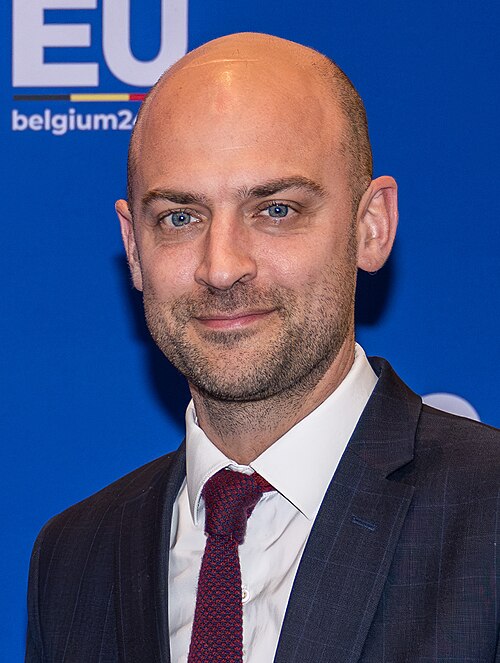 Jean-Noël Barrot
Transcription Whisper (large-v3), avec identification des locuteurs. À recouper avec la source d'origine.
Analyse automatique
Générée par IA — peut contenir des erreurs. Méthodologie
Chapitres
Répartition du ton (temps de parole politique)
Propositif 92 %Attaque 4 %Défensif 5 %
Questions et réponses
Taux de réponse directe : 94 % (directe = 1, partielle = 0,5, éludée = 0)
- 29:48OuverteRéponse directe
Quels liens entre la fatigue démocratique et les engagements multilatéraux ?
- 35:07OuverteRéponse directe
Des changements radicaux sont-ils nécessaires pour concilier sécurité et bien-être social ?
- 39:19OuverteRéponse directe
Quelle est la stratégie française face à l'administration Trump ?
- 39:34OuverteRéponse directe
Quelle est la stratégie de la France face à l'administration Trump actuelle ?
- 42:12OuverteRéponse directe
La France a-t-elle reconnu la Palestine ? Pourquoi cette initiative ?
- 51:19OuverteRéponse directe
Comment renforcer la crédibilité du pilier européen de l'OTAN face aux réserves des alliés ?
Affirmations vérifiables (citations exactes)
- 7:18Invité politiqueChiffre
« Democratization raises GDP per capita by about 20% in the long run. »
- 7:58Invité politiqueChiffre
« Adult life expectancy increases by approximately 3% over 10 years after a country transitions to democracy. »
- 8:44Invité politiqueFait
« Over the past 80 years, no mature democracy has gone to war with another. »
- 18:19Invité politiqueChiffre
« Last year, the Economist Democracy Index fell again to the weakest score ever. »
- 19:55Invité politiqueFait
« The China shock destroyed millions of jobs and left entire regions of Europe and North America bleeding. »
Temps de parole
- Jean-Noël Barrot69 %
- ?18 %
- Présentateur6 %
≈ 184,6 interruptions / 10 min (chevauchements et interjections détectés).
Modèle mistral-small-latest · prompt v1 · les citations sont vérifiées mot pour mot dans le transcript ; le taux de réponse directe est calculé à partir des verdicts question par question. Aucun label idéologique n'est produit.
Our session today, as you all know, comes in the midst of the U.N. General Assembly's
High
Level Week in New York,
where
leaders are here discussing a myriad of issues that are facing the global
collective,
particularly with the U.N. marking its 80th anniversary. This moment in particular, it spotlights both the present and the future of our multilateral institutions,
as
well as the ongoing shifts in the global order.
And
in addition to what's happening on the international stage, as many of you will follow,
in
France, as they lean towards coalition building around issues such as Israel and Palestine
or
the war in Ukraine, domestically, they're also in transition with a new prime minister
and
a looming budget crisis. So with all of these themes in the mix, today
we're
going to explore issues of democratic resilience, the future of multilateralism, and several other themes with our discussion.
I
will now turn it over to the minister
to
give some opening remarks, and then after that we'll be in a brief conversation before I open it up to questions from the audience. So thank you, Mr. Minister.
Thank
you very much for your kind words. And indeed,
it
is good to be back to Cambridge,
where
I left a number of memories, colleagues, and friends.
I
grew up in central France,
on
a land ringed by old mountains and dormant volcanoes.
I
grew up
with
the legend of a hero,
a
hero
who
was also born and raised on this land,
a
hero of the two worlds,
as
we call him,
for
France
and
for the United States of America.
So
let me tell you his story
as
an introduction.
He
was raised by his mother and aunts on this land.
And
when he turned 19,
he
heard of bold men
fighting
for freedom and democracy on the other side of the Atlantic.
He
defied his boss at the time.
He
stood shoulder to shoulder with the American patriots.
He
fought amongst them.
He
became friends with George Washington.
He
bonded with Thomas Jefferson,
who
was at the time
writing
the Declaration of Independence. Remember
those
words,
we
hold these truths to be self-evident, that all men are created equal, that they're endowed by their creator with certain inalienable rights, that among these are life, liberty, and the pursuit of happiness.
Our
young man
took
these powerful words back to France.
And
a few years later, just three days before the storming of the Bastille, he wrote the first draft of the Declaration of the Rights of Man and of the Citizen, that said,
men
are born and remain free and equal in rights.
The
aim of every political association is the preservation of the natural and imprescriptible rights of men.
These
rights are liberty, property, safety, and resistance to oppression. Clearly,
you
hear the influence of Thomas Jefferson.
And
this is the story,
by
now you have guessed it,
of
Lafayette.
This
was 250 years ago.
In
fact, today, September 25th, we celebrate the 249th anniversary of Congress's decision to mandate Benjamin Franklin to negotiate a treaty with France to consolidate American independence.
So
the powerful words of Jefferson and Lafayette
have
survived the test of time.
So
much so,
that
a century and a half later,
the
same story happened, but the other way around.
On
the full moon night of June 6, 1944, thousands of young American men boarded ships heading to the shores of Normandy, where many of them would spill their blood
to
liberate France, my country,
from
oppression
for
the very same reason
why
young Lafayette had crossed the Atlantic in the first place.
So
think for a minute.
Ask
yourself,
why
did these young men cross the Atlantic and risk everything they got?
Why
did they do it?
What
does it take?
What does it take? It
takes a simple idea. An idea that France and the United States have championed
for
over two centuries.
An
idea that has brought so much to the world
and
that holds in one single world,
democracy.
Democracy as the vision of a society in which enlightened citizens decide for themselves. Democracy as a fragile but incredibly powerful institutional framework resting on three pillars.
First
pillar,
fundamental
rights. Some rights are sacred. You cannot
touch
them. Second pillar, one man, one vote. Law is made by the people, for the people. Third pillar, the rule of law. Everyone has equal rights. No one is above the law.
If
all three principles hold,
democracy
will hold.
Should
one be shaken,
then
democracy will falter.
But
when democracy holds, it is indeed the most conducive institutional framework for prosperity, welfare and peace.
This
is not an opinion.
This
is a statement grounded in scientific research.
What
does research tell us about democracy?
The
world's most cited economist, Harvard professor André Schleifer,
has
assembled a broad body of evidence
that
shows that legal tradition is a key driver of development.
He
and his co-authors have shown that the rule of law yields stronger investor protections, deeper and broader capital markets and ultimately higher economic growth.
The
intuition is simple.
When
private property is protected, when intellectual property is protected, entrepreneurs, innovators are incentivized to create value
and
push the knowledge frontier.
I
just quoted a Harvard economist.
I
will avoid a diplomatic incident
and
turn to an MIT economist.
Who
has had so much influence on my own research when I was a professor there.
The
Nobel laureate, Daron Acemoglu.
Daron
and co-authors have shown that democracy does cause growth.
This
is not an opinion.
This
is a statement grounded in scientific research. Democratization raises GDP per capita by about 20% in the long run, driven by democracy's greater investments in capital,
education
and health.
In
further groundbreaking work, Daron has also found that inclusive institutions, those that ensure broad participation and spread the dividends of growth, lie at the core of why some countries grow rich
when
some others
remain
poor.
Some
of you will say that GDP is not a sufficient statistic for welfare. And this is a fair point.
So
let's look beyond GDP.
Research
published in The Lancet
has
shown that democracy has a positive causal effect on life expectancy.
Controlling
for other factors, adult life expectancy increases by
approximately
3% over 10 years after a country transitions to democracy. Consistent with this
is
the negative correlation between democracy and infant mortality. Consistent with this is the positive correlation between democracy and subjective well-being documented in many, many, many papers.
So
democracy is conducive to prosperity and to welfare.
But
democracy is also, and this is perhaps a little bit less intuitive, to peace.
No
need to graduate from Harvard Kennedy School to spot the pattern.
Over
the past 80 years, no mature democracy has gone to war with another.
And
most importantly, democracy provided the blueprint for the international order that raised from the ashes of World War II. Read the United Nations Charter signed in San Francisco 80 years ago.
You
will hear the echoes of Lafayette and Jefferson.
You
will recognize the three pillars of democracy translated to the international level and supporting a democracy of nations. Pillar number one, the fundamental rights. Territorial integrity,
you
don't touch my border, I don't touch yours,
and
self-determination of
people. Pillar
number two,
one
nation, one vote, with each country having the same share of power at the General Assembly.
Third
pillar, the rule of law,
with
the same rules
applying
to all nations.
The
number one purpose of the United Nations
was
to maintain international peace and security.
Has
it worked?
Yes,
it has.
The
guiding principle of territorial integrity has made aggression costly
for
any state tempted to invade their neighbor.
Not
every conflict has been averted,
by
far.
But
the mediating roles of the General Assembly and the Security Council have stopped many crises, many tensions from sliding into full-blown wars.
Further,
research has shown that the UN peacekeeping missions and other peace-building activities reduce violence,
improve
human rights, and create more stable post-conflict environments.
They
help prevent future conflicts and they do so cost-effectively and strengthen global security. Prosperity, welfare,
peace,
democracy has brought so much to our civilization. And France and the US have contributed to all
this.
Yet, wherever I look,
fundamental
rights are challenged.
The
rule of law is contested.
Wherever
I look,
I
see democracy under fire.
And
fire is set,
first
and foremost, by enemies of democracy from the outside. Authoritarian regimes that fear democracies like vampires fear sunlight.
They
know that democracy is contagious.
They
fear it like a deadly virus. Nothing worries them more than it spreading to them.
They
will do whatever it takes
to
stop it,
whether
it's brute force, blackmail, disinformation, election manipulation.
When
democracy gets too close to their border,
they
will do anything to prevent this
from
happening.
And
they have a very, very simple playbook.
The
script is always the same.
No
need to study political science at Harvard to figure it out. Everything
lies
in the scenario
of
Star Wars.
When
Darth Sidious, the dark lord of the Thys, turns the galaxy from democracy to dictatorship in four easy and replicable steps,
he
sets the standard.
And
he does this for easy steps and a red lightsaber, of
course.
But step one is what? Identify
a
proxy.
Disguise
yourself
as
a senator
from
within. Step two,
foster
a fake internal separatist threat.
Step
three, get rid of the ultimate counter power,
the
Jedi Order.
And
step four, declare in the Senate
the
end of the Republic and the advance of the Empire
for
the sake
of
security. Fortunately, the return of the Jedi puts an end to all of this, restores balance to the force.
But
this scenario is not one of fiction. Look at Vladimir Putin.
The
true reason for his colonial wars, Georgia in 2008 and Ukraine since 2014,
is
simple, democracy.
The
sovereign and legitimate choice of Georgians and Ukrainians
to
turn toward Europe, threaten democratic contagion to the Russian sphere of influence.
So
he staged fake separatist fronts
to
justify breaking international law.
He
then launched a full scale invasion of Ukraine.
He
tried to manipulate elections in Germany, Romania, in Moldova.
And
now he tries to intimidate supporters of Ukraine by tampering with their borders and violating their airspace.
Has
he succeeded? No.
Will
he succeed? Certainly not.
Putin
is failing to make progress on the ground, just like he is failing to make progress in the spirits.
Why? Well,
because democracy is an idea
and
an idea cannot be bombed.
It
cannot be destroyed with Shahhead drones.
And
beyond Ukraine, Vladimir Putin is targeting the European Union itself
with
sabotage, cyber attacks, disinformation campaigns, assassination attempts. Why?
Because
the EU is a genuine democratic project.
Perhaps
the most democratic project of all times.
He
hates it,
he
hates what it represents, and he is not alone.
And
by the way,
some
dare say that freedom of speech
is
bounded in Europe. Remember that Europe invented freedom of
speech. And
I can confirm
that
the French government
is
not spared
by
public scrutiny.
In
fact, criticizing the French government is a national sport.
We
are even better at it than at soccer.
So
if you worry about free speech in Europe,
try
it the Russian way instead.
And
let me know
what
you think.
Because
the battlefield for democracy has not only shifted in recent years, it has expanded into new domains including so-called social networks.
The
forces that want to bring democracy down from the outside have spread and gained the high ground in the information space.
By
spreading fake news from the outside to polarize public debate,
they
are attempting to weaken democracy from within.
A
lie travels halfway around the world while the truth is putting on its shoes,
Mark
Twain said.
We
cannot let that happen. Europe will never let go of the rules we have adopted democratically and sovereignly to preserve freedom of speech while preventing foreign interference to break down democratic debate. Everywhere I look, I also see assaults from within.
I
see political movements with authoritarian purpose gaining ground.
From
within democracies,
mature
democracies across Europe and North America.
The
ultimate goal of these political movements is clear cut, capturing power from within
and
set the conditions not to give it back.
Here
again, there is a playbook. There is a script.
Breaks
are broken.
Limits
are tested. Alignment with foreign authoritarian forces emerge. Principles of international law are contested. Force become a substitute to the law. Audacity outruns accountability.
Reason
gives way to emotions. Politics is turned into a permanent theater of outrage. Emotions are weaponized to amplify anger and fear.
Propaganda
is laundered through private proxies.
Political
campaigns are drenched in disinformation powered by AI. The goal is not persuasion but exhaustion. Dissent is outcast. Opponents, NGOs, civil rights defenders can hear the knock at their door.
Raids,
lawsuits, intimidation
dressed
up as public order. And free speech is indeed bounded. Compliance is sold as civic duty.
Data
are erased. Research topics are forbidden. Subsidies are cut for projects that don't align with official narratives. Traditional press is squeezed
and
reporters are harassed. Vote
is
tilted. Violence leaks at the edge of polling stations. Candidates are struck from ballots. Election results are contested in spectacular outbursts of violence,
targeting
core democratic institutions. Separation of power is questioned.
Executive
power swells.
The
law is bent.
Judges
are replaced or cowed. Courts are leaned on. Anti-corruption bodies are gutted, turned like knives against critics. And finally, submission is rewarded above merit. Contracts and tax breaks for friends, choke points for dissenters.
Innovation
withers,
and
in the silence that follows, repression grows tall. Down this road lies a darker claim. Ending what is described by some as a failed 200-year experiment. Replace democracy with a CEO monarchy. Far, very far from what Jefferson and Lafayette had in mind.
Some
will say I'm being dramatic.
That
we're still a long way from all this. No, we're not.
Popular
support for democracy has never been so low.
Last
year, the Economist Democracy Index fell again to the weakest score ever.
The
rise in dissatisfaction has been especially sharp since 2005. and this trend
has
been particularly severe in developed democracies. Hence,
the
most important question of our time.
Why
is democracy losing its momentum?
Why
are its enemies making so much progress?
The
answer to this question holds in two words. Democratic fatigue. Citizens in mature democracies grow frustrated, jaded, exhausted, disappointed.
Trust
is eroded.
The
civic heartbeat is dimming.
Power
to the people sounds like an echo instead of a call. Democratic fatigue.
The
feeling that citizens are not being heard.
That
the issues they care about never are addressed.
That
a distant elite in Paris, in DC, decides for them without accountability.
The
feeling that democratic government is failing to deliver.
That
it's breaking its promise of freedom, security, self-fulfillment.
The
sense that we're paying more and getting less.
That
public services are underperforming.
That
red tape blurs who does what.
And
to the kitchen table question, will my kids be
better
off than I am?
The
answer is no longer yes.
The
feeling that democracy doesn't shield us from global disruptions.
The
China shock destroyed millions of jobs and left entire regions of Europe and North America bleeding.
This
policy swelled US household debt and cast a shadow over American jobs. I actually did research on that. Meanwhile, deep shifts in family structures, rising immigration, transform our societies, fueling anxieties that democracy has struggled to address. digitalization, automation, split labor market, polarized it
and
hallowed out the middle class.
And
people feel left to pick up the pieces alone.
The
feeling that democracy is no longer striking this subtle balance between individual autonomy and common purpose.
That
is the necessary condition for self-fulfillment. And paradoxically, we have grown to lack both of them. Individual autonomy
and
sense of belonging. We lack autonomy as we feel hindered in our day-to-day lives. As we suffer from restrictions to our ability to choose to decide to act.
And
we lack common purpose as we no longer feel drawn into endeavors greater than ourselves.
And
finally,
what
may be the worst feeling of all, the feeling of injustice and frustration materialist societies generate sometimes,
despite
the unprecedented welfare we live in compared to the overwhelming majority of people on this planet.
This
democratic fatigue didn't appear by accident.
To
a large extent, it is our own responsibility.
It
is the result of decades of elite blindness to a world in upheaval. Denial of the legitimate wrath in the middle class, the working class, tired of feeling looked down upon and pushed aside. Failure of traditional political forces, including my own, to sketch a new horizon, to meet that anger with answers.
For
years now, traditional political forces, North America and Europe,
have
let our institutions rift until we, the people, have felt dispossessed
of
power.
And
the greater threat ahead of us is popular resignation.
And
let's face it, democratic fatigue is also the result of the grip we have let the so-called social networks
take
on
our
lives.
A
business model designed to drain cerebral bandwidth and exploit personal data to breed advertising revenues. Algorithms,
algorithms,
filters that segregate people into distinct bubbles, citizens turned into eyeballs, followers, users, public space privatization for the purpose of paying dividends.
Faced
with such fatigue, many will be tempted to give up.
To
give up on Lafayette and Jefferson's legacy.
To
concede to
what
is called now the neo-reaction to dark enlightenment to CEO monarchy.
We
won't,
we
will resist and we will fix democracy.
Fixing
democracy starts with fixing citizenship. Raising genuine citizens. Enlightened citizens, able and willing to take responsibility for themselves and for others. How do we get there? With a great deal of enlightenment, empowerment and courage. First enlightenment, veritas, as they say in Harvard.
For
power to the people only works if people are properly informed.
If
not, they're bound to air in the dark.
How
can we have a productive debate if we cannot agree on facts?
If
polarized fractions fight over fake news on social networks?
If
truth is being engineered for political purpose? Enlightenment starts in the classroom and continues here at Harvard in universities.
Where
professors dedicate their lives to better understanding the world
and
to sharing the breadth of their knowledge to their students.
Today
science is questioned.
Science
is mistrusted. Science is politicized.
Yet
to raise citizens,
we
need more research, more academic freedom, more science, not less.
Free
and open science.
We
need the competitive emulation of a vibrant academic community.
We
need the tough discipline of peer review.
We
need policy evaluation.
So
yes, we stand.
We
stand with free spirits who dream beyond limits.
With
faculty and students who dare.
We
stand with universities facing the threat of government control, restriction to their funding, constraint
on
their curricula or research project.
We
stand with students here
at
Harvard elsewhere. Enlightenment also rests on free press. Journalists that feel independent enough to report on what they see. Reporters free from editorial pressure or political constraints.
Media
with resources to investigate
and
reveal inconvenient truths.
So
yes, we stand.
We
stand with fact checkers, whistleblowers,
with
journalists who dare.
We
stand with independent media striving to do their work.
With
those fighting for information integrity.
That's
for enlightenment.
But
we also need empowerment. Democratic fatigue can lead to democratic backsliding.
When
the system seems broken, some starts asking,
why
not try another one?
Why
not concentrate power in fewer hands? Make it more efficient.
The
antidote to this, the only alternative to power concentration
is
power distribution.
Power
back to the people.
Start
with a full reset of who does what.
Public
sector, private sector. Federal government, local government. Government, agencies.
The
guiding principle should be subsidiarity. Allocate power where it is exercised most effectively.
The
goal should be to unleash energy.
To
give each person the means to stir their own life.
Open
new paths for passion and talent.
Then
continue with giving more agency to everyone.
In
all dimensions of their life.
People
are craving to make their own decisions.
People
no longer want to vote on a platform every four years or five years.
And
have no say in between. Let them participate more actively in policy making.
France
has experimented citizens' assemblies on topics like climate change
or
end-of-life care.
This
is a promising path.
Other
countries have built digital tools to consult people on a more regular basis.
To
leverage the wisdom of the crowds.
We
need continuous citizen participation.
They
need to be actors,
not
spectators. Enlightenment, empowerment are necessary conditions to fix democracies.
But
they won't be enough unless we restore courage.
In
1978,
Alexander
Solzhenitsyn delivered the commencement address at Harvard.
A
powerful speech in which he criticized Western democracies for their loss of civic courage.
Their
inability to confront major challenges.
He
blamed the passivity of the elite.
The
focus on material comfort.
The
spiritual decay.
He
coined this
the
decline of courage.
And
he was right.
We
need to restore
courage. Courage
to place values above interests.
Courage
to carry one's share of collective burdens with no certainty that others will do the same.
Even
if other free ride. Above all
if
other free ride.
Courage
to embrace the spiritual dimension of life and resist the temptation of comfort.
Courage
to look
at
the world with the eyes wide open.
And
be ready to make difficult decisions when they arise. Courage not to concede to instant pressure.
But
focus on the right thing to do.
And
this you can know.
Fear
the time when man's self will not suffer and die for a concept.
For
this one quality is man distinctive in the universe. Can one read
in
the grapes of wrath. Democracy can be fixed.
In
France. Like in the US.
If
we really want
it. Fixing
democracy is all about citizens. The making of men and women who listen and debate. Vote with clear judgment. Hold leaders to account. And step forward.
For
the common good. Enlightenment. Empowerment. And courage. Are the key. We are the key.
So
students.
Of
Harvard.
At
this moment of your life. As you're considering options. For what comes next. You.
Are
facing a decision.
What
citizens.
Will
you be.
Will
you be spectators. Or actors.
Will
you stand. For democracy.
When
addressing Congress. In 1824. Lafayette said that the US. Stand as a lesson to oppressors.
An
example to the oppressed.
And
a sanctuary. For the rights of mankind. May we live up.
To
the legacy. Of Jefferson.
And
Lafayette. May we be inspired. By the courage.
Of
Lafayette. When he sailed to America.
The
courage. Of those. Who landed. On the shores. Of Normandy. Of those. Around the world. Today. Who are risking. Everything they have.
For
freedom. And democracy.
We
owe it.
To
them.
We
owe it.
To
ourselves.
And
we owe it.
To
the generations.
To
come.
I
thank you.
That's
a lot. To reflect on. And a very powerful. Call to action. For the students. Assembled here. At the Kennedy School.
I
want to. Draw down. Draw. Drill down.
On
one of the. The key themes. That you put. Into juxtaposition. So you. You very passionately. Spoke about.
Both.
The resiliency. Of democracy. Over. History. But also. In the present day. Democratic fatigue.
And
you spoke about.
The
kitchen table concept. I want to link that. A bit. To the multilateral. So France. Like many other democracies. Including here in the US. Faces. Intense. Domestic. Pressures.
For
example. In the. Recent weeks. Of protest. Even those. Constituencies. Or politicians. In France. Who might say. Enhanced. Defensive. Spending. That's a. Call to action.
In
Europe. Might push back. If it seems like. The government. Is prioritizing. That middle.
Military
spending. Over. Sustaining. Important. Social. Safety.
Nets. So
the question.
More
broadly. Is. How. Do you see. The role. Of democratic. Reconciling. Those. Bread and butter. Concerns.
As
we would call them.
In
the US.
Of
their constituents.
With
the need. To invest.
In
that security. Or defense. Or the broader. Multilateral. Commitments. How do you tie. Those two together. In the context. Of reflecting. The democratic process. But also. Sustaining. A commitment. Multilateral. Goals.
That's
a very important.
That
number. Of governments.
In
Europe. North America. Are now facing.
We. Among
others. Are. Pretty. Budget. Constraint.
And
so. This question. Is for us. Pretty acute. I would say.
You
need to zoom out. For a second. And not be trapped. By the perception.
You
can. You may have. Of. How the people. Think. And what the. People's aspirations. Are.
Through
the lens.
Of
the public. Or the political. Debate. When. I.
Look
around me. In the district. Where I'm. Elected.
I.
See.
A.
Lot of energy.
I.
See.
A
lot of. Willingness.
Of
people. To.
You
know. Take responsibility. For themselves. But also. For others. In.
You
know. Whether. By running. For election. Or. Handling. Local. Organizations. Supporting. Supporting. Communities. And so on. And so forth.
So.
There. The energy. Is there.
It's
not that. The west. Is unable. To.
You
know.
Is
unable. To.
To.
Lift itself. To a level. Where.
He
would have. Where. The. They could. The west. Could combine. The preservation. Of. Welfare state.
And.
Addressing. The new. Challenges.
But
I think. The starting point. Is to. Is to. Liberate. The energies. That are. That are. There. In. Western. Societies.
But
that. Have been. Impeded.
By.
This.
This.
Kind of. Accumulation. Of. Norms. Bureaucratic. Bureaucratic. Constraints. And so on.
That
I've. Left.
People
feel. They're. Disempowered.
If
you.
You
know. If you start. By doing this.
If
you start. By releasing. The energy.
Then
you can get. Much more. Than you think. From. The people.
Of
Europe. And the people.
Of
North America.
But
this means. You need. To be ready. To be. Pretty radical. In the way. You're going. To reform. Government. Reform. The state.
The
way. You're going. To address. This. Issue. Of the accumulation. Of norm. The way. You're going. To open up.
The
door. To
answer. This
is just. My intuition. Because indeed.
If
you.
You
know.
If
you're going to.
To
address. This debate. By saying. Sorry guys. We're going to cut. The welfare state. Because now. We need to build. Weapons. And thanks. It's not gonna work. You're you're. You're not gonna get. Anyone to support. These things. Until. Of course. you're dragged because you haven't done the efforts you're dragged into a war
or
conflictuality that you have not chosen
there
is still time and space
to
restart so to speak
the
nuclear power plant and
draw the
people of our countries
into
a new endeavor that will incorporate new levels of security spending that will that will address the question of climate change and the
extra public
spending that is required and so on and so
forth and
so just staying on this theme for a moment you mentioned kind of the concept of radical changes are needed or radical adjustments to the structure the way in which the government is reflecting
the
population's desires and you talked in your speech about the example of citizen assemblies to address certain issues are there other examples that come to mind for you when you when you're thinking about what would be a radical change to help
no
so we so if I look at the French system there are multiple violations of subsidiarity
I
look at the mayors in my district
they
are subject to contradictory orders by the administration
the
funniest or
maybe
the saddest
story
I heard lately
was
a
letter
that all of the mayors in my district received and in other districts where they had to
appoint
within their local council a
person
that would be the
reference
point for mosquitoes
for
mosquitoes
you
know
if
if the state
is the
federal the central state is concerned about your mosquitoes
then
there needs to be in every 35,000 cities in France
a
reference point that the state can activate you know on mosquitoes
this
just drive the mayors crazy
and
they feel
like
they're treated like children
that
they're not
they're not
untrusted and they're
not
untrusted
and empowered and
so in the institutional life of ours we have many many examples of this
but
we also see
in
other dimensions of our life like on the in the workspace for instance
you
try to estimate correlations between elements of life at work
and
tendency to turn to you know extremist popular popular populist parties
you
will see that one dimension one correlation that that scores very high
is
the correlation between with the
electoral
choice and
whether
or not you're free to choose your schedule during the
week if
your schedule is imposed on you
and
you have hectic schedule
this
drives
drives
you to think that you have really no power on your
on
your own time on your own week and so on and this
is this
drives you
away
from democracy
I
mentioned that this idea that people are going to vote on a platform treating
all
topics every four or five years
we
have very different political systems but I know
of
zero person except those that have written them that actually read the political platforms
of
candidates for presidential in France and even
so
we spend so we
spend so
we
spend so
I've run for many elections so I spend you know spend nights writing your document every word is weighed you need to have all the right buzzwords in there
spend
a lot of time but then no one reads it
because
that's just not the way
it
might have been the way people allocated their attention like you know decades ago
but
it's not the way people allocate their attention now
so
there is something that's breaking up because it's like you know it's like a show
I'm
going to write a platform and I'm going to try and convince you to vote for my platform and you're going to pretend you read my platform that you support me and you vote for me there is something wrong about
that and
what's wrong about that is that citizens are deprived from agency from their real ability to affect to stir the policy making
so
you see in several
in
many many different fields of our democratic life whether it's political cultural economic and so on
there
is
a
lot we can do to restore agency to restore power and to
restore
subsidiarity
okay
so I know there is a lot we can explore with regard to France's role in the international stage and its leadership
I'm
in the interest of time I'm going to ask one question in that space and then I'm actually going to open it up to the audience
so
I'd like to ask
you
know obviously we're all watching the news there's been a lot of interesting highlights coming out of New York this week
there's
an interesting dynamic that it seems to exist between President Macron and President Trump
more
broadly what would you say is France's strategy for dealing with President Trump and the current US administration
and
are there opportunities that his posture has created
that
otherwise may not have been there for France or how you see your role in shaping the international conversation
so
there is a very long-standing friendship between France and the US deeply rooted in our common history as I was
mentioning
earlier we
have
not always agreed on everything
but
we've been together in the most important moments of our
history I think
that those ideas of freedom and democracy are ingrained in the DNA of our both countries
and
eventually that's what gets us
to go
back to each other
even
when we have some disagreements or tough negotiations
now
in the more recent or in the current context
an
important dimension of the
relationship
between France and the US is the personal relationship between President Macron
and
President Trump they've worked together
back
in the first
Trump
term
they've you
know they've
learned
to know each other to
work
together on important security issues and others and this is of course instrumental
as
we are
dealing
with Ukraine as we are dealing with the Middle East
and
many other issues
that
we the US and France as permanent members of the Security Council have responsibility
to
handle
to
handle
so I
would indeed say that this personal relationship is
very
important
to make
the most of this long-standing relationship
thank
you
all
right I would like to ask the audience to offer up their questions I know we have some mics moving around are we meeting the
okay
so let's start on this side
Sarah
yes we'll start with this gentleman the mic is coming around
hi
Minister thank you so much for being here my name is Roy Schwarz Tichon I'm from Israel I want to strongly support your position about Ukraine and nuclear proliferation
I
wanted to ask you recently France have spearheaded efforts to recognize the Palestinian and this country while you have a country
while you haven't
yet recognized many countries followed and have recognized due to your effort although they meet only two of the four necessary criteria in the Montevideo Convention
what
should we interrupt that in the context of more than 10 territories with more than more 1 million square kilometers and 50 million citizens who aspire to be recognized like
Taiwan
Taiwan Catalonia
him
and Golan Heights and more over
and
don't you
fear
that it will incentivize terror like the October 7th attack
what
will incentivize terrorist attack
so
the answer to this
second
part of your question is no absolutely not
in
fact
the
efforts that France led with Saudi Arabia
was
not efforts to
to
recognize the Palestinian state
was
to revive or save the two-state solution
that
has been seen
for
decades by the entire international community as the only solution
likely
to bring peace and stability to the region
now
this solution was
close
to collapsing or vanishing
because
of 7th of October
and
the anti-semitic massacre that led that the
the
Hamas inflicted on Israel
but
also threatened by the indefinite continuation of Israeli operations in Gaza and the accelerated settlements in the West
Bank and
so
our
idea with Saudi Arabia
was
basically to do our utmost
when
we started working on it one year ago
to
remove
all
possible obstacles on the path towards the state of
the the state
of Palestine
what
is the state
of Palestine what is the
first obstacle that we have removed
until
September 12th
two
weeks ago
there
was no international condemnation of Hamas for its crimes
no
international call for the disarmament of Hamas
no
international call for its exclusion of any future role in the governance of Gaza and Palestine
since Friday
September 12th
is
no longer the case
because the it was because
of a resolution that France and Saudi Arabia that was adopted
the
overwhelming majority of countries
the
UN
it
made sound like a surprise to some of you
but
until two weeks ago
there
had never been any texts adopted that the United Nations condemning Hamas for their crimes
et
je suis sûr que vous pouvez comprendre pourquoi.
Many
countries from the Arab world, many countries from the south
did
not feel compelled
to
condemn Hamas and to call for his disarmament. This is done.
We
have changed the mindset. Everyone now sees Hamas for what they are,
a
terrorist organisation. Second obstacle on the path towards a state of Palestine that we try to remove.
The
fact that
the
Arab peace initiative, this idea that the Arab countries will at some point establish normal relationship with Israel.
This
was kind of going away
because
Arab countries, especially in the region, they also have a public opinion for some of them. And so
stating
out loud
that
they're going to establish relationship with Israel is politically extremely costly. It was publicly impossible until what we did.
What
we've achieved is not only to get them to say it again
and
to endorse a text that says it clearly,
but
we got them to go one step further.
Read
the New York declaration paragraph 34 and 35
and
you will see that we got them including Qatar, including Turkey, including Algeria,
even
though Algeria is not concerned by what I'm just going to say. We got them to say that they aspire not only to have normal relationship with Israel,
but
to enter into a common regional architecture in the model of ASEAN in Asia or OSE in Europe. We got them to say, the Arab countries, things relative to the security of Israel that they have never said before.
And
yes,
the
counterparty, so to speak,
of
this condemnation of Hamas, of this security guarantees provided by Arab countries, is
the
recognition of the state of Palestine. And all of this was holding together.
And
now, since it's
been
an important week for the Israeli-Palestine conflict, let me also tell you how this
has
also been thought by France and Saudi Arabia
as
complementary to the US efforts.
First, the
way I described our initiative, I'm sure some of you
already feel
that there is something similar to the Abraham Accord logic. What's the Abraham Accord logic?
I
get the Arab countries to provide guarantees to Israel
and
I, the US, provide security to those countries.
In
some way, what we just did
is
the same thing.
We
get the Arab countries to provide security for Israel and in exchange, I give them comfort by saying that I recognize the state of Palestine.
And
so we are basically,
with
this initiative, paving the way
for
future Abraham Accords by treating some of the difficulties
that
led Arab countries to shy away from the Abraham Accords the first time around.
Now,
back to what's happening today in New York and tomorrow and Monday on the White House.
The
White House,
President
Trump's White House,
has
recently come to the conclusion
that
a hostage and ceasefire agreement
would
not be reached
unless
there is sufficient consensus
on
what will happen immediately after
what's called
in the press the day after plan.
And
so,
President
Trump has asked some of his close advisers
to
go to the Arab countries, to go to France, to go to the UK, to gather all the ideas, okay, that all of us have been putting together for past months and years for what a day after plan would look like.
And
this is finally
getting
into the same paper
and
is being discussed as we speak in New York between Trump administration and Arab
countries. And
as incorporated, Secretary Rubio was mentioning it last night, ideas from France, ideas from the UK.
The
day after plan,
which
is a necessary condition for a hostage and ceasefire agreement, also has, also requires
for
the Arab countries to sign, to endorse it,
to
be ready to contribute to it,
also
requires that there is some kind of political horizon.
And
so, what happened on Monday
and
the French Saudi initiative
gives
enough comfort
to
the Arab countries
to
participate to the day after plan.
And
the day after plan is going to give enough comfort
to
the negotiating parties, Israeli and Hamas, to sign a ceasefire and hostage deal.
So,
you see how all of these pieces can be brought together in
hopefully
what may be
the
resolution of this tragic war in Gaza. And
from
what I've experienced this week in New York,
I've
never seen
so
much hope
that
we may be close to a resolution.
Thank
you.
I
want to get some more questions in. Let's go to this young lady here.
There. Thank
you. And then we'll come to this side.
Mr.
Minister, thank you for being here today. My name is Anna. I'm Franco-American. And I wanted to ask you about something that's really dear to my heart, which is European security. And we, since we're talking about radical change, we know that the war in Ukraine has changed a whole lot of perspective from European leaders around the European pillar of NATO and something that France has been vouching for for years, strategic autonomy.
Now,
the problem that I see, the tension I see is, even though this is a French position that hasn't changed, and I think it has proven to be correct,
there
are still some reservations among many European allied nations that there isn't enough credibility in the European pillar of NATO, that it is safer to rely on the US for security,
and
that if we are to shift away from this, it's going to be a self-fulfilling prophecy and that eventually the US is going to leave us.
So,
my question to you is, how do you reconcile that tension? How do you work with European allies
to
enhance the credibility of that European pillar?
And
also, how do you work with the US to ensure that this isn't a co-optation and that this is more of a collaboration than it is a replacement? Thank you.
I just
have about five more.
Yeah.
No, thank you. So, first, I think that
everyone
in Europe has fully understood the idea of strategic autonomy, and in that respect, the Trump administration has been very clear, perhaps even clearer than former administrations,
about
what the aspiration of the US is, irrespective of which side is
in
the White House, so to speak.
And
so now everyone is, I think, on the same page. But of course, strategic autonomy
is
easier said than done.
But
I want to tell you
that
the coalition of the willing that France and the UK brought together
in
order to provide a security solution to a major continental security issue,
security
guarantees for Ukraine, is the most important piece of work
for
European security since the creation of NATO.
Because
for the first time,
more
than 30 countries came together,
including
the US, to design a military planification
that
is ready to,
you
know, they're off the shelf, ready to deploy as soon as there is a ceasefire.
And
this led more than 26 chief, army chiefs, charts to put their expertise in common outside of NATO. This had never been done before. It's very complimentary for NATO, but I think I would draw your attention on what's happening there, and I would follow closely because this is very, very promising.
Okay.
Let's take two from this side at the same time, because we just have a few minutes left. The gentleman here in red.
Hello.
I'm Tsihwa, a graduate student from Harvard T.H. Chan School of Public Health.
So
my question is, assuming, as you may suggest,
Ukraine
and Russia war is so critical to Europe's sovereign integration and democracy, and, like, how many resources that France has contributed to this war, including personnel, money, and weapons, and how many more you're thinking are going to contribute for
this
war?
Let
me take one more question for you.
The
woman in the back, please, as well.
Hello. I wanted to say thank you for being here. I'm researching AI-enabled authoritarianism at Oxford,
and
in my research, I've actually noticed that authoritarian systems, they can thrive in liberal democracies
precisely
due to fragmented AI oversight. However, the one project that was effectively dismantled was in the Netherlands. So given that this year's AI Safety Summit was in Paris, and Nobel Laureate Maria Ressa's call for international red lines for AI this week at the UN,
where
do you see maybe France's or the EU's role in champion democracy strengthening AI use
internationally,
especially amidst democratic fatigue and maybe, like, the AI race between the US and China?
Maybe
on the second question,
by
hosting this international global summit on AI after the UK and South Korea hosted it,
we
expressed our willingness to contribute to a common framework to regulating AI.
But
I also want to warn against this idea that Europe is systematically regulating technology.
I
have grown to think that the best way to control or to
have
an influence, sorry, on
the
use of technology
is
to craft it
rather
than to regulate it.
So
our main, main, number one
objective
right now
is
to allow global-scale AI companies to grow out of France and Europe. Because we,
of
course, we will set red lines and so on, but we know that organically
the
models,
the
people,
will
have tighter connections with some of the core values
that
are enshrined in the declaration of, you know, the man and the citizen that I was referring to earlier.
So
yes, regulation, but
let
us develop our own tools
that
will be organically closer to delivering
on
our values and vision of mankind and the world.
And
on Ukraine, we dedicated a lot of resources, but let me
be
frank. It is a security issue for Europe because
we
are very close to the battlefield,
but
it is a security question for the world.
If
the Russian aggression was awarded with the largest annexation since
perhaps
the creation of the UN,
this
means that territorial integrity no longer matters,
right?
And as I said in the first part of my intervention earlier, the sort of the principle of territorial integration, I don't touch your borders, you don't touch mine, has prevented many, many
conflicts. When
it falls,
then
every one
of
your neighbors
becomes
a potential adversary.
So
you don't want this principle to fall.
At
least we don't want this principle to fall.
Okay,
I'm going to do one last lightning round, one minute answer. This gentleman here. Sarah, could you?
Thank
you. So this will be our last question, just due to time the room. There's a class just after this. Sorry about that.
Bonjour
Monsieur le Ministre. I'm a French student at the Kennedy School and I'll be part of the European Conference at Harvard.
So
I have a question about the tension between democracy and
situations
of crises, right? So
we've
had political theorists criticize liberal democracy as being
on
the grounds that it doesn't really work in times of emergency, right?
If
an emergency, you need the executive to respond quickly.
So
in a world where environmental and security crises become more prevalent, do you see that tension between democracy and crises to be an important challenge in the future?
Thank
you.
So first, recent evidence tends to contradict this statement. If you look at COVID crisis, even though I haven't done research on this, but I would suspect that democracies have not done that bad
because
of the, you know, faced with
a
crisis of a certain type, which is a huge Neytian uncertainty.
The
fact that there is so much scrutiny and pressure from research, from the press and so on, you know, guides the people in power into making the right decision. So, you know, it can be useful in certain, in certain crises. Then, of course, there is a tension
on
efficiency. But is concentration of power the only, is it the only way to restore or improve efficiency in our democracies?
I
don't think so.
And
if you look at the theories of the firm, for instance, where there is a tension between efficiency and decentralization, one thing that matters a lot is
coordination
mechanisms between
sort
of, say, the top of the pyramid and the bottom. And I think that with, you know, technology that we have now, I think we can
strengthen, you
know, that's why I was mentioning subsidiarity. I think we can get more of subsidiarity because we have less coordination problems, basically, in complex systems,
thanks
to technology. So I would
route
for the power distribution rather than power concentration and seek new ways to reach
better
democratic efficiency on that path.
All
right. Unfortunately, we do have to call it there. We will be using this classroom as we're at a school for a class in about 10 minutes.
Please
join me in thanking Minister Okubo.