Iran: Forewarnings and a Funeral, NATO, Le Pen • FRANCE 24 English
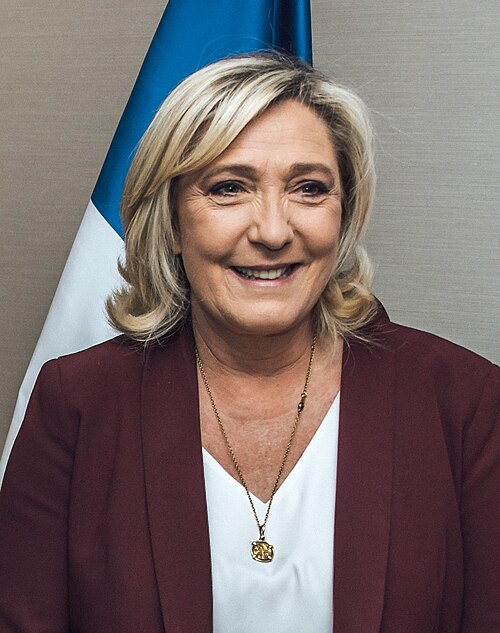 Marine Le Pen
Transcription youtube_captions. À recouper avec la source d'origine.
Analyse automatique
Générée par IA — peut contenir des erreurs. Méthodologie
Chapitres
Répartition du ton (temps de parole politique)
Propositif 30 %Attaque 50 %Défensif 20 %
Questions et réponses
Taux de réponse directe : 83 % (directe = 1, partielle = 0,5, éludée = 0)
- 2:00OuverteRéponse partielle
Comment analysez-vous les tensions entre Trump et l'OTAN lors du sommet d'Ankara ?
- 4:00RelanceRéponse directe
Trump a qualifié les dirigeants iraniens de 'scum'. Comment interprétez-vous cette escalade verbale ?
- 8:00OuverteRéponse directe
L'Iran menace le détroit d'Ormuz. Pensez-vous que cela pourrait déclencher un conflit plus large ?
- 12:00OuverteRéponse directe
L'AFD en Allemagne monte dans les sondages. Comment expliquez-vous cette poussée ?
- 16:00RelanceRéponse directe
Marine Le Pen peut-elle vraiment se présenter à la présidentielle malgré sa condamnation ?
- 22:00OuverteRéponse partielle
La France et l'Allemagne investissent-elles assez dans la défense européenne ?
Modèle mistral-small-latest · prompt v1 · les citations sont vérifiées mot pour mot dans le transcript ; le taux de réponse directe est calculé à partir des verdicts question par question. Aucun label idéologique n'est produit.
Welcome to The World This Week with me, Gavin Lee, analysing the tumultuous events of the past seven days in just 45 minutes, alongside an ever-changing panel of four distinguished international correspondents. In a week that's seen a NATO summit take place in Turkey, the 35th since its inception in 1949, there were 10 summits over the course of the first four decades and five in the last four years since Russia's invasion of Ukraine. President Trump's greeted in Ankara by President Erdogan and started with grumbles about how disappointed he was in the alliance over a perceived lack of royalty and not supporting his war with Iran.
But by the end he was practically quoting Led Zeppelin and talking about a whole lot of love being in the room, apart from one or two leaders, he said, that he still doesn't like. No clues there. Nada.
We'll look at how it began and how it's going for the alliance and the current relations between President Trump and Zelensky. President Putin said, I would love to meet in Moscow. And I said, I don't think, you know, I have to put myself in this position.
I don't know that he'd go to Moscow. Maybe he would. Would you go to Moscow?
It's difficult. There are a lot of Ukrainian drones. They are dangerous.
It's been a week of public mourning in Iran. The coffin of the last Supreme Leader, Ali Khamenei, who was killed on the first day of the war, was paraded through five cities in Iran and neighbouring Iraq and buried in Mashhad on Thursday. Millions of tearful mourners were reportedly in attendance, clad in black, some shouting for revenge and retribution in front of the cameras and invited media.
All while the fight for leverage in the Strait of Hormuz continued. The Revolutionary Guard struck ships, taking the American route. Then the U.S. bombed dozens of Iranian missile sites.
And so, Tehran once again targeted U.S. bases in the Gulf as the ceasefire and the ongoing talks to end the war appeared to be going up in smoke.
I think it's over. I don't want to deal with them anymore. They're scum.
You know what scum is? They're scum. They're sick people.
They're led by sick people. It's been a week where the political landscape of France has changed after appeal court judges upheld the guilty verdict against the far-right leader Marine Le Pen for misappropriating more than €2 million of European Parliament funds, but reduced the five-year ban on her standing for public office to 15 months. Time already served, said the Paris court.
And from the courtroom to the TV studios just hours later, Le Pen confirmed she was running to be president, third time lucky, despite repeatedly saying she wouldn't stand if attached to an electronic tag, which she still may have to wear for a year. Already out in the streets and campaigning, we will assess a seismic week in French politics. And it's been a week that France edged close to lifting the World Cup for a third time after beating Paraguay and Morocco.
Headlines were made off the pitch, too, with the French Football Association filing a criminal complaint for racism against a Paraguay senator, Celeste Amarria, who ranted about Bape because she said he hadn't shaken hands with the Paraguay goalkeeper at the end of the match. In a tirade of abuse, she called him a brute, a colonised Cameroonian who desperately tried to pass himself off as French, among other incredibly derogatory comments. Bape wrote in response, And it's been a week that's marked 25 years since The Office was first broadcast in the UK with tributes marking the mockumentary about the fictional paper company Wernham Hogg in Slough, where there's been a David Brent sculpture unveiled this week at a Slough budget hotel paying tribute to the ultimate middle manager.
To follow that, we have a superb panel this evening. So let's meet them. In the studio with me, we have Peter Conradi, the Europe editor of the Sunday Times and author of many acclaimed books, including Who Lost Russia from the Collapse of the USSR to Putin's War on Ukraine.
Also, The King's Speech, and in 2013, The Great Survivors, How the Monarchy Made It to the 21st Century. Good evening, Peter. Good evening.
Great to have you with us. You have been focusing on two things, but I want to start. We're going to talk about Le Pen in a moment.
You've been focusing also in Germany this week. You've been watching this big AFD rally play out with huge protests. Yes.
Last weekend in Erfurt in the middle of Germany, there was the AFD conference, annual party conference. They wanted to hold it. They're actually required under German law to hold it.
Many, many thousands of people didn't want them to hold it. So it was a bit of a standoff. It was relatively peaceful then.
I often thought, had the same thing happened in France, so I think it would have been a little bit more volatile. But I think German protesters are just that little bit calmer, a little bit better organized, a little bit better behaved. Was it ever, when we saw that there was kind of re-elected position for Alex Weidel, was there ever in doubt?
No, there wasn't. I mean, it was very clear. She is the, the party has actually two leaders.
There's Alex Weidel and there's Tina Chrupalla. She would be their chancellor if they ever became, they ever got into that position. So no, that wasn't really in doubt.
There's a lot of kind of internal stuff going on. There was a kind of a more radical wing of the party under a gentleman called Björn Höcke, who is really to the radical right, whereas Weidel is a little bit more, a little bit more to the center. I mean, a little bit more towards the center.
And so there was a bit of a kind of a signs of a kind of a power struggle between them. But the end result of the conference was really to show a united front to Germany. It was all about discipline.
It was all about showing that there's a united party. And they're leading very, very dramatically in the polls at the moment. It's a good read this week, Peter, and a good listen, too.
You can find it as well on YouTube, your account of what's been going on there. And within the same rhythm, Peter, we'll go from you to Stéphane Degian, and the French correspondent for German public broadcaster Deutschlandradio, has come over to Paris after a decade as the network's chief correspondent. Stéphane, great to see you as well this evening.
Yes, good to be here. Thanks for having me. Stéphane is also the co-author of Die Zauber der Linge, the Sorcerer's Apprentices, assessing Germany's 2015 refugee policy.
Stéphane, listening to Peter just a moment ago, this is a super election year, isn't it, in Germany, a superwahljahr. Simeon, popular Friedrich Mertz, recently agreeing these reforms that are, what, the most significant for decades. And with it, he's dealing with a once dependable car industry that's suddenly now struggling.
Huge layoffs at Volkswagen this week. Yes, Germany is in a difficult situation. Germany is now feeding the structural crisis of its industry and the core of German industry, which is the car manufacturing industry.
And this is putting a lot of pressure onto German politics and onto the German society. And we are seeing this in the rise of the right-wing party of the AFD. I mean, we shouldn't forget they are far from reaching the majority which would allow them to govern on federal level.
But we have a regional 11 in the state of Saxony-Anleit this fall. And this might be, for them, the first opportunity to win an election with an absolute majority so they can form a government in one of the East German states. That would be a political earthquake in Germany.
And that would completely change the political landscape in Germany, even though the AFD is far from reaching a majority or a situation where they could govern on a federal level in Berlin. Stefan, it's going to be great to have your insight with us as well tonight. Stefan Djetjen.
Let's move from Stefan. Let's go to London and bring in Nina. Nina Anderson Award-winning correspondent, former broadcaster, Europe editor, anchor at CNN, now director of Freud's Group Communications.
Great to have you on the programme as well, Nina dos Santos. Nina, let me ask you a bit of an earthquake of a story in the UK today. Very little detail coming out, but a very well-known politician, Anne Widdecombe, the former Tory MP and spokesperson for the Reform Party, appears, well, there's a murder investigation ongoing.
That's right. The nation was quite shocked to learn yesterday that Anne Widdecombe had lost her life aged 75 years old. I remember interviewing Anne Widdecombe when she made her switch to leave the Conservative Party and join what was then the Brexit Party, which later on became the Reform Party.
Obviously, these parties led by Nigel Farage, and she was a very forthright speaker. I have to say I've been to many of their rallies where the likes of Richard Tice, Nigel Farage, key members of the party, drew the crowds to the stage, and one of the people who was the most forthright, and by the way, had also cultivated a significant television following because she'd been on various shows like Strictly Come Done, saying this sort of...
We've lost Nina for a moment. We'll try and get Nina back in just a moment. But as she was saying about the news about Anne Widdecombe is developing through the evening.
Let's stay in the UK. OK, let's move to Oxford and complete a brilliant line-up tonight. I can welcome another friend of the programme, Peter Apps.
Good evening, Peter. Good to be here. Great to have you on board with us.
Global Defence commentator for Reuters, British Army Reservists, and author of The Next World War, the new age of global conflict and the fight to stop it. Peter, let me ask you, your work is now available on audiobooks. You recorded it, Peter, is that right?
And this is Olympic-level recording, almost 13 hours, and to compare, President Trump's art of the deal is 10 hours, and only part read by him. You have out-trumped Trump, Peter. Well, yeah, Andy, you get to hear my very poor Donald Trump impression about the way through the third or fourth chapter.
But, yeah, I mean, it's interesting. We had the NATO summit this week, and Trump has been on fine form again. I think we forget just how unusual it is to have a US president who sits in quite so many sort of press conferences.
There was a day that was almost entirely Donald Trump moving from one press conference to another. And it's all sort of entertaining and worrying and striking. But I think that the most striking thing that's happened this week, particularly at that summit, was watching Zelensky and Trump sit next to each other as Zelensky was continuing to strike infrastructure in Russia.
I think if you came back, if we sort of took us back five years or even three years, this idea that the president of the United States will be sitting next to the president of Ukraine while essentially encouraging the president of Ukraine to keep bombing targets in Russia and then announcing he was going to do the same thing in Iran, then I think that has moved quite a long way, certainly beyond where people thought the world would be when I started writing that book. Well, let's get straight to it, Peter. Great to have you with us as well on that point.
Let's start at the NATO summit, where memoirs of Mark Rutter are likely being shaped already by the man himself, just as the NATO Secretary Generals of Christmas's past have done before him, curating their own narratives of what life is like inside the arena. Rutter's story could show how he helped keep the alliance together in some of the most consequential moments of recent history, taking the flack from President Trump and finding unity. This week in Ankara, their joint press conference had a familiar theme.
I'm very unhappy with NATO, and yet this man is a great leader and he gets it. He gets it. Gets it maybe better than some of the leaders.
But also your allies get it, thanks to you, and that is important. I could not do this without you. It's too bad Biden didn't do it, or Obama.
Hey, but you are here now. Obama. And Trump 45, and Trump 47, in total more than $1.2 trillion.
I call this the Trump trillion. No, it's true, but don't you know... $1.2 trillion extra spent by Canada and the...
And I'm not always blaming NATO. They're getting a...
They got a free ride. The delicate diplomatic dance was on show, the family photo, as well as Ruto was seen. Literally Trump whispering, look at those, he said, as he made a joke about the trainers worn by Albania's Prime Minister, Eddie Rama, so-called trainer diplomacy, wearing signature white trainers, as you can see.
The upshot of the summit in real terms, there was no news of a breakup yet. President Trump's anger at the lack of spending, the lack of perceived loyalty going with Iran, appeared to dissipate on the way out. There was no...
There was a Patriot missile deal for Ukraine as well, notable, as Peter mentioned a moment ago. Turkey got a step closer to buying American F-35 fighter jets and the AFP reported inside the room, President Trump told the 32 leaders, we want to remain with you. So all in a day's work for Mr.
Ruta, who is however well and truly put on the spot by Danish journalist, Rasmus Svanborg. Mark, you sit next to Donald Trump in moments where he talks about conquering Greenland, talks about lashing out at allies like Spain, starting trade wars, things that it doesn't seem like the old Mark Rote would approve of. Does this have any effect on your self-respect when you sit next to him like that and say nothing?
You know, what I always do is acknowledge when praise is due and I think we should praise Donald Trump for the fact that NATO is so much stronger. Peter Conradi, Mark Ruta is on a reported €350,000 a year tax-free as the NATO go-to. Is he earning his crust?
I think he is, as a Trump whisperer-in-chief. I mean, sometimes he does go a little bit too far, doesn't he? You remember that previous thing when he was describing Trump as the daddy?
I can't forget. Which had all of us, all of us cringing. But, I mean, maybe it works?
I don't know. I mean, he's an interesting, Mark Ruta himself is an interesting character. He sort of followed his career in Dutch politics.
I mean, they used to call him Teflon Mark, I think, because he was sort of forever surviving scandals and hopping from one coalition to another coalition and so on. And, I mean, he's clearly, he's clearly, you know, worked out this idea that you basically have to, I mean, can I use the word, crawl to Trump in public, keep him happy. You know, I would love to, I'd love to hear, though, what Ruta actually says to the other leaders when Trump's not listening.
It's a very good point. Apparently, he's a huge fan of kind of British political dramas and comedies, like Yes Minister, for example. He can quote almost word for word certain episodes.
So he's well into kind of the machinations of politics. and big fan of the House of Cards as well. So this is a very interesting figure.
Peter Rapps, if we talk about Mark Ruta on the one hand, a diplomatic man-in-the-match award this week, is it going to present Zelensky turning around a very difficult relationship and getting this Patriot Interceptor missile plan so important to Ukraine right now? Yeah, I mean, I think that's important. I mean, I think what really matters is whether that deal actually works.
So Patriot missiles, the long-range Interceptor missiles have been around since the Gulf War, really, really expensive, really hard to make, and the Americans have really tightly controlled the manufacturing process of those missiles. The question now is whether both Ukraine and Poland can start delivering those quickly, and that's going to depend on whether the Americans actually give them the guidance and the kind of the technical kind of know-how to be able to do that, and then when they can actually build them. And again, that's a bigger picture at the moment.
We're seeing the Russians and Ukrainians smashing into each other with attacking each other's infrastructure, and then this real race to get Europe ready for a war, maybe as soon as 2029, but also a real worry that things might escalate a bit faster. So the man of the match of war, I think, will go to whoever can actually really get that industrial kind of might up and running. So maybe less Zelensky and more the Defence Minister Mikhail Fedorov, who's done amazing things so far, and if you can deliver that on Patriot, then that really will do Europe a favour.
And a lot more behind-the-scenes intelligence, Peter, going in line with your book about how quickly Europe has to prepare for a possibility of a wider threat from Russia, that it's not going to be 2035 or 2030. It could be before that, and there's more intelligence services kind of looking at the prospect with a real warning right now. Yeah, I mean, so the real question at the moment, and Zelensky was quite upfront about this in his comments in Ankara.
The Russians are not capturing the ground that they want to capture in Ukraine, and they are now having a really rough time at home with their defence industry, their energy infrastructure being struck really hard. They're heading back into Ukraine really hard, which is what everyone expected. The question is, do they then decide to do what they've never dared so far and have a crack at something in Europe?
I think the assumption is they probably won't, but there is a fear that that risk is rising. And the other thing that's worth noting is that those U.S. troops that pulled, that U.S. troop deployment to Poland that was cancelled about a month ago has also meant that the number of U.S. troops in the forward Baltic states has now fallen quite substantially.
So the Estonians gave a press conference just before Ankara. They had about 600 troops on their soil. It's now down to about 100.
So, you know, there is this really kind of sort of slightly risky summer and then this race to try and get ready for as soon as possible to be prepared. And it's not just about what's going on in Europe. There's also this sort of belief that China isn't ready to make a move against Taiwan for another couple of years at least and probably will wait until the next Taiwanese election.
So the assumption has been we're safe until 2029. But I'm detecting a bit more nervousness about the next few weeks and months. And that's a very interesting point about Estonia as well.
We're talking earlier, you can see it on the French 24 website with Joachim Clemente, sometimes on the world this week, journalist at the NATO summit. He was saying that there were literally notes of paper being passed from the Prime Minister's office to Pete Hegseth and team about are you still going to commit to Estonia? And the message back was yes, the kind of things we don't see in public.
Nina, just listening to Peter, NATO leaders will be getting ready for the summer break, parliamentary season's ending. Keir Starmer, probably the last, well, will be the last for him, will be heading off into the political sunset in days to come. Will they, as they go, feel less anxious about the Atlantic relationship?
Well, I think this was certainly a NATO summit that woke up and smelt the drones, if you like. Really, this was a NATO summit that was significant in the sense that what it did was it acknowledged a couple of things. One is that the nature of warfare is changing and so technologically Europe has to rearm, spend money on that, yes, but in a rather different way than perhaps when they may have made even some really ambitious commitments six, seven, ten months ago.
And then the other thing that they also probably acknowledged in the room was the grown diplomatic heft of Turkey that had convened this in Ankara. One of the big winners coming away from this particular summit was Recep Tayyip Erdogan of Turkey, you know, who has been a significant player in the drone market. He very cleverly invested a number of years ago in this nascent type of technology which is really rewriting the rules of war well beyond NATO's borders. and also the axis of NATO is shifting as well, isn't it?
It's not really here in Europe anymore. It's not really in the North Atlantic. It's further and further east towards Ukraine and also further and further south even towards the Middle East.
Areas like that that made their way onto the agenda here even if technically they are nowhere near NATO's boundaries. Yes, and for Recep Tayyip Erdogan giving everybody moral choices, a weird story, wasn't there, of this summit swag that he gave everybody, the pistols with live ammunition and moral choice, take it or not. They had a clearance to go through customs and apparently the Belgian Prime Minister bought the waiver.
It got taken off him and it's being scrutinised. Keir Starmer left his behind. Stefan, you would have been watching the French President and the German Chancellor closely at this summit.
Friedrich Mertz said, the results exceeded all of my expectations but here's the thing, there's a story about the Germans buying Tomahawk missiles from the Americans to bridge the defensive gap. Is Germany going against the grain here because the Brits are reportedly putting together this 12-country, 50-billion dollar European plan to develop missiles to hit long-range targets while Germany are buying these Tomahawks. What's going on?
I mean, what's going on is that Germany has enormous amount of money now with the package, with that package, the new government raised at the beginning of their term. So they are spending a hundred billion euros into their defence. Friedrich Mertz announcing that he wants to build up the Bundeswehr, the German army, the strongest conventional army in Europe and we are seeing a rat race of the German defence industry to get to this attractive, to this lucrative business that the government has opened.
So we are seeing on one hand side, we are seeing nationalisation of the German defence industry with enterprises like Rheinmetall raising to become and maybe the greatest European enterprise in the defence industry. And at the same time, we are seeing Germany still relying on American weapons systems delivery. So that's the Tomahawk issues.
That was the decision of Germany to buy F-16 fighter jets. That was a decision taken by the last government. And in that context, we shouldn't forget also the decision of the German government announced by Friedrich Merz to quit, to give up the common fighter jet project with France, EFKAS.
So that's definitely a problem, Germany going this way. And the question is, is Germany going this way of rearmament, of building up the German arm, the strongest conventional army as a national project or as a European project? That's a question.
Peter Conradi, from Germany to Greenland, it seems this Greenland demand is like diplomatic whack-a-mole. It's the issue that won't go away, isn't it? Yeah, it won't go away.
No, it is. It's strange, isn't it? Because it, I think when it first erupted earlier this year, I think a lot of us heard for the first time that, in fact, that wasn't the first time that it, you know, it had gone back to the Second World War.
So it is this sort of long-running American demand, which I think sort of first surfaced before we were, even I was born, but which has come back again under Trump. And he just doesn't seem to want to forget it. No, completely extraordinary.
And he raised it again. The Danes obviously got upset, but, you know, it's not entirely clear he's going to do anything about it. A word, Peter Rapps, just as the summit that was taking place, there was a detailed assessment from the Carnegie Institute this week assessing Moscow's military power after Ukraine.
This is from Michael Kaufman, who talked about a military reconstitution arguing that the military could emerge from the war more capable, more dangerous to NATO sooner, going to what we were saying earlier, they're not simply going to wind down. How does that look to you? Yeah, I mean, I think that's almost certainly right.
I mean, there will be a, I mean, there's a whole bunch of challenges to Putin if this war comes to a halt. The first is what does he tell the Russian people? The second is obviously what does he tell his generals and his, you know, the oligarchs and everyone else.
But I think the easiest thing for Russia to do once the fighting in Ukraine stops is to keep building weapons at the same speed as they have been while fighting. And, you know, that is a Chinese component. So that's obviously an element of joint Russian-Chinese effort there.
So if you think about how many weapons that they're currently chewing up, then they will stop expending those if the war stops. and that means they will then build up very significant forces very quickly. And they will also start to reconstitute those army units which are currently in Ukraine, but their peacetime sort of bases are on the borders of NATO.
So they're much closer to the Finnish border, much closer to the Estonian border in particular. And so you will have the sort of creation of a very heavily armed Russian army right on NATO's border. And then Putin will be obviously sort of looking into Europe and trying to use that to gain, at the very least, domestic legitimacy in Russia, so at the very least to make himself look powerful in front of his own people.
But there's also the question as to what else might happen beyond that. And then that's where the question about how ready Europe is is really important, the Poles and the Germans obviously, and how what the US is doing. Okay, well, Peter, stay with us on this one because this is going to be very interesting to get your analysis as Iran was also on the table.
Let me take you back to the press conference where we started with Mark Reuter alongside President Trump who was asked by a reporter whether the ceasefire with Iran was over. Is the memorandum of understanding dead? I think it's over, Trump said.
I don't want to deal with it anymore. He called them scum and sick people to contrast that with calling them very smart people two weeks ago. Also, reports from the Wall Street Journal today suggesting that one of the reasons that he might have switched planes and didn't take the Qatar new replacement for the Air Force One was because of an ongoing assassination plot.
Very little detail coming out but reportedly passed on by the Israelis according to Israeli and US media. Meanwhile, in Iran as you can see the funeral procession of the last supreme leader was making its way to the holy city of Mashhad for burial while in the Strait of Hormuz an effective tug of war for control continued with stranded ships caught between the belligerents having to decide who to trust more to leave the waterway to go north the Iranian route with the future prospects of a toll or south the American advised route that hugs the coast of Oman avoiding the mines in the middle but the side where Iran struck three ships this week was the south including missile attacks on a gas tanker from Qatar and an oil tanker from Saudi Arabia that were badly damaged. US Central Command then bombed the Iranian homeland missile launcher sites radar installations escalating with Iran firing at US bases in Kuwait and Bahrain.
Back to you Peter perhaps you're reading of the latest flare-up intelligence in Iran must be analysing US Navy posture at the same time working out whether they are showing signs of their Navy fleet of disappearing. Yeah and they're not I mean there's currently two US carrier battle groups in the Indian Ocean I mean it's worth it's worth noting just how powerful the US is the US has just held its largest ever Pacific military drill there's another huge fleet exercise taking place in the Atlantic and on top of that they still have one carrier in the South China Sea and two carriers off Iran so you know the US is able to maintain astounding levels of military forces compared to any other nation having said that you know the Iranians are obviously signaling that they're going to keep firing the Americans are doing some quite interesting movements of forces they've pulled back some bombers from Europe but they definitely have the ability to conduct a whole bunch of airstrikes into Iran and you tend to get the impression that whatever happens next it's everyone regards this as being a long-running confrontation so the ceasefire is over this you know but in fact we're going to have we'll step on and off and the question is how much longer this is going to go on this year because of course all those ships backing up in Hormuz those kind of those oil and gas supplies the rest of the world are not going anywhere at the moment and it's really I mean the real question I think is whether the Gulf states themselves can broker some kind of deal and that does not look likely at the moment and to that point this is according to the data analysis from marine traffic there have been around 40 to 50 ships Nina just listen to what Peter was saying this is passing through the strait each week each day this is 40 to 50 ships compared to about 130 day pre-war almost all the traffic notably appears to be taking the northern route by Larrak Island the Iranian way few of them are taking the US path they appear to be turning if they do they're transponders off is that telling us that Iran has leverage there at the moment well I think the United States obviously went into this war saying that they wanted to eliminate the leverage they believed at the time that Iran was building up which was supposedly nuclear weapons obviously now it's become very clear that the actual leverage is also just geographical really you know this particular pincer point for about 20% of the world's oil but having said that I think speaking to oil analysts and listening to them over you know the last couple of months commodities is an area I've been personally interested in for years because it underpins international trade what's interesting is that the oil price still is below $100 a barrel last time I looked is that Brent crude was about $75 a barrel and that speaks to the fact that some oil is getting through but I think the trading community around the world in the west and also oil traders themselves even just big international companies that rely on big you know shipping routes and have to buy in bunker oil and so on what they're worried about here is this long term pressure the fact that yes there is some getting through but you know it is still quite elevated quite as a price quite strained but there is very little visibility and that makes it very very difficult for international companies to plan and hedge in the future as well Stefan the issue of Hog Island keeps coming up doesn't it Iran's principal oil export terminal Trump saying to Fox News this week quote my preference has always been take Hog Island I don't know if America has the stomach for it so this is this would be a military taking of an entirely different scale when I'm listening to Donald Trump speaking about about Iran I'm listening to a president who needs to cover up the humiliating defeat of the United States this war he started with Israel is an enormous failure for the United States he didn't reach anything any of the promises he couldn't keep any of the promises he made and he helped Iran to get in an incredibly strong position with the control over the Strait of Hormuz and we are seeing a US president who is going in who is approaching midterm elections in the United States with an unsolved unsuccessful war I think that's what we need to take into consideration when we are seeing Donald Trump and listening to this US president Peter Conradi if I read to you the signing of the memorandum of understanding on the bit about the Strait and bear with me this is point three quote upon signing the Islamic Republic of Iran will make arrangements using its best efforts for the safe passage of commercial vessels with no charge for 60 days from the Persian Gulf to the Sea of Amman and vice versa the traffic of commercial vessels will immediately start considering the need for removing the technical military obstacles and demiling by the Islamic Republic of Iran the clause appears to place responsibility with Iran arranging safe passage demining what's your take I find it completely incomprehensible actually the whole thing I just agree with Stefan I mean how on earth did we get into this and we got into this because Donald Trump wanted to get into this because Donald Trump thought that it was going to be an easy win he was blinded by what he'd achieved in Venezuela and thought he could apply it there so I don't know the memorandum of his understanding was officially signed on June 17 I think for 60 days to negotiate on the nuclear program well we haven't even started on that as far as I can tell we're still stuck on the Strait of Hormuz we're well into the first half now indeed we are I despair maybe the other panellists can find a way out of this conflict but I certainly could well I've heard many analysis of this 14 point plan that's got more holes than Swiss cheese Peter Rapps there's a quick word on this assassination plot that the Wall Street Journal have been reporting today what are you making of that linked perhaps to this Qatar plane yeah so I think linking to the Qatar plane I think would be a bit I mean it's clearly the ultimate nightmare for the Americans would be that the Iranian and Qatari relationship which is obviously involved talking to each other for a long time might extend to the point that someone has actually got the ability to do something with this plane I think that's incredibly unlikely the Qataris are not big fans of the Iranians at the moment they're being bombed by Iran quite a bit I think the issue is that the Qatari planes that's the newer of the two Air Force ones does not carry countermeasures or weapons it's obviously built by the Gulf refitted by the Gulf states and given to Trump it doesn't have a defensive suite the older Air Force one which is the one that he actually flew on of course did I don't think you have to believe in a particularly credible assassination plot though to realize that the US Air Force might want to rely on a plane that they trusted flying around in Turkish airspace which isn't that far from Iran in the middle of a major war but there will certainly be some forces in Iran who will say they killed our leader we should kill theirs and they'll doubtless be trying to make sure that message gets through to other nations so no one tries to do the same thing again very interesting let's move from the situation in the Strait of Hormuz to Western France and the weekly market in the town of La Flesche on Wednesday morning this is where Marine Le Pen chose to make her first appearance on the campaign trail a day after the Paris appeal court upheld her conviction for misappropriation of EU funds but crucially cleared the way hanging pots and pans shouting thief and no criminals in government there was a lot of cheering and support for her too in a town that voted for national rally at the local elections in March after decades of voting socialist and it was a joint outing she was alongside the man who could have been the chosen one to be the national rally presidential candidate if the case had ruled differently Jordan Bardella told reporters he was neither relieved nor disappointed to be the support man once again while Marine Le Pen set out a joint message Jordan Bardella and I are here because we have started the presidential campaign I will not spend this entire campaign talking to you about judicial issues the court gave me back my right to stand in this election the rest will follow and what I now want is for us to talk about politics because the future of the French people depends on it Peter Conradi this is a complicated start to the campaign there are still questions about an electronic tag she's appealing this she had said before that she wouldn't stand she was running for the presidency if she had to wear a tag or she had a guilty association what's your take and given that you today were in her constituency I was indeed I was today up in in the north of France talking to the locals who were all of course delighted that she's going to be standing it was interesting actually because the older ones probably sort of 40 or so upwards were all very much sort of Le Pen people they were delighted it was her younger ones they would have preferred to have Bardella which was interesting you know not least because a lot of them follow him on social media he's incredibly popular I think he's got two and a half million followers on TikTok which is possibly more than you and I've got put together compared to about 1.3 million for her I think he's very very big on Instagram and so on and I mean it's sort of this you know he kind of exemplifies I think the merging of influencer with politician but I mean back to the tag I mean it's been a very very long and kind of tortuous legal procedure where we stand now at the moment is technically speaking she yes she does have to wear a tag but that was what the court of appeal ruled on Tuesday but she has made an appeal to yet another stage in the legal process to the court de cassation and until they consider that she doesn't have to put the tag on and it's not clear when they're going to start to consider it might actually be as late as the beginning of April which would be like a couple of weeks before the election the first round of the election itself so you have this slightly bizarre spectacle of the woman who by then presumably will still be way ahead of the polls will be fitted with this bracelet on her ankle you know will it be visible will she wear a short skirt so we can all see it will she hide it under her trousers who knows who knows Stefan let me bring you in at this point because as Peter mentioned Jordan Bardella what do you think becomes of him now is this going to be an easeful partnership with Marine Le Pen now back as boss you couldn't forget the guy is 30 years old so the future is his and I think together they can be a strong couple I believe she Marine Le Pen played it extremely well with the beginning of the review of the trial she stopped delegitimizing the French judiciary she promised that she would accept a ruling even if it means she can't run for the presidency now she can run that's her success and I think the tag won't be a big obstacle the rules for wearing tacks in the French judiciary system can be quite flexible people need for example to be allowed to continue their professional life so she would have a lot of options even if she would be forced to wear this tag and the way she played until now I think makes her a very potential candidate for the presidency and a big challenge for the other political parties in France Nina Marine Le Pen saying it's up to the people now to decide her future polls suggesting she is still far and wide the candidate to beat contenders for the left and centre jockeying for position I think there is something like 30 towards 40 characters all saying right now they will stand this is very crowded race isn't it yes I mean it's similar to the sort of situation that you're seeing in the UK where we've gone from a two-party system to like a five-way split and that's in a country where there has been you know a system in place for years that we all just assumed you know left very demarcated lines in politics and I think it probably speaks to the fact that you know lots of people are voting along different lines I suppose but I think here in the on different issues and I think here in the UK there's been some surprise in the commentaries about how successful this has actually ended up being the strategy as you just heard there from some of your previous guests by Marine Le Pen to just wait it out and see one of the questions I have in my mind is how her relationship with will now develop as they head into what's going to be a very short and very intense campaign that as you said before and Peter was just saying before may well be dominated by limitations that she may have to face if indeed she has to face surveillance because she has to wear this ankle bracelet throughout the course of that campaign and you can bet that obviously on the other side of the Atlantic again Anglo-Saxon press particularly in America on the right will be watching that very keenly Peter Rapps we watched in real time Keir Starmer's power ebbing away in the days if not hours when he was forced to resign last month President Macron has 10 months left he said in April I wasn't in politics before I'm not going to be after do you think we will see the President walk off to the sunset enjoy the beaches of Latouque with Bridget at 49 where did he go from here is there still a role to play people like Barack Obama and Nick Clegg who have given the appearance of Nick Clegg former Deputy Prime Minister in the UK who also lost his seat and they tend to disappear for a bit and stay with a millionaire and possibly look again in the case of Clegg got another job with Facebook so I think Macron will step to one side I think it was interesting to note how much power has ebbed from France in the NATO summit not just because of Macron being on the way out but also because they haven't put the money into defence and there are real questions over what approach Le Pen and those around her will take to the alliance they've sent some really mixed signals there's some talk of pulling out of NATO's military structures a la Charles de Gaulle but there's also been more recent noise particularly from some of their more junior figures saying they would stay in so there's quite a lot going on but yeah I post literate culture that we're in of endless social media hyperlinks videos distractions they cite case studies of American adults that show their ability to answer logic questions and reason decline from 2006 to 2018 that they tend to have a smaller vocabulary than those with the equivalent level of education did half a century ago something that you cannot level at our panel which includes authors themselves so ahead of our summer break in a minute or so that we have perhaps 20 seconds each I'm going to ask the panel who use words for a living Peter Conradi books to be reading this summer I would first say that article went on and on and on and on maybe because I was reading it on my phone but what I 'm reading the summer is I started to read a great book called Weimar by Katja Heuer a German historian who lives in Britain I had the great pleasure of going on a tour around Weimar with her for a piece I wrote for the paper all about the rise of Hitler but seen through the diaries of people who lived in Weimar in the 1920s and 30s a real kind of micro history that just shows how you can go from democracy to totalitarianism I love it and she's been on the program as well in the world this week Stefan what is on the bedside or the Kindle for you this summer it's not a kindle it's real books it's paper and I'm going into history I will finish reading the great novel Belle Amie by Guy de Montpassant this wonderful book about Paris life in Paris in the 19th century and it's a book about journalists and media in France in Paris in the late 19th century and I will read the great wonderful historian Marc Bloch who was brought who entered the pantheon the enormous French hall of fame two weeks ago Fantastic Nina let's get your TBR pile for this summer Well this particular article you're talking about the Atlantic talks about the death of romance novels and fiction and you know being a journalist I spend a lot of my time reading non-fiction it's currently this one written by a friend of mine everybody loves our dollars by Ola Bullock you know a great sort of writer about the geopolitical machinations of the importance of the US dollar in all sorts of good and bad things around the world and how it underpins trade and then once I finish that I'll be heading to another one by a friend of mine about the blowing up of the Nord Stream pipeline by Boyan Panchevsky again both non-fiction because as journalists you have to keep on top of things there's no time to imagine very good choices and Boyan was on the programme two weeks ago as well Peter Apps your book The Next World War New Age of Global Conflict of course the fight to stop it should be on everybody's TBR what are you reading so I'm reading Chip War by Chris Miller which I should have read a couple of years ago when it came out but it's about the long battle over microchips from 1945 to the present day lots of stuff going Japan Taiwan South Korea lots of videos and I've also just downloaded Stephen Fry's Odyssey because as a reminder that books come back as films and audiobooks and everything else but one of the oldest stories knocking around but still quite a good one very timely thank you Peter a brilliant panel tonight on the ground experience and insight with context clarity can only dream about if they dream in the studio thank you to Peter Conradi your editor for the Sunday Times author of many acclaimed books including Who Lost Russia and The King's Speech thank you Peter have a great weekend thank you Stefan France correspondent for German public broadcaster Deutschen radio thank you thank you so much Stefan and in the UK thank you to the award-winning correspondent and broadcaster Nina Dos Santos thank you have a great weekend Nina and Peter Apps as well the global defence commentator for Reuters and British Army reservist author of the next world war Peter Apps thank you for your time have a good one it is our penultimate show before the summer break but don't think we'll be taking our foot off the gas as expensive as gas might be we'll be throwing as much into the last 45 the Azteca on Monday who left it all on the pitch voice and all for captain Harry Kane we will leave you with the interview of the week a rather hoarse Harry and see you in seven days for the world next week I'm going to try one more question if your voice holds out what can this do for England going forward you've got a quarter final in Miami against Norway to look forward to what can the England fans look forward to now just look at them here incredible unbelievable support speechless I can't even talk so go and rest that voice rest up thanks Harry