France's Europe Minister Amélie de Montchalin: 'Peace in Ireland is not negotiable'
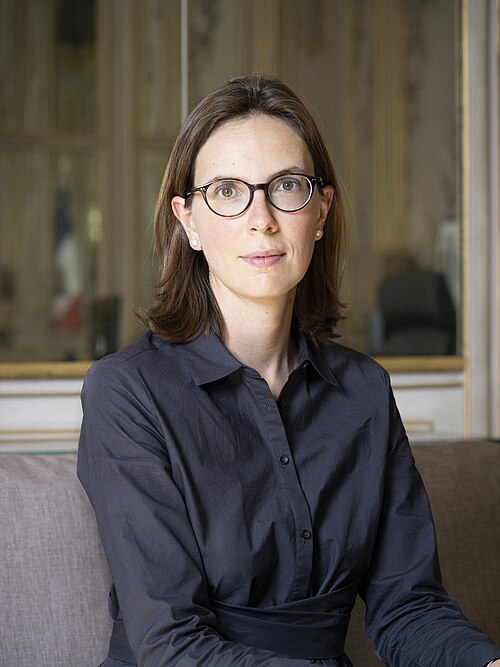 Amélie de Montchalin
Transcription youtube_captions. À recouper avec la source d'origine.
Analyse automatique
Générée par IA — peut contenir des erreurs. Méthodologie
Chapitres
Répartition du ton (temps de parole politique)
Propositif 70 %Attaque 20 %Défensif 10 %
Questions et réponses
Taux de réponse directe : 100 % (directe = 1, partielle = 0,5, éludée = 0)
- 1:00OuverteRéponse directe
Do you think that a deal is likely to come through?
Affirmations vérifiables (citations exactes)
- 1:30Émilie de MontchalinPromesse
« We managed to find the very tiny path to a deal. »
- 2:30Émilie de MontchalinFait
« Peace in Ireland is not negotiable. »
Modèle mistral-nemo:12b · prompt v1 · les citations sont vérifiées mot pour mot dans le transcript ; le taux de réponse directe est calculé à partir des verdicts question par question. Aucun label idéologique n'est produit.
Hello there, you're watching Talking Europe on France 24, I'm Catherine Nicholson. Now, it's been a difficult week for France in Europe. President Macron's choice for French European Commissioner Sylvie Goulard was massively rejected in the last week by members of the European Parliament who cited conflict of interest concerns.
Well, meanwhile, Boris Johnson, Michel Barnier and all manner of diplomats and ministers have been very busy working on Brexit. And on Europe's doorstep, Turkish President Recep Tayyip Erdogan has launched an incursion into Kurdish-held northern Syria, threatening the EU with pushing millions of Syrian refugees currently in Turkey into EU countries. Well, with our guest today, we will be discussing all that and more.
We're joined by France's Secretary of State for European Affairs, Émilie de Montchalin. Thank you for being with us. Thank you.
Now, I'd like to get started with Brexit. There have been a lot of updates towards the end of the recent week and negotiators on Friday going into what's known as the tunnel, these intense negotiations, which seems to indicate that there is some path forward. One of the diplomats said it's a tunnel with a very small light at the end of it.
Do you think that a deal is likely to come through? I won't comment on probabilities. I think people need to understand where we stand and we have to be very clear regarding the different scenarios.
One is indeed that we managed to find the very tiny path to a deal. This is what we wish for now three years, to find a way to have an older exit of the UK. This is not because we want it.
It's just the wish of the UK people and it's a UK issue. It does seem though that the red lines are a bit incompatible for the European Union, so intransigent on any kind of change to the single market, the UK insisting on ending freedom of movement. If you look at what the 27 think, and this is also to respect and protect the rights of the EU citizens on the continent, it's three things.
Three things. One is we need to respect and protect the peace in Ireland and we need to protect the Good Friday agreements. That's, I think, for me, nobody can go against this first principle.
Second principle is to say we need to protect the interior market. It means we have to get some form, somewhere, of control and trust in the fact that things coming in the EU 27 area are controlled and respect the norms we set for our own producers. And this is, I think, something people can understand.
And the third condition we set is we need to build a future relationship where we have some loyalty and potentially some balance. And we need to create the conditions so as this country, the UK, which is 50 kilometers northwest from France, can have relationships based on trust, loyalty and balance. Once we set these lines, we have worked for two years with Theresa May, governments, and Michel Barnier to have this withdrawal agreement.
We understand so far the parliament has not said it was in favor of this agreement. We got it, you know, we understood it. The issue is to move on, to have an agreement, we still need to have these principles respected, not because we are ideologists, but because for the respect of our own people, these things have to be protected.
Of course, the other option is no deal. That is staring us in the face. There are three options.
One is we managed to find this path. It will be quick. And we will know probably in the next week or less than a week how this tunnel, as you describe it, where it leads us.
Second scenario is indeed a no deal. This is not something we wish. We know it would be very shaky.
We prepared ourselves. We prepared the different sectors, the ports, the tunnels and so on. But we know it's a break.
It's a rupture. It's a moment of dejunction and divorce. So we are getting prepared.
We are very serious about it. In this case, we have two main drivers of action. One is to protect people.
We will not play with people. The Brits in France and the French on the other side of the channel must be secured in their right, in their right to stay, in the access to health, in what makes your basic rights as citizens. And there is a third scenario, which is an extension.
On this, very quickly, if the UK asks for an extension, we need to have a proper justification. All things change politically, or we have a conviction that not only time will make things better, but something has to change. So France could be favourable to an extension?
Yes, but not time for time. If things politically, if there is no announcement of elections, of referendum, of the change of prime minister...
And you would want to hear that before the request for the extension was made? Yes, because we need to justify why we give time. You know, a few months ago, in April, we said, yes, we will give more time.
But, you know, the political conditions in between didn't actually help so far to have a proper positive outcome. So we need to be very serious. These three scenarios are on the table.
I will not comment on the probabilities, because I don't know. But this is the scenarios under which I think people need to understand where we go. There's a perception in the UK that France is often playing the bad cop, the hard man on Brexit.
Why is France so often the country that is taking a tough and strict line? You know, we are, with Ireland, the most directed, impacted country if there is a no deal. So if things do not happen orderly, in an organised manner, France is the country with Ireland with the most direct impact.
So we don't want, we do not wish, we do not expect a no deal, but we have to be responsible. If it happens, as we will be most directly impacted, we have to have, get prepared. We will have to work on our future relationship, whatever is the condition of this Brexit.
But perhaps taking a tough line doesn't make the best groundwork for having a good relationship in the future. Our line is not tough. This antagonism.
We've already had Donald Tusk this week talking about a blame game. Yes, our line is not tough. Our line tries to be clear on the conditions to be met.
We try to be clear also with our people. Peace in Ireland is not negotiable. The capacity for us to be sure as consumers that what we buy, what we find in our shops and so on, is respecting the norms we set for ourselves is not negotiable.
Having a future relationship which is loyal, based on trust and confidence is not negotiable. Saying this, I'm not tough. I'm just showing the principles of action we have been following for two years and a half.
And if negotiations start with this famous now tunnel in Brussels, I think it's positive. We have to give us the best chance to have an ordered solution for Brexit. All right.
I'd like to move on away from Brexit to other events happening on Europe's doorstep. In the last few days, Turkey has very much angrily rejected international criticism of its offensive against Kurdish fighters in northeastern Syria, including a statement from yourself. Now, this is an operation that world powers fear could further destabilise the region.
Turkey first launched airstrikes before sending troops across the border to attack some key towns. The Syrian Observatory for Human Rights says that more than 60,000 people were displaced on the first day alone. With more on this, here's Emerald Maxwell.
On foot, or in pickup trucks piled high with their belongings, residents flee from bombs. Many had just a few years ago escaped the Islamic State Group. Now they're under attack from Turkish forces as they continue their push into Kurdish-held northern Syria.
The offensive has been widely criticised internationally, but the Turkish president has hit back, renewing his threat of letting Syrian refugees flood Europe. If you try to label this operation as an invasion, it's very simple. We will open the gates and send 3.6 million refugees your way.
Turkey has defended its offensive as a plan to return millions of refugees to a new safe zone in northern Syria. But there are fears that as fighting intensifies, Islamic State militants could break out of prisons. A senior Kurdish official has warned that may already have happened.
One of the prisons in which the Islamic State group prisoners are kept under the control of Syrian Democratic Forces was bombed by Turkish war planes yesterday. Turkey's offensive began days after a pull-out by U.S. forces from the border, a decision widely criticised as an abandonment of the U.S.-allied Syrian Kurds.
The Kurds have appealed to the European Union and other NATO members to freeze their diplomatic relations with Turkey. They've also called on U.S.
President Donald Trump to help in finding a political solution, asking him to remember the sacrifice made by Kurdish forces in the fight against the Islamic State group. Coming back to our guest, Amélie de Montchalin, you condemned Recep Tayyip Erdogan's incursion into Syria. You called it a shocking situation.
Is France, though, considering actually any action? We have to have a unity on the international scene on how we respond. What is for me the most disturbing is that for five years, Turkey, the U.S., France and others led a coalition or supported a coalition to fight Daesh in this zone.
And we fought along the people now that have been targeted by this Turkish move. So our feeling is that everybody should be taking its responsibilities. and also the U.S. because we know that in this moment the view is not just to have strong words.
We have to have responses and responses that start first with stopping a ceasefire on the most urgent basis and then defining responsibilities so as we can move forward and bring back again stability and peace in a region that we all know is very, very complex and that where things will not be solved in other manners than politically. You talked about the multilateral reaction to this. Is the EU, is France going to be putting forward the idea of sanctions against Turkey?
Everything is on the table. Ministers will meet. We will have this European Council with the heads of states and governments.
For sure, European Union countries need to define the line. And one line to start is that we do not work against blackmail. And we have to be very clear on this. the just operations being done by Turks today can create 450,000 more refugees of people being now attacked while they are civilians.
So we have to be very, to move in a unified manner and we have to work on responses. As we heard, Recep Tayyip Erdogan threatening to go ahead with his opening the doors to the EU for 3.6 million Syrian refugees currently on Turkish soil.
He does seem to be a man of his word going on past action. Do you believe that he would do that? I think we cannot believe such a thing first and I think we should not take this as a starting point.
Blackmail is not, you know, in my small book of diplomacy, something that we use or something that we will consider. So we will discuss. I think the UN Security Council will work very intensively in the coming hours again and we have to follow this not only by words but by action.
Well, Europe clearly is not prepared for a massive influx of migrants, of refugees. Is France planning any contingency measures? I cannot comment on this. our first priority is to have these combats stopping.
It's to have a ceasefire and to have, again, the different players having to assume, not to assume, to take on their responsibilities. There has been a suggestion of, for example, the American troops that pulled out of this part of northern Syria. There was only around 2,000 of them.
Couldn't the European Union send 2,000 troops? This all should be discussed. Do we have capacity?
This is also, I'm taking a step on the side, this is why we say for many, many months now we need to have sovereignty on defence, not to be fighting against anybody but to be able to join our diplomatic voice to capacity to intervene. I'm not saying we should do it now. That's not my role.
It should be discussed. If we do it, it should be also with the agreement of the UN Security Council. Which includes the United States.
We've had Donald Trump saying, why should we help the Kurds? They didn't help us in Normandy, for example. Can you win him round?
I want to also comment on declarations regarding past history 60 or 70 years ago. What I know is today we have to stop the combat. We condemn again this move and we have...
Can you convince the United States to join you on this? Because of course a key member of the United Nations Security Council...
This is all discussion. What the Foreign Affairs Minister, the Defence Minister and the intelligence pieces that we receive will guide us on doing. and I insist on doing.
Condemnation is the first step. Cisfire is the second step and responsibilities taken for everybody is the third step. All right.
We've just got time for a quick discussion of events at the European Commission. France's Commissioner designate Sylvie Goulart massively rejected by MEPs after her second hearing this week. MEPs saying that there were a big conflict of interest worries for them.
President Macron has said that this was political game-playing. Which do you think it is? I won't comment on what, you know, members of Parliament do.
I think they opened a major crisis, a crisis of confidence between the Commission, the Parliament, the Council. Ursula von der Leyen now has to move forward, find solutions. Our President will discuss with her how we can also have this Commission entering into action.
The goal of all of this is not just naming people, is making sure the most stringent questions put forward by citizens during the European elections are being solved. What do we do for create jobs against, you know, these digital champions that put in question our sovereignty on the digital markets? What do we do for our defence?
What do we do against climate change? All these questions need a strong team. This is the responsibility of Ursula von der Leyen.
We will discuss with her. France will obviously be putting forward more names for European Commissioner, but, for example, the leader of leading French Green politician Yannick Jadot says that, you know, this is a big slap in the face for France and he says it's President Macron's fault. France is weakened in Europe because of its own president.
France is weakened by this, isn't it? I want, you know, France will be weakened if the priorities we set, the project we defend, the ambition we have, you know, put in the system. Yes, we're putting pressure on the system because we know and we know France is a country that for many, many, many years have Euroceptics on the top of the votes.
We are one of the countries where if you ask people in the street, do you believe Europe is serving you? People are not, you know, they're saying yes, but the number show to us that we need to be ambitious. The defeat for me would happen if one day because of this nomination processes or, you know, drawbacks and we say, okay, what we do is we stop having ambition.
We go on, you know, the same blah, blah for years. But Sylvie Goulard's situations regarding the parliamentary assistance were well known. The issue of the think tank came up later.
Was it perhaps naive of President Macron to nominate her in the first place? This was a discussion with Ursula von der Leyen. The Secretary General of the European Parliament said there was no case.
She has never been, she's never been indicted to anything. So we can then discuss, you know, morality for years. Parliaments are not tribunals.
So my sense is things were there, but for me, the most stringent now and most urgent pass and move for everybody in Europe is to solve the crisis and have a working commission in place so as we work on the most needed questions that the citizens ask us to solve. Thank you very much. Émilie de Montchalin, French Secretary of State for European Affairs.
Thanks for being your guest. Thank you. Thanks to you as well for watching.
Hope to see you in part two of the programme in just a couple of minutes' time. in just a couple of minutes' time. Thank you.