Podcast: A Conversation with Benjamin Haddad, France’s Minister Delegate for Europe
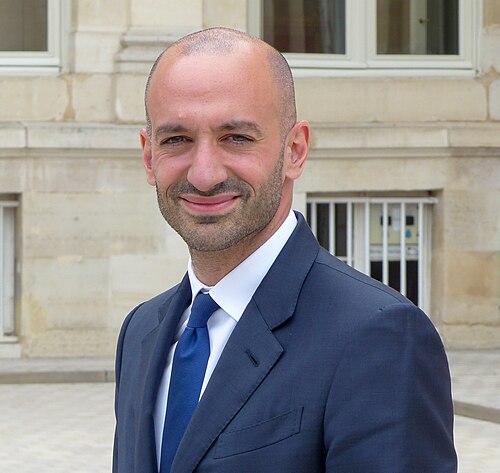 Benjamin Haddad
Transcription Whisper (large-v3), avec identification des locuteurs. À recouper avec la source d'origine.
Analyse automatique
Générée par IA — peut contenir des erreurs. Méthodologie
Chapitres
Répartition du ton (temps de parole politique)
Propositif 95 %Attaque 3 %Défensif 2 %
Questions et réponses
Taux de réponse directe : 100 % (directe = 1, partielle = 0,5, éludée = 0)
- 9:40OuverteRéponse directe
Comment construire des alliances en Europe pour la défense ?
- 16:38OuverteRéponse directe
Quelles sont vos attentes pour les négociations du Cadre Financier Pluriannuel ?
- 20:21OuverteRéponse directe
Que pensez-vous de la mise en œuvre du rapport Draghi ?
- 25:35OuverteRéponse directe
Pourquoi l'élargissement de l'UE est-il si lent ?
Affirmations vérifiables (citations exactes)
- 3:49Invité politiqueFait
« The MFF is the budget of the European Union for the years 2028 to 2034. »
- 3:59Invité politiqueFait
« We decide how much we will spend together and invest in agriculture and food security and cohesion in territories. »
- 4:02Invité politiqueFait
« But of course, in defense, AI, technological innovation, the green transition, all these areas that are critical for a continent to invest in its future. »
- 4:54Invité politiqueFait
« our Europe, our internal market of 450 million people, our talents, innovators, companies, startups, is an incredible asset for us to defend a different voice and to defend our own interests and values on the world stage. »
- 5:13Invité politiqueFait
« We need to defragment our internal market that still today is too complex, filled with too many regulatory barriers between countries. »
- 5:41Invité politiqueFait
« all the savings of European citizens that cross the Atlantic every year to fund US markets, stay in Europe to support their own companies. »
- 6:02Invité politiqueFait
« when we're facing subsidized overcapacities from China, coming to destabilize our companies on EVs, steel, chemicals in so many sectors »
- 6:18Invité politiqueFait
« the Americans, and they didn't have to wait for Donald Trump, by the way, to do the inflation reduction act, the small business, act to do protectionism and support their own companies. »
- 7:23Invité politiqueFait
« I am a member of President Macron's party »
- 7:46Invité politiqueFait
« we've put at the heart with President Macron for European policy, this idea of European sovereignty »
- 12:09Invité politiqueChiffre
« if you look at France over the two terms of the Macron presidency, we'll have doubled the defense spending of France. »
- 13:04Invité politiqueChiffre
« you pull together resources at the European level, 150 billion euros for the safe plan. »
- 15:36Invité politiqueChiffre
« the 90 billion package that was finalized by the European Council a few months ago. »
- 17:14Invité politiqueChiffre
« investment, I think, around 800 billion euros a year that Europe suffers compared to the United States. »
- 19:16Invité politiqueChiffre
« It's about 60 billion euros a year. »
Temps de parole
- Benjamin Haddad72 %
- Présentateur15 %
- ?13 %
≈ 122,2 interruptions / 10 min (chevauchements et interjections détectés).
Modèle mistral-small-latest · prompt v1 · les citations sont vérifiées mot pour mot dans le transcript ; le taux de réponse directe est calculé à partir des verdicts question par question. Aucun label idéologique n'est produit.
This
podcast is brought to you by the IIEA, Sharing Ideas, Shaping Policy.
And
he will be speaking to us. I'm going to do the introductions.
But
before I introduce Minister Haddad,
let
me introduce myself. My name is Orla Quinn. I'm the Interim Director General here in the Institute.
And
I'm the former Secretary General of the Department of Enterprise, Trade and Employment.
So
before I do the formal introduction, maybe just some of the House Rules. Our conversation today is online. We have audience online and it's being recorded. So again, just to keep that in mind. If people have questions, the Minister will say some opening remarks and then we will have some questions. I have some and you may have some.
If
you're on Zoom joining us, you can put in your question on Zoom.
And
we'll work that through as the event continues.
We're
very, very pleased to welcome you today, Minister. It's a particular honour for us. And as we host the Ireland hosts, the EU presidency,
it's
a great opportunity for us to really focus in on the many issues facing Europe today. And Minister, I know you yourself have been
both
a member of a think tank and a political researcher.
So
let me just formally introduce you to the group. As I say, you're a graduate of the Paris Institute of Political Studies
and
Minister has been a researcher in international relations, which he has taught.
And
indeed,
I
worked for seven years in think tanks in Washington, including a senior director of the Atlantic Council's Europe Centre
up
to 2022.
He's
the Minister of Le Paradis Paridou, La Marée de Trompe et la Fin des Illusions Européennes.
So,
again, that's a particular topic that we may touch on, Minister, in terms of what you would see as European strategic autonomy
and
sovereignty in the face of new geopolitical threats and U.S. withdrawal, perhaps, or certainly a diminution. The Minister was the first national secretary of the UMP party from 2011 to 2014. He has represented the Labour Party in Washington,
and
he was elected to the National Assembly in June 2022.
He's
a member of the Foreign Affairs Committee
and
the European Affairs Committee.
And
on July 2024,
the
minister was elected in the 14th constituency of Paris.
And
on the 21st of September in 2024, he was appointed Minister Delegate for Europe. Minister, you're most welcome, and I will pass the floor to you.
Thank
you. Thank you very much, Dr. Quinn. It's great to be here at the Institute for International or European Affairs here in Dublin. I just landed here in Dublin
less
than an hour ago for two days that are going to be, I think, very important with my colleagues of the General Affairs Council, the Minister for European Affairs.
We'll
be touching upon mostly the negotiations of the Multiannual Financial Framework, which is, you know, an acronym,
one
of these many EU acronyms that you will hear in the next few months. And
behind what
will be most likely very technocratic debates full of issues of governance and accounting, first and foremost, there will be a deeply political and strategic conversation about the future of Europe
and
where we want to bring Europe in the next 10 years. The MFF is the budget of the European Union for the years 2028 to 2034.
This
is where we decide how much we will spend together and invest
in
agriculture and food security and cohesion in territories. But of course, in defense, AI,
technological
innovation, the green transition, all these areas that are critical
for
a continent to invest in its future, to reduce its dependencies and to act and stand on its own two feet as a power on the world stage at a time where we see Russia's war of aggression against Ukraine and Russia's hybrid warfare against our European democracies,
the
questions arising about the future of the transatlantic relationship
and
the trade pressure coming from China, destabilizing our markets and companies.
None
of this, I'm absolutely convinced, and this is the message that I will convey to my colleagues, that
our
Europe, our internal market of 450 million people, our talents, innovators, companies, startups,
is
an incredible asset
for
us
to
defend a different voice and to defend our own interests and values
on
the world stage.
But
for this,
we
need to strengthen it.
We
need to defragment our internal market that still today is too complex, filled with too many regulatory barriers between countries. We'll discuss this maybe later in the conversation, but this is at the heart of the competitiveness agenda, the draggy agenda that we're pushing, the saving investment union, simplification, investment,
everything
that we're doing to make sure that
all
the savings of European citizens that cross the Atlantic every year to fund US markets, stay in Europe to support their own companies. European preference. European
preference. That
will be a key part of this debate, both on the MFF and on all the texts
that
we're pushing today
at
the European level.
The
idea that
when we're
facing subsidized overcapacities from China, coming to destabilize our companies on EVs, steel, chemicals in so many sectors, when we see the Americans, and they didn't have to wait for Donald Trump, by the way,
to
do the inflation reduction act, the small business, act to do protectionism and support their own companies.
And
we should not be naive
and
also defend our own and support our own innovators and champions.
Invest
massively into our security, into our space sector, into our AI, all the areas that are absolutely critical
for
strategic autonomy.
I
outlined this very briefly because
I
really want to share that
behind
the conversations that we will have
in
the next few months, it's really
these
issues, these key political and strategic issues for the future of our continent that will be at the heart of the choices that we will make. And in this respect,
I
think that this Irish presidency of the European Council comes at an extremely critical time,
at
a juncture where the choices that we'll make
will
really determine
how
we
survive
and how we assert ourselves
as
a power.
So,
as you know,
I am
a member of President Macron's
party,
I was appointed two years ago by a prime minister that I think some of you have heard in this country called Michel Barnier, who has also been a good friend and mentor to me. And ever since 2017, we've put at the heart with President Macron
for
European policy, this idea of European sovereignty,
this
idea that Europeans should be able to defend their own values, their own identity, their own security.
And
I think sometimes some of the
terms
that we used
European
preference, defense and security,
standing
up.
You
know, sometimes on our own
on
to assert own interests
were
a bit taboo at the time.
And
you can see now
a
clear historical acceleration of these of these terms and of these of these issues. So this is really what will be at stake. And
I
want to say I'm really glad to be able to have this exchange with you. You were kind enough to mention that I personally come from the think tank world.
I
spent seven years in think tanks in the United States working on these issues of European strategic autonomy in the future of the transatlantic relationship and convinced of the role that think tanks
can
and must play in our policy conversation to
build
the bridge between the world of ideas, the world of academia, the world of expertise and the world of policy making
and
decision making. So thank you again for your invitation. I'm really looking forward to this conversation. Thank you.
Thank you for that, Minister. You've touched on so many things that we can talk about. I think it's true. And you've pointed out, I don't think Europe has ever been at such a
state
of geopolitical uncertainty and Europe, as you say, rightly establishing itself
and
to play that leading role.
Ireland,
I suppose, in terms of our presidency, we focused on security values and competitiveness. Maybe if I
touch
on security first, because it's obviously hugely important and
the
role of the EU in terms of that common defense.
Could
you just say a word how easy, how difficult it is to build those alliances across Europe?
No,
thank you. First, I will say, I mean, we will talk about security, but it's interesting because when you look at security and competitiveness and you could add values, I think actually these concepts are deeply intertwined.
When
we talk about supporting our innovators and our AI startups, when we think about building the public investment that we need to be able to leverage private investment to support our own competitiveness and innovation ecosystems, that's now a security issue.
If you
look at all these areas which we thought were sort of devoid of politics, trade, technology, energy, we see now that all these interdependencies have been weaponized and are now used as tools and levers of power.
And
so when we talk about integrating our internal market, when we talk about protecting our companies from unfair competition coming from China, destabilizing
our
sectors,
we're
also talking about our own security and our own strategic autonomy. And this is why these debates about
the
Draghi report or the multi-annual financial framework that we will have are closely tied to our security agenda. But to respond really to your point, clearly, I think
there's
been in the last few years a deep strategic awakening of Europeans.
You
know, I spent, as I mentioned,
a
few years in the US and I was there doing the whole first Trump term.
And
what struck me at the time
was
the deep level of denial that you could see from many Europeans basically thinking, OK, let's just wait it out. It's a bit of an accident of history. He was elected because Hillary Clinton ran a bad campaign or whatever.
And
then we'll go back to the traditional transatlantic relationship afterwards.
And
I think you see a few years after that,
that
now there's a deeper sense that something more structural is going on.
And
by the way, if you look at the other side of the Atlantic,
it's
Barack Obama who talked about pivoting to Asia,
who
called Europeans free riders of American power. It's Joe Biden who continued the protectionist trends of the Trump administration with the Inflation Reduction Act.
And
so the lesson we must draw from this is continue to engage with our US allies and partners, of course, but at the same time, take matters into our own hands and
take
the steps to be able to invest in our own security. This is what first we're doing at the national level. So if you look at France
over
the two terms of the Macron presidency, we'll have doubled the defense spending of France.
And
even right now, as we're
struggling
to reduce deficit and public spending and we will have a budget soon that will continue to tackle
public
spending,
we're
continuing to increase the defense spending of our country. We're actually accelerating the deployment of our military bill to go even quicker in the increase in defense spending. But of course, all of this makes sense if we do it also at the European level. Our neighbors, Germany, Poland and others are also increasing the defense spending, but we need to invest
in
cooperation, industrial cooperation and defense.
I
think
a
model that we've seen with what the European Commission has laid out with the safe plan is a very interesting and pragmatic one. What is it? Basically,
you
pull together resources at the European level, 150 billion euros for the safe plan.
We
lay out areas, domains in which we have shortages in capacities, ammunition, long range strikes, drones, cyber, air defense, etc.
And
then you give the financial incentives to countries and companies
to
procure, to cooperate cross border to be able to invest.
And
this will be one of the key debates that we will have as well
in
the MFF in the multilateral financial framework. The second pillar of that budget, the first pillar to make it quick and not too technocratic. But the first pillar is what we call the national plans. It's where you have agriculture and cohesion.
And
the second one will be the competitiveness fund. This is really an innovation of this new budget. This is why it's so important.
And
this is where you will fund
AI,
defense, space, and here again,
work
on cooperating together.
One
key condition for us in this debate
will
be, and I mentioned it, European preference. The idea, very basic idea, I think common sense,
that European
taxpayer money should come to support European companies, European industries and actors and foster
greater
cooperation between them.
And
one last point on
the
security awakening, because I'm talking about financing, I'm talking about
industry
and initiatives.
But
the key test of this, of course, is our support for Ukraine. This is the first security test today for Europeans.
And
here again,
you
know, I remember very well where we were
a
year and a half ago
when
we had the meeting in the Oval Office between President Trump, Vice President Vance and President Zelensky.
And
at the time, it was quite common to hear in the commentary that
that
was it. America and Russia would negotiate a deal without Europeans being anywhere,
that
Ukraine would be forced into capitulation
and
that we just passively stand by while something that is first and foremost a security issue for Europeans was being handled by others.
And
we've refused this.
We
actually stepped up,
took
care of our own security. We created the coalition,
the
willing, first to shape the security guarantees for Ukraine after a potential peace deal,
but
also to coordinate our support for Ukraine.
Today,
almost all of the support for Ukraine comes from Europeans,
the
90 billion package that was finalized by the European Council a few months ago. We've already, I think, delivered about 11 billion out of these 90 billion euros that gives visibility to Ukrainians for the next couple of years, both economically
and
militarily. Some of the military announcements like the
permission
to produce storm shadows and scout missiles under licensing,
you
know, things like this that will give also Ukrainians the means to defend themselves. So I think this has been, you know, still a test of resilience and long term commitment,
but
this has shown really that there's been a shift, I think, in the last few years of Europeans taking security and defense matters seriously and stepping up
to
defend our own interests.
You've talked there, Minister, just about the MFF and that balance. And of course, it's going to be, there will be very difficult compromises. And I know certainly Ireland and France would have a huge interest in the cap
vis
-à-vis defense spending. And
I'm
just thinking from the Irish presidency,
what
are your hopes and expectations for those negotiations?
So,
as I mentioned, the next few months will be really critical. And we've said that our objective
is
to build the conditions to get to a deal by the end of the year.
Yeah.
But of course, that depends on building consensus and having a budget that's up to the investment needs and ambitions that we lay out. If you look at the Draghi reports, it's very clearly showing the lack of public and private investment.
investment,
I think, around 800 billion euros a year
that
Europe suffers compared to the United States.
And
we need that public capital to be able to create leverage and create momentum to bring in private capital to support this ecosystem. First, I think we should not oppose,
you
know, the traditional policies like agriculture and investment into technology or defense and space. Because if you look at the world we live in,
all
the relationships are being weaponized today. And they can be tools of power.
Do
I want to put into jeopardy my food security? When, you know, yesterday we did the same for energy.
Thinking
energy is just a commodity that you trade on a market between clients and different markets. And then you realize it's become a tool and leverage of power and of geopolitical influence.
So
I think the support for our agriculture is key for food security. But of course, you also need to have the resources to invest in our competitiveness, everything that we mentioned.
And
so one issue that will be key to us in these negotiations in the next few months is to solve that financial equation. If we get a bit into the details, the today, the European budget is funded
at
about 90% by national contributions.
So
it's member states who send a check
or
generally a wire transfer every year
to
the European Commission.
If
we want to increase the level of ambition of our budget and of our investment,
it
cannot rely solely on national contributions. And actually Ireland and France share the fact that they're net contributors to the budget. So, you know, we look at this also very closely.
The
only way to resolve that equation
is to
build the own resources
for
the European Union
to
be able to balance this.
In
the initial proposal by the Commission, you actually had a package of own resource.
It's
a good first step.
It's
about 60 billion euros a year.
So
we need to look at this and debate it, maybe even propose others. The European Parliament has proposed other own resources like tax on the digital services, online gambling, crypto.
But
we need to have this conversation and we need to have an ambitious package of own resource
to
be able to close the budget,
because
otherwise,
to
be honest, we will not be up to that challenge. We will not be up to the historical moment that we're facing.
We'll
get into this conversation by doing
deep
cuts of hundreds of billions of euros when
we
need we need to invest. Everyone agrees that we need to invest in AI and space and defense or in the green transition. By the way, something that I should mention
when
we had a terrible summer of fires
in
the south of France, unfortunately. So once again, I think these
technical
discussions on building your own resources will be absolutely critical to be able to adopt the budget by the end of the year and really be up to the investment needs and ambitions of our continent.
Could
you say a word about Draghi? Some of the discussions we've had here in the Institute
that
there's great disappointment that Draghi hasn't been implemented to the extent that it should be less than 10%, I think, at this stage.
Just
where can the drive or the push come to actually really focus on competitiveness?
Yeah.
First,
I think you have seen a shift in how we operate,
but
you're clearly right that it's too slow
and
we need to deliver in a much quicker and much more ambitious way. Between 10% and 15% of the Draghi conclusions have been implemented. And if you look at the details, they're mostly the ones on defense and on setting up a defense industry and the defense funds.
We
started doing a push towards simplification, and I think that's good because it's the balance that you find between keeping the same level of ambition. For example, on the green transition, everything that we've done with the green deal,
but
doing it with pragmatism and common sense and working closely with our companies
to
make sure that we can accompany them in this way.
I'll
give you a specific example. Yesterday, I was in Lille in the south of France, and I met with lots of SMEs and French companies,
and
a lot of them are doing a lot of investment and efforts because it's also in their own business interest to invest in their decarbonation and environmental transition.
But
some of the initial texts of European Commission
were
so burdensome in terms of
data
reporting,
in
terms of paperwork, and was basically treating
huge
international corporations that have the means to be able to do this accounting and administrative paperwork and SMEs the same way.
So
we've pushed to simplify a lot of these rules in the last few years to say, okay, let's at least lower the burden for the smaller companies so that we can accompany them.
So
all this work needs to continue.
And
then what's clear is that we have
an
internal market that's still too fragmented. I think, as I mentioned earlier, it's an incredible asset, 450 million people, so many talents, so many companies.
But
you know,
when
I
go
around the country and I talk to French companies and French entrepreneurs or startup entrepreneurs, and I ask them,
what
do you think about when you think about Europe?
To
be honest, they should be the most pro-European crowd, you know, liberals, open to the world, entrepreneurial risk taking.
But
what did they tell me? Number one, too much administrative burden. And number two, they say, you know, I've been successful in France, I have, I've raised funds, I have customers, I've have bank relationships. If I want to go tomorrow,
to
Ireland, to Germany, to Poland, to Portugal, I feel I have to restart everything from scratch.
So
we have this, but at the same time, the solution that they're drawing is not a thought to say, let's go back to national borders, let's abandon all this, let's make this a reality.
So
this is why we've pushed very much,
and
actually also with the Irish Commissioner, who's been at the heart of this effort, the 20th regime, EU Inc., this idea that at least you should have a simplified way of incorporating a company that's dematerialized, no capital, and recognized everywhere in Europe, if you want to expand and export on the European market.
The
saving and investment union, as I mentioned, you know, in French, we have an expression that doesn't translate very well, but we say serpent de mer means a sea snake. And it's something that has been a recurring debate for a very long time and comes back from time to time and that is never solved.
The
saving investment unit is a bit of this at the European level,
but
I think clearly now you have a bigger sense of urgency.
And
we've worked with partners with Germany to create a first proposal
and
build momentum among European partners
to
be able to push forth. So all these pieces, the simplification, the integration of the internal market, the investment, that will be linked also to a large extent to the MFF debate,
are
now, I would say, on the table.
I
think the next year, six months to a year will be absolutely critical to deliver.
We
need to do so.
And
I would add one last piece to this. Let's be agile and flexible.
You
know, I talked about the coalition, the willing on Ukraine. This is something that we did with Europeans, also with non-EU
members,
the UK, Norway,
Canada
and Australia. Countries that are not European, but share a lot of our values and interests and wanted to contribute.
On
a lot of these issues, like the saving investment union, if we don't manage to do it at 27 immediately,
then
let's have a group of countries that work together, integrate together and create momentum for others to join. I think, you know, you can be deeply pro-European like I am without saying that necessarily you have to do everything at the 27 level all the time. Otherwise, you don't do anything. I think we need to show a bit more creativity and flexibility in the way that our institutions work.
Can
I ask you and then I'll open up to the audience. I think Ireland scores one of the highest in terms of
our
enthusiasm for Europe,
but
we have benefited hugely from Europe. And this country is a different country than it was.
But
we also at our presidency in 2004, we welcomed 10 new member states
and
we've only had one new member since then. And yet
we
have so many waiting in the wings that really want to join, particularly on the Baltic side of Europe.
Could
you just say a word about that? I was struck people saying they were disappointed that Iceland didn't pass the referendum, which I think we could all agree was disappointing, but yet
we
have so many
members. of
course, North
Macedonia
is nearly 20 years waiting to join and other countries. Just
why
that itself has been so slow. And I appreciate politics and regulation comes in, but
for
Europe to grow and to benefit from new membership.
I
completely share your assessment of this. You know,
I
deeply believe that enlargement
is
an opportunity for Europeans.
First,
it's
a
geopolitical necessity to anchor peace and stability on our continent, especially when you see
the
level of interference that you have
from
predators and rivals. Russia
and
others
in
the Western Balkans, Moldova, of course, the war of aggression on Ukraine.
And,
you know,
I
don't have a lot of personal decoration in my office because it's not a very stable job. So you should not get too attached to
to
the place. But there's one poster that I brought from Sarajevo a few years ago from the siege of Sarajevo in 95
that
says Europe wake up. Sarajevo is calling you. There's one expression I never use. I don't like is when people say war is back on the European continent when talking about Ukraine because it never left. We're a bit in denial. We outsource to others.
There
was always war.
And
first, it shows how fragile our continent can still be. Second, it shows the incredible opportunity that Europe not only can be for us in terms of anchoring peace,
but
also for our neighbors.
You
know, I travel a lot through the candidate countries and talk to young people, talk to civil society, to leaders as well. And it says a lot about our institutions
that
you still have, you know, tens of millions of people
who
are going through deep reform, deep work
to
be able to join.
And
there are more candidates today to be the 28th member of the European Union than the 51st state of the United States. And I think that says something about our model. I was in Ukraine the first time in Maidan in 2014. And for the first time in history, we saw young people being targeted at, shot at, killed because they were brandishing this European flag. That was for them the promise of a better future. Now, once we say this, it's true that it's a process that's very demanding
because
you need to integrate what we call the acquis communautaire, which is the body of legislation from the European Union. This is actually what guarantees that this enlargement is successful
rule
of law, independence of judiciary, protection of minorities, free markets, et cetera, et cetera.
So
you have countries that are moving forward, I think, really in the right direction. Montenegro, Albania.
I
think North Macedonia could be on that list to Moldova and others. France, like
a
lot of our partners, sends experts in these countries to accompany the reform process in the administration. the ministries of justice, et cetera.
But
I think here again, I talked about our institutions being more agile, more flexible.
Here
again, we need to have a conversation about how we can make this enlargement process more flexible, because as you see, there's a bit of a tension. There's a tension between the fact that we want to anchor these countries and these regions to Europe. But at the same time, we must stay very demanding on the reforms and the rule of law
for
us, for our institution and their integrity, but also for the civil societies of this country that we don't want to betray.
And
I think here making the enlargement process more gradual could be a way to answer this, because the way it works today, it's a light switch. It's on off.
You
do all the work for years, years and years,
and
you're not in the EU. And then suddenly one day you join and you're in all the bodies of policies of the European Union.
I
think if we had something more gradual where you say, okay, you've ticked the boxes on the fundamentals, rule of law, democracy, et cetera, then you can already join certain blocks of policies, whether that's energy, whether that's defense, whether that's the internal market, that's something we can figure out.
You
could sit around the council table without voting, but you can participate to the deliberations and debate. De facto, this is what Ukraine has been doing to a large extent for the last few years. President Zelenskyy is very often around the council table. So I think thinking creatively, not betraying the integrity of the process that is important, but thinking creatively about making this process more gradual as a way to go. We've made some proposals to open the conversations in this respect with Germany. It's been, I think, well, welcome and received in the candidate countries because they know it. We don't see this as an alternative to enlargement.
We see this as building blocks towards full enlargement and final enlargement.
And
I think that's a good way to think about it.
Okay.
Thank you for that.
This
podcast is brought to you by the
IIEA,
sharing ideas, shaping policy.