French Finance Minister Roland Lescure at Semafor World Economy
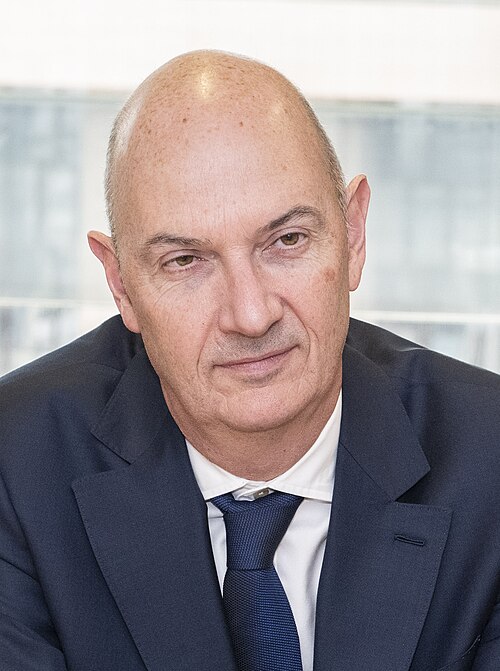 Roland Lescure
Transcription Whisper (large-v3), avec identification des locuteurs. À recouper avec la source d'origine.
Analyse automatique
Générée par IA — peut contenir des erreurs. Méthodologie
Chapitres
Répartition du ton (temps de parole politique)
Propositif 85 %Attaque 5 %Défensif 10 %
Questions et réponses
Taux de réponse directe : 78 % (directe = 1, partielle = 0,5, éludée = 0)
- 0:21OuverteRéponse partielle
Quelle est la véritable facture pour la France de la guerre Trump-Iran ?
- 2:00OuverteRéponse directe
La France envisagerait-elle d'escorter des navires dans le détroit d'Ormuz ?
- 2:58OuverteRéponse directe
La France serait-elle prête à payer l'Iran pour le transit du détroit d'Ormuz ?
- 4:52OuverteÉludée
Est-ce du terrorisme économique ?
- 5:51OuverteRéponse directe
Le financement de la défense pourrait-il impacter les retraites et la santé ?
- 9:14OuverteRéponse directe
Craignez-vous un retrait des États-Unis de l'OTAN ?
Temps de parole
- Roland Lescure75 %
- ?13 %
- Présentateur12 %
≈ 116,7 interruptions / 10 min (chevauchements et interjections détectés).
Modèle mistral-small-latest · prompt v1 · les citations sont vérifiées mot pour mot dans le transcript ; le taux de réponse directe est calculé à partir des verdicts question par question. Aucun label idéologique n'est produit.
Good
afternoon, everybody. My name is Hadley Gamble.
I
am the Chief International Anchor for IMI, and it is a thrill for me to be sitting next to Your Excellency. I just want to kick off by asking you, given everything that's been happening, we know that President Macron is going to be hosting a summit on Friday, focused on the Strait of Hormuz and what can be done. Your Excellency,
what
at this time can you tell us has been the true cost to France of President Trump's war with Iran?
You
know, I mean, so far, France is
better
protected, probably less exposed than others, including in Europe,
let
alone Asia. That's on the forefront of what's happening in the Gulf. I mean, you know there's about 12 million barrels that are missing every day,
and
most of those barrels are missing in Asia, where there's a, you know, proper oil shop
happening.
France never let
good
crises go to waste. You know that expression, Churchill used it, Rahm Emanuel used it in 2008.
In
the 70s,
France
embarked on a massive investment program in nuclear energy.
As
a result, our exposure to hydrocarbons went down from 90% to 60%.
And
that cushion is what's weathering us a bit from this crisis. It doesn't mean we don't have an impact. Gasoline prices have increased in France like everywhere else,
but
no impact on electricity price, very little impact on gas.
You
know, so far, so good.
You
mentioned the conference on Friday.
You
know, we want to be part of the solution. We know that the Strait of Hormuz is the knot, the economic knot
of the
conflict. So France is willing, with the UK and others, to make sure that we can,
you
know, fluidify the Strait of Hormuz once the escalation takes place, not before. So this is not going to be a military operation. This is going to be a peacetime operation to stabilize the Strait
if
we get there. But first, we have to get there, and that
requires
negotiations between Iran and the U.S.
Would you anticipate that France would act to convoy ships, potentially?
You
know, we'll see what happens. We won't do it on our own.
I
think that what we want,
you
know we're not a belligerent. We're not part of this conflict in the sense that,
you
know, we're not part of the war.
We
are protecting our citizens on the ground. There's 400
,000
French citizens on the ground, including dual citizens in Israel and in Lebanon.
We're
also protecting our allies because we have defense partnership with some of the Gulf states.
But
we also want to protect our economy. And the way to protect the economy is to get oil flowing in the Strait of Hormuz. And we feel the only way we can do it, once there's the escalation, once there's a ceasefire that lasts more than a few days,
is
by making sure that people from different angles of the world that have an objective
interest
in having oil flow, get together to do it. We're not going to do it alone.
Yesterday, we heard from Patrick Pouillonnet, the CEO of Total here at Semaphore,
and
he has said, you know, at the end of the day, whether we have to pay or not, we need to get the oil flowing. It has an impact on markets, very much to your point.
But
would France be okay with having to pay Iran to transit the Strait of Hormuz?
I
mean, we're already paying.
You
know, we're all paying. So whatever brings
oil
flowing, I think, is welcome.
But, and
there's a big but,
we
are very much of the view that international laws on sea circulation have to apply.
You
know, this is an international strait that needs to be free of passage. So, no, we don't like the idea of having a toll bridge on a place that belongs to all of us and that should keep on belonging to all of us. Lots of negotiations happening to hopefully de-escalate,
ease
the tension,
start
getting oil and others things to flow. As you know, there's not just oil coming from the Gulf
and going
everywhere, you know, fertilizers, helium and others.
So,
we need to open this.
We
also know that even if we open this, we're going to be
quite
a while before we get back to normal.
We
know that in March, despite the strait being closed, there was a lot of oil circulating because there was tankers.
We
know that in April, those tankers are not there anymore.
We
still have, you know, confidence in the fact that there's going to be oil, at least in Europe, in France. We don't have an issue there. May is now an iffy month. So,
I
said recently, you know, we need this to be sorted in weeks, not months.
Because
we know that once this is beginning to be sorted geopolitically and hopefully peacefully, there'll still be quite a few weeks of turbulence to go through before we go back to normal,
if
we ever do go back to normal.
Is
this economic terrorism?
No.
I mean, I don't want to use those words. Why? Because at the end of the day, what matters for me, I'm the finance minister, is that we find ways of de-escalating.
I
don't want to escalate. I want,
you
know, discussions to take place. And obviously, first and foremost, between the U.S. and Iran, between Israel and Lebanon as well. You know, Lebanon is very dear to our heart. And we need those conversations to take place.
And
we don't want Lebanon to be a, you know, side victim of a conflict
that
is not theirs.
But
at the end of the day, my role,
you
know, we're chairing the G7 this year. And I'm having a G7 finance ministerial meeting tomorrow. It's to make sure that the finance ministers
weather
the economic impact of the storm as much as possible.
And
I don't think that we're doing that by
using
somehow inflammatory words. I would call it that way.
Tell
me this. Funding defense. It's something that your government and your president have for many years now attempted to put at the forefront of Europe's agenda. But, of course, that does come at a cost. You've suggested that perhaps health care and pensions may be impacted in France.
Are
the French people ready, in your mind, to bite the bullet there
and
take on that economic pain?
Well, I'd say, unfortunately, what's happening in the world now is helping them be convinced that we need to invest more.
We
started investing in defense in 2017.
You
know, defense had been a poor child of French budgets for quite a while.
But
between 2017 and 2027, next year, the two mandates of President Emmanuel Macron, we would have doubled defense spending in France. There's no other country in Europe that has done that. They're not doing it.
And
this is welcome. When Emmanuel Macron started talking about European sovereignty in 2017,
there
was a few listening years here on this side of the Atlantic, but not that many listening years in Europe. So,
one,
we've already done quite a bit of the way. Two, we need to do more.
Three,
French people understand that we have to have priorities. And it's not the only one, by the way. Defense is one. Industrial energetic sovereignty is another one. As I said earlier, we invested a lot in the 70s. That makes us more sheltered today. We need to double down. We need to invest even more now on nuclear and renewables. Yes, renewables. To make sure that when,
not
if, when the next crisis comes,
we're
depending even less from hydrocarbons. So, industrial energy sovereignty, defense sovereignty,
but
also digital sovereignty.
We
do have a competitive advantage in France.
That
makes us the favorite destination for anyone who wants to invest in AI. We have cheap electricity. It's carbon-free. It's voluminous.
We
also have great engineers. You guys have probably met a great French engineer in your life.
He's giving us the sell, if you're not aware.
Yeah, so buy France, by the way, buy France.
That's
the
sell.
But it is a sell, but I think it's not a hard sell. You know, yesterday I was with the main CEOs of all the U.S. banks in New York,
and
they all get that. They understand that France has been business-friendly more than it's ever been,
and
it's been open for investment, but it's also got these competitive advantages on AI. And if
great
companies that are here want
to
be more potent in Europe, they need to have feet on the ground. They need to have data centers. You know that data sovereignty is a big deal. But if you don't have data centers in the countries where you want to do business,
it's
going to be hard to do business there. So,
yes,
I'm selling France. Please buy France. Come and see us. We're great. We eat well, and we've got great engineers.
But
I think it's important as well.
At
a time where,
you
know, inter-country relationships are sometimes a bit hard at the top level, that investors, that corporations, that engineers, researchers, journalists, and all, keep on talking to each other. We need to stay engaged. We've been friends, you and I, for 250 years, your country and mine.
And
we have to remember that every day. And sometimes when there's a bit of a strain,
we
need to remember
that
at the end of the day, we need to gather and we're going to be better together in AI, in geopolitical, and in everything else.
Are
you concerned that the United States may pull out of NATO?
I
certainly hope not.
I
think that,
you
know, I was with Mark Rutter recently, the Secretary of
the
General. He's done a great job in keeping NATO together.
We
need each other.
And fair
to say, you know.
Because who's going to make up for that shortfall in terms of the cost?
You know, there's two things. There's
the
actual contribution to NATO.
And
you know who contributes the most to the budget of NATO? 60%? The EU.
The
actual contribution of the U.S. to NATO is not that big. It's about 20% even less. But
can you afford
to have the U.S. pull out of NATO?
No, I
don't think any of us do. I
don't
think any of
us.
We need each other. And again,
what
the U.S. has done, which we haven't done enough of, is defense spending.
It's
not the budget of NATO that counts.
And, you
know, there's massive
geopolitical
challenges. I mean, the Arctic is a massive geopolitical challenges.
It's
not by asking who does Greenland belong to that we're going to sort it out. It's by being together
in
the Arctic and making sure it's protected from potential aggressions from people that we're not necessarily friends with. I don't need to name them.
Beyond the high taxation and high debt that you are dealing with.
Thank you. And you have been dealing with it for some time. That's
not only what we do, guys. Tell me. Tell me.
I want specifics. How are you guys going to pay for this? And I'm talking about that increased defense spending. Because as much as the sell is very nice to hear,
that
high taxation is not what people
are interested in.
And enough is enough. I think that, you know, the level of taxation in France has gone high enough. We need to lower it. We started doing it between 2017
and
the COVID. And, you know, it's been tougher since then. And, you know, we've now landed a budget. We're going to land another budget for 27. I'm convinced about that. We have political stability.
But
the main debate is going to be about 27 general elections. You know, we have a presidential election. We have probably a parliamentary election at the end.
And
French people are going to have to choose.
They're
going to have to choose between what I alluded to earlier,
industrial
sovereignty, energy sovereignty, defense sovereignty, and digital sovereignty.
This
is going to require investment.
But
those investments are going to pay back. They're going to bring growth. So investment and growth.
Or
protection, which is great, without the growth, but with taxation. And that debate is going to be up for grab. You know, it's going to happen.
I'm
convinced that at the end of the day, and, you know, there are things on which we don't always agree with you guys. But one thing you guys have been carrying for a long time
is
a growth agenda.
And
we need to have a growth agenda. You don't make people vote for you by telling them it's going to be
sweat
and tears. You're going to get them to vote by telling them we're going to grow our way out of that. Yes, it's going to require efforts. We have to think of the way we finance our social spending.
We
have to think of the way we finance our retirement system. So you're going to lower taxes?
Yeah,
I hope so. I hope so. I'm not going to do it. By the way, I'm not the next president. So I'm not going to be the one doing it. But I hope that the candidates are going to make sure they have a credible program that allows us to do it. We did it in 2017. In 2017,
we
lowered taxes, we lowered the deficit, and we hired growth. We can do that. We need to invest in the things I talked about. We need to reform the system. We reformed the labor market in 2017. There's more job to do.
Were
you encouraged by the fact that Viktor Orban was not returned in Hungary?
I
mean, I don't interfere
with
others' elections.
But
it's a sign. You're
smiling.
It's
a sign. It's a sign that, yes, I mean, he's been there for a long time, so, you know. But there was also a progressive election in the Netherlands a few weeks back.
I
think there's a sign that people want hope. They want optimism. They don't necessarily want countries to fall back
and
retract
and
protract.
I
think they want progress. They want prosperity. And for this, we need to be open, engaged with each other. Let's stay engaged for another 250 years.
Your
Excellency, just in a few moments from now, you're going to be meeting with America's Secretary, or I should say Minister, but Secretary of Finance, Scott Bessent. What are you hoping to hear from him?
Well,
I'm hoping to keep on working with him. We've been working very well. We've met three times in person already. We've been on the phone. We've been on G7 conferences.
You
know, four or five weeks back, the international energy agency liberated 400 million barrels of oil. That helped
count
the market and have oil circulated. We engineered it in the G7.
And
we started it in the G7 finance by having a conversation, Scott and I, about doing so.
You
know, we need to work together. We're doing it well. There's a great
challenge
that we are holding in the G7, which is
correct
big imbalances that we're faced with. China has to consume more. You guys have to save more. We have to invest more. We're holding that agenda together. We're chairing the G7. The U.S. are chairing the G20. We can work together.
At
the end of the day, to make the world a better place. And without engagement, without discussions, without debate, and sometimes even without disagreement, we're not going to do it.
And
with lower taxes. Your Excellency, thank you so much for joining us.
Thank you.