Europe Minister Amelie De Montchalin speaks on BBC's The Andew Marr Show
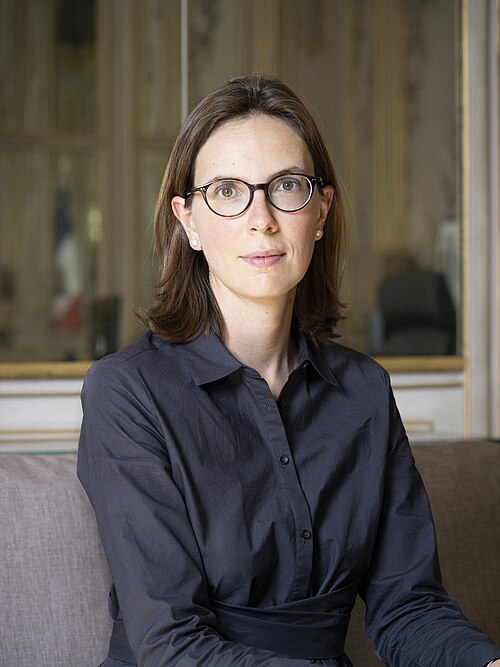 Amélie de Montchalin
Transcription youtube_captions. À recouper avec la source d'origine.
Analyse automatique
Générée par IA — peut contenir des erreurs. Méthodologie
Chapitres
Répartition du ton (temps de parole politique)
Propositif 60 %Attaque 20 %Défensif 20 %
Affirmations vérifiables (citations exactes)
- 2:15Amélie de MontchalinFait
« I think we are entering a new phase of Brexit. »
- 3:27Amélie de MontchalinPromesse
« There is time if we are consistent, if we go quickly to the reason, to the rationality. »
- 5:18Amélie de MontchalinFait
« We said that there are four topics which are linked in negotiations. »
Modèle mistral-nemo:12b · prompt v1 · les citations sont vérifiées mot pour mot dans le transcript ; le taux de réponse directe est calculé à partir des verdicts question par question. Aucun label idéologique n'est produit.
This week, we finally saw Britain's negotiating position for the all-important trade talks with the EU. The Prime Minister struck a pugnacious tone, warning that he might walk out of the talks halfway through if they haven't advanced properly by June. So how has that gone down with the other side?
I caught up this week with Amélie de Montchalin, President Macron's Europe Minister, and I asked her what her country's foreign minister meant when he said the UK and the EU would rip each other apart in these negotiations. I think we are entering a new phase of Brexit. We have known a lot of drama, a lot of passion, a lot of emotion, because politicians were speaking to politicians.
I think now we are entering the real people negotiation, the one for business, for farmers, for fishermen, for companies, for the real issues that concern people on both sides of the channel, being them European or British. Some people expect me, you know, because I'm a French minister here, to say things. Maybe the hard Brexiters expect me to say I want to be in a battle, I want the British to lose.
You want to grind down the British economy? This is not a battle. This is very serious.
This is a moment where we need economic rationality. It's not a moment where if, you know, British lose, French or Europeans will win. At the end, we need to protect our citizens, we need to protect our businesses, we need to be, as politicians, able to look the people that voted for us in the eyes and say very calmly, we protected you, we protected your interests, we protected your way on living and move forward.
So why this phrase, rip each other apart? It doesn't sound very friendly. I think what it is meant is that there are many issues to be discussed.
Take the fishermen, take the farmers. People will want us to be in a battle mode. And I think this is not the way it should be.
The mandate that we Europeans gave to Michel Barnier is a mandate of rationality, of reason, of saying that at the end, if we go and rip us apart, as it was said once, we will all lose. And this is not the objective we want to pursue. Do you think that there is time in the year ahead, by the end of this calendar year, to do a proper comprehensive agreement covering all aspects of trade, security and the rest of it?
There is time if we are consistent, if we go quickly to the reason, to the rationality. If we stay at the level of politics, of symbols, of things which are not at the heart of the negotiation, then there is a risk. But what I want to tell you, that we will not exchange trade-off substance for calendar.
If we need six more months, we, as Europeans, we are very clear that we want a good deal, a fair deal, a deal that can last for many generations to come. And we will not sign for the sake of having a deal, you know, the deal that we managed to have at 11 p.m. on the 31st of December.
It would make no sense. The trouble with that, respectfully, Minister, is that the EU, like the UK, signed up to that date in international law. That is the date both sides agreed.
And Britain certainly has said that that is a hard deadline. Yes, I understand. It's also a date that can be extended.
In international law, we provided a way. But you don't expect Boris Johnson to extend. I mean, Boris Johnson is talking about walking away from the negotiations if there isn't substantive progress by June.
What I know, and I go back to my passion and reason, I think it would be very difficult for people to understand that we did not protect them as much as we could have done. Just because we wanted to stick to a date while we had the opportunity to be extending the delays for negotiation for six months more, 12 months more, if we need so. I'm not telling you this is what we want.
I'm telling you that at the end, what matters is the content, is the substance of the deal. And that we will not sign for any type of a deal just because we need to sign something if we fear, because we are politicians, we also have sovereignty to respect, we fully respect, fully respect UK sovereignty. But in reverse, we also have to fully respect the people on the European continent that never ask for Brexit.
Can I ask you about some of the specifics that are going to be a problem? If Britain does not get full access to European markets, do you understand that it would be impossible for any British government to give European and French fishermen access to British waters? That would be impossible.
We are ready to open it in comparison with the capacity to maintain fair condition of competition. We are interdependent. We can choose a route where we have a lose-lose solution.
No access for fishermen to waters and then no access for fish, fished by UK fishermen to the European soil. I'm not sure this is either a rational way to go. This is why I trust our capacity to be reasonable, to be rational, to see that we are interlinked and to work to protect, on both sides of the channel, our businesses, our people.
Fishing is really interesting about the way both sides are going to approach this negotiation, because I think it accounts for 0.04% of the population. It's worth less than 1% of European GDP.
Is it really conceivable the whole deal would fall on something like fishing? You know, I was in Normandie a few weeks ago, and we cannot, we Europeans, in Denmark, in Belgium, in Netherlands, in Spain, in Germany, in France, because we cannot go to these people who invested for their whole life to buy a boat than to create a full, you know, industry, to transform, to freeze, to export fish, that for a reason they didn't choose. You know, we fully respect the Brexit vote.
It's a sovereign choice of the British people. But these people… It means Britain is now an independent coastal state. And I ask again, would you actually let the whole deal fall on something like fishing?
We linked four subjects. We linked free trade agreement, conditions of competition, governance of the whole deal, and fishing. Because we feel that we cannot agree on any of these subjects if we cannot agree on the whole of the four points.
So the whole thing could fall on this? Yes. We said that there are four topics which are linked in negotiations.
But what I want to say is that on fish and other topics, all we play it with emotion, with drama, with passion, with symbols. And we know how to make it a very, I think, nasty battle. Both sides.
Both sides. A very nasty battle where politicians in the UK, politicians in France are put in a situation where things get very difficult. And at the end, we will both lose.
Let's swim away from the fish and let me ask you about state aid rules, which is another very, very big area. Now, in terms of the amount of money that Britain spends subsidizing its industries, it's far, far less than France and far, far less than Germany. Why should this be such an issue?
You know, it was put in the political declaration because both the UK side and the European side thought that if we wanted to be fair in the future competition, and we're not talking about the past. You know, in the past, we had the same rules by definition. It was the European rules.
We had the European Court of Justice ruling things if they were not done properly. And even the UK was a key actor in setting these rules about state aid because it was a vision where economy should be mostly played by business and not too much with public subsidies. This is exactly what is put in the deal, that we need that the rules of state aid stay the same so as we can maintain on both sides a fair competition.
There's a democracy point here. If the British people are not able to elect a government to do what they want when it comes to state aid rules, then they have lost sovereignty. Again, you are totally sovereign to vote the laws that you want in your country.
We, on the European side, we share competencies because we feel we are stronger by doing things together. UK people decided differently. They decided to do it themselves.
It's a totally free and possible choice. But when the goods, when the services get out of the borders, then we are concerned. Not concerned in a negative way.
Then we have to say yes, no, in which way it comes. Boris Johnson wants a zero tariff, zero quota agreement. We are ready to give it.
But we need zero dumping to make sure that we keep a fair competition as it was in the last 47 years. There is clearly no room for compromise as far as the British government is concerned on this area of following EU law going forward. Given that, is there really any deal to be done?
Again, I'm not asking any British people to think that what the European has put in the mandate for Michel Barnier is to follow for the centuries to come EU rules. It would be meaningless. What we say is that to keep a free trade with no tariffs, with no limitation in volumes, we need to do it in a fair manner.
Fair manner doesn't mean we have to have exactly the same rules. But we need, you know, a corridor, a convergence, a proximity. So as, you know, farmers in France don't see products being sold which are so differently produced that they are 20%, 30% cheaper.
And in reverse, in reverse, that things do not come to your markets and are sold 20%, 30% cheaper. When it comes to a lot of these rules, there are plenty of other rules too. Things like the minimum wage, maternity rights, holiday pay, for instance.
Those are all areas where Britain actually has higher and more generous standards than the EU more generally. And again, people say, so why going forward when Britain is a completely independent country? Should we be expected to follow the changes in EU standards when our standards are already higher?
I think we need to be clear on this. Nobody, nobody is asking the UK to copy-paste for the eternal times to come, the EU regulation, as it is done in the EU, sovereignly, where we transpose, as we say, the EU regulation. Nobody is asking this.
You are, and you were, and you will be a sovereign country, as ever. We've heard quite a lot, Minister, about the possible consequences for British industry and British farming and the rest if there is no deal. What about the consequences for French industry and indeed Europeans more generally?
They too will suffer pain if there is no deal. So, you know, I grew up in Calais for a while. I was a little child.
It was just after the opening of the tunnel. At that time… British territory. At one time, yeah, it's half-half, you know, it's in the middle.
At that time, we had one million trucks going from Calais to Dover and from Dover to Calais every year. Nowadays, it's five million trucks. So, it means that we cannot know for sure if such a thing happened, who has the most to lose.
I think we all lose. These conversations, of course, cover much more than phishing or even state aid rules. They cover security.
They cover data. They cover a huge range of issues with the failure of these talks this year not to be a massive sort of geopolitical disaster, both for the EU and for the UK, a real failure of statesmanship and political craft by those involved. So, I agree with you.
The partnership between the UK and Europe, the partnership between France and the UK, has a long history. You know, the President Macron wants to come to London to award the Légion d'honneur to the city. It's the highest civil and military recognition we could give to a person or to a city.
And we have a long, long-lasting relationship. We've waged war together. We've managed to get peace together.
So, I'm not telling you that what is at stake is our, you know, long-lasting relationship. We are talking about trade. We are talking about businesses.
That's one negotiation. Brexit happened. It is done.
There is no more British MEPs in the European Parliament. There is no more UK commissioner. Many people will be very happy about that on both sides.
Yes. So, what we need to do is not to get confused. There are negotiations to be discussed by Michel Barnier on the mandate we gave him.
There are things which are bilateral that France in the UK will continue to share. We will continue to share a lot of intelligence on defence projects, on security. This is a bilateral relationship.
We have lots of treaties just between France and the UK, and they will last. Minister, thank you very much indeed. Thank you.
Thank you. Amélie de Montchalin. And by the way, that was the first time she had ever given an interview on television in English.
You couldn't have told that. Thank you. Thank you so much.
Thank you. Thank you. Thank you.