Inside Feminist Diplomacy with Delphine O
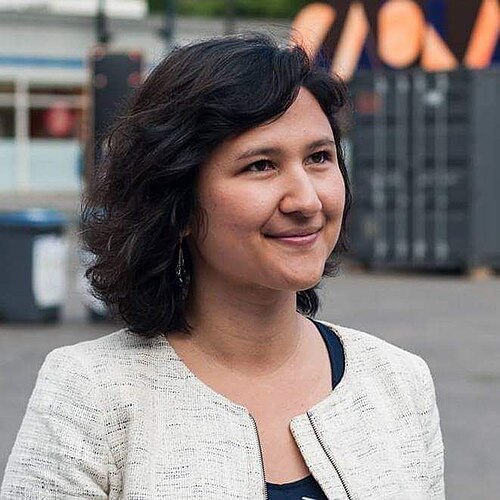 Delphine O
Transcription Whisper (large-v3), avec identification des locuteurs. À recouper avec la source d'origine.
Analyse automatique
Générée par IA — peut contenir des erreurs. Méthodologie
Chapitres
Répartition du ton (temps de parole politique)
Propositif 65 %Attaque 20 %Défensif 15 %
Questions et réponses
Taux de réponse directe : 96 % (directe = 1, partielle = 0,5, éludée = 0)
- 3:06OuverteRéponse directe
Peux-tu nous en dire plus sur toi et ce qui a façonné ton choix de rejoindre la diplomatie ?
- 5:52OuverteRéponse directe
Comment comparerais-tu les mondes politique et diplomatie ?
- 7:56OuverteRéponse directe
Qu'est-ce qui t'a le plus surpris en devenant ambassadrice ?
- 11:05OuverteRéponse directe
Quelle est la décision la plus marquante que tu as influencée en sept ans ?
- 14:15OuverteRéponse directe
Pourquoi appelles-tu la diplomatie féministe un sport de combat ?
- 16:50OuverteRéponse directe
As-tu un exemple où tu as dû affronter des attaques idéologiques dans un espace international ?
Affirmations vérifiables (citations exactes)
- 0:33Invité politiqueFait
« I was 33 years old when I was appointed to this posting as ambassador, the youngest ambassador. »
- 0:40Invité politiqueFait
« I was systematically taken for the intern when people did not know me. »
- 0:47Invité politiqueFait
« It was true at the National Assembly. And then it was true also at the ministry. »
- 6:44Invité politiqueFait
« I was representing a district in Paris, and I was a member of the Committee for Foreign Affairs in the French National Assembly. »
- 2:40PrésentateurChiffre
« mobilizing over $40 billion for women's rights worldwide. »
- 11:54Invité politiqueChiffre
« fundraise this $40 billion for gender equality going through the world's pandemic. »
- 12:59Invité politiqueFait
« we launched the Laboratory for Women's Rights Online, which is the first and only international platform for exchange on technology facilitated gender-based violence. »
- 24:07Invité politiqueChiffre
« I was twice on maternal leave. And the second time I had six months maternal leave. »
- 26:53Invité politiqueFait
« I am both wondering if we are seeing the end of the international world order as was built after the Second World War and possibly the end of the UN as we know it. »
Temps de parole
- Delphine O77 %
- Présentateur14 %
- ?8 %
≈ 74,6 interruptions / 10 min (chevauchements et interjections détectés).
Modèle mistral-small-latest · prompt v1 · les citations sont vérifiées mot pour mot dans le transcript ; le taux de réponse directe est calculé à partir des verdicts question par question. Aucun label idéologique n'est produit.
I
was
33 years
old when I was appointed to this posting as ambassador, the youngest ambassador.
And
of course I was not taken seriously. I was
systematically
taken for the intern when people did not know me. And it was true. It was true at the National Assembly. And then it was true also at the ministry. But what is happening now is that gender equality is being attacked in all the other arenas. It's being attacked at the Food and Agriculture Organization. It's being attacked at the Organization for Civil Aviation. It's being attacked when we're talking about resilient agriculture. During the seven years, I had two kids.
So
I was twice on maternal leave. And the second time I had six months maternal leave. And
obviously
there was no issue with the ministry. I mean, it's legal in France and so on. But I purposefully chose, after having my two kids, to be spending less time in foreign missions.
I
am both
wondering
if we are seeing the end of the international world order as was built after the Second World War. And possibly the end of the UN as we know it.
Hello
and welcome to Humans of Diplomacy. This is a conversation series about the people behind international diplomacy.
The
diplomats, the international civil servants, the humanitarian leaders,
and
the negotiators who work every day to navigate some of the world's most pressing crises and challenges.
My
name is Rita Khiaari. I spent more than 20 years working as a diplomat and inside the United Nations system.
And
I'm now an author,
a
senior advisor, and career coach,
and
of course the host of Humans of Diplomacy.
Through
this series, I want to explore diplomacy from the inside. Not only the organizations, the institutions, the negotiations,
but
really the human journeys behind those things.
What
motivates people to dedicate their careers to diplomacy? What are the turning points that shape their journeys? What are the dilemmas that they have to face in their work, but also outside of their work?
And
what does diplomacy really look like behind the scenes? These are some of the questions that we will be addressing
through
this series.
So
for this very first episode, I'm really delighted to welcome Delphine Oh. Delphine Oh was the ambassador at large at the Ministry of Foreign Affairs of France.
She
was also the head of the Generation Equality Forum, and she led the organization of what was the largest conference on gender equality
since
1995, mobilizing over $40 billion for women's rights worldwide. Before that, Delphine served as a member of the French National Assembly, an elected member of the parliament,
and
she has always been deeply engaged in international affairs
and
feminist diplomacy.
So,
Delphine, welcome to this Humans of Diplomacy episode, and thank you so much for agreeing to be our guest today. Thank you. It's my honor.
So,
I think the first question that I want to ask you, Delphine, is to tell us a little bit more about yourself, of course,
but
also to tell us if there was something in your early life or early career that shaped your decision or your choice to join diplomacy.
Well,
first of all, thank you and congratulations on launching Humans of Diplomacy. I'm very glad to be your first guest of honor. Well, to answer your question, I have to admit something first, is that I'm not a career diplomat. So, you may host other career diplomats in this podcast, but
I'm
one of these few exceptions, at least in the French diplomatic corps,
as
I'm an external outsider who has been working in diplomacy on and off,
but
I did not choose a career in diplomacy, and we can probably come back to that. To answer your question, what kind of triggered me to work in, I would say, international relations and geopolitics,
rather
than only diplomacy, understood as the diplomatic corps?
Well,
I come from a binational background. My
mother
is French, my father is South Korean,
and
I grew up in a very diverse international environment.
I
grew up in the south of France, in Lyon, the second biggest city in France,
and
I was always surrounded by international students. My mother was actually teaching French as a foreign language.
My
dad was deeply involved in the Korean community in Lyon and in France,
and
we used to travel all the time. So, I would say that I was,
from
an early age, very much exposed
to
international affairs and to traveling around the world and to dealing and negotiating and speaking and trying to build bridges between different cultures and different histories and different countries.
So,
that probably really kind of set the scene for me to be interested in international affairs.
And
I think very early on, so my dad used to say that when I was in middle school, once I came back home and I said,
you
know, I will be one day Secretary General of the UN.
So,
I'm not going to be the next Secretary General of the UN,
even
though it might and it may hopefully be a woman elected this year. I don't know if it's a myth or not, but apparently from a very early age, I was interested in international affairs. My first internship was an internship at the German parliament, as I was doing an exchange year there in Berlin as a young student.
My
second internship was an internship at the French embassy in Korea, as I was doing also another exchange year. So,
again,
it is very telling that I was, you know, of my early work, early, let's say, jobs were all abroad.
Thank
you. That's very, very interesting.
So,
before you joined the Ministry of Foreign Affairs, you also worked in politics. I mentioned you being elected to the French parliament.
So,
how would you compare both worlds?
Well,
first of all, I have to say that my career is very diverse. In
French, we
say éclectique, which means it does not really have a thread
to
it. Sometimes I have a lot of students and young people ask me, you know, why did you choose such and such? And I say, I didn't really choose it. It kind of chose me. So, I have worked, as you have said, in politics, in diplomacy. I have worked
in
the think tank. I have worked now as a freelance consultant. I worked at NGOs. I even launched my own startup in the media. So, I did very different things, I think, just because by nature, I'm very curious. When I was in politics, I was, as you said, elected an elected member of the French National Assembly.
I
was representing a district in Paris, and I was a member of the Committee for Foreign Affairs in the French National Assembly.
So,
it's quite overlooked part of what MPs are doing in France. It's more known in the U.S. or in Germany and the U.K. and parliamentary systems that actually members of parliament can have a great role in diplomacy, but it's less so in France. And there, I was quite invested in what we call parliamentary diplomacy. I led, actually,
two
parliamentary delegations to Iran because I used to be an expert on Iran and Afghanistan. We can
come
back to that. I also authored a report on the strategic states in the South China Sea, and I traveled through the Middle East and different countries.
But
now that I've transitioned then to the Ministry of Foreign Affairs, it's very different because
in
the parliament, you don't make decisions about foreign affairs, at least in France.
Whereas
in the Ministry of Foreign Affairs, I was in a high-level position as an ambassador for gender equality and feminist foreign policy,
where
I was able at least to influence decisions made by the minister or by the authorities and the leadership.
Great.
And
so, when you started working as an ambassador at the Ministry of Foreign Affairs, what is the thing that surprised you most that you didn't think would happen or was the case?
And
maybe more generally, what is it that you think people who are outsiders of this world usually don't get right about it?
Mm-hmm.
Very
interesting.
Well,
I think in France and other countries, there are a lot of stereotypes about what diplomats are and what kind of life they live.
That's actually
why we're doing this podcast.
Yes, exactly.
So, there's this phrase in France, you know, la vie fait rire au rocher, which is this kind of luxury chocolates that they used to serve in the diplomatic evenings and receptions. And a lot of people tend to think that when you're a diplomat, at least abroad, you have a luxury life and you spend your time doing receptions and going to events and it's a very easy life. I think this
may
have been the case in the past, but this has changed a lot, a lot. So, first of all, when you work in Paris, in the capital, it's very different from working in an embassy because your day-to-day life is very different. What surprised me was,
I
would say, both ways. One is that
the
ministry, as any kind of public administration, is a very heavy machinery. It's also true, of course, of the UN and most international organizations.
And
so, when you have to make a decision to actually
suggest
a decision to the cabinet and to the minister, there are so many levels of green light approval you need to get.
And
again, it's also true in multilateral organizations, that it can take an awful amount of time and energy and diverse opinions. At the same time, when you work in the ministry, and this is what I've deeply enjoyed in the seven years there as an ambassador in this high-level position, is that
you
really get to be at the heart of the, I would say, nuclear reactor. Like, you have, you're at the heart of the system. You really get to influence and impact decisions made by the system. And as the Secretary General of the Generation Equality Forum,
as
most recently last year, also the SG for the Fourth Ministerial Conference on Feminist Foreign Policies, and as someone who wanted to impulse and to trigger and to create new programs, even new areas of interest for the ministry, I hope that I was able to have that kind of influence and impact. But I do feel after seven years that things have changed, at least in this area of feminist foreign policy, which is interesting because it's a new concept,
even
for the ministry and for most countries. So, at the same time,
it
can be very heavy, very slow, and very sometimes just, you know, bang your
hand
around the wall because it's so slow. But at the same time, you're also able to make very quick decisions and to actually influence people's lives.
So,
what is the biggest decision that you think you have influenced in these seven years?
I
wouldn't say a single decision, but I could pinpoint a few either events or projects that I have led and initiated that I'm quite proud of. The first one is obviously Generation Equality Forum, which was the, as you said, the largest conference on gender equality since 25 years. At the time of the pandemic, at a time of we were experiencing the backlash already, it was so hard to get around the table, a diverse variety of stakeholders. So, obviously, UN agencies, countries, states, governments, but also philanthropic foundations, NGOs, you know, enterprises from the private sector, and so on and so on, and to fundraise this $40 billion for gender equality
going
through the world's pandemic. Another one initiative that I'm very proud of is
when
we were working at the Ministry of Foreign Affairs, so when we work on gender equality, we work around the scope of gender equality and women's rights.
So,
we're working on gender-based violence, economic empowerment,
the
role of women in climate change, and so on and so on.
But
there was sort of a blind spot in the work that we were doing,
which
was technology facilitated gender-based violence, what was happening in the digital world.
We're
kind of late recognizing the impact of that at the international scale and taking action to
exchange
best practices and try to also move forward the needle at the UN and international institutions. So, for a year, I spent working and analyzing and additioning different stakeholders around the world and in France to understand what we could do as the Ministry of Foreign Affairs of France. And, of course, we're not passing a law
in
France, we're not doing national legislation,
and
we launched the Laboratory for Women's Rights Online, which is the first
and
only international platform for exchange on technology facilitated gender-based violence.
And
we were also able to support financially and politically a number of civil society organizations from the Global South
who
are coming up with their own
tech
solutions to come to help and support victims of TFGBV, as well as counter hate discourses online. And, for instance, that didn't exist before, and it's a very clear, efficient, concrete initiative that I was able to launch because also our minister was very, yeah, very intently hearing what I was saying and understanding that, yeah, we need to fill that gap. And I'm often asked, you know, what does the diplomacy do, what is it worth these days because it cannot prevent wars, you know, comfort the Middle East. And this is just a very concrete initiative when you bring together, and it doesn't have to be the whole of the UN, it doesn't have to be 193 member states.
You
know, there are six member states, about 15 civil society organizations, two UN agencies,
and
those are the good-willing, basically, those who want to move forward the Middle, work together in exchange best practices.
Great.
So on this issue of gender-based violence and gender equality in general, so you have worked extensively on these issues, and you have even written a book which is called La diplomatie féministe
est
un sport de combat. La diplomatie féministe est un
sport de
combat. So why do you call it a combat sport?
Well,
with this book, I actually wanted to really narrate my day-to-day life as a diplomate. I didn't end up really using the first person because I'm a very discreet person, but I wanted to kind of explain to the general public, not just to experts and feminists and those who know about the issue, what's going on? What's going on in the background? What's going on at the UN,
among
others, but mostly at the UN, in terms of the battle for women's rights? And I wanted to ring the alarm bell and say, you know, what's happening in Iran and Afghanistan? Because it kind of gets the focus of the media. Even what's happening in the US, this can happen any day now in any country, including my own, France. And you have seen Hungary, you have seen Poland, you have seen Italy, and obviously you have seen the US.
And
so I wanted to say, you know, be aware, because you do not hear about international news. You do not hear about what's really being negotiated in New York and in Geneva. And all you heard the big headlines, basically, you heard about the war, you heard about, you know, when there's a UN Security Council resolution about Gaza,
but
what's going on is that international law when in consul women's rights
is
being fully attacked, like aggressively attacked by a number of countries today, led by the US administration. And so I wanted to kind of bring the reader with me
in
the background of what's happening and in the back scene, almost in the back scene to see, to understand what's happening, but also wanted to spotlight certain women's activists, feminist activists that I've met,
that
we were supporting with the ministry who are doing extraordinary work. And for me, they're diplomats of their own kind, they're not working for their own country, their government of the UN, but the work they're doing is exactly aligned with mine, we may have a different method, different tactics, sometimes we do not exactly align on the objectives, but overall, we want to defend international law,
when
it comes to women's rights, we want to defend the multilateral system, and we want to defend women, basically.
So
that's interesting. So you describe the attacks that we see today on gender equality and the fact that it's actually a continuum and people might not see it as such, like that what is happening is actually worsening in certain countries and can happen anywhere. Do you have an example of like at a time where you had to face
such
ideology or attacks in an international space or forum?
Well,
I have too many examples, somehow, not personal examples.
But
what I have seen, so I've been seven years in the job,
I
came into office during the first Trump administration, where there was already a backlash, but it was not as organized and as powerful, as we're seeing now, then there was a bit of a relief under the Biden administration. But we were seeing the tendency of the backlash reorganizing and refunding basically those movements, those anti gender movements, especially in the global south.
And
then there was a second election of Donald Trump.
And
this US administration has come as everybody has seen in the news, full fledged against women's rights and LGBTQ rights also.
And
what's interesting is that
you
would assume that I would only negotiate women's rights in women's rights
negotiations
or resolutions. So for instance, for us at the UN, the commission on status of women, right? Every year in March, two weeks of negotiation, all member states, civil society come together, we negotiate attacks.
But
what is happening now is that gender equality is being attacked in all the other arenas, it's being attacked at the Food and Agriculture Organization, it's being attacked at the Organization for Civil Aviation, it's being attacked when we're talking about resilient agriculture, when we're talking about tourism, when we're talking about real estate. So
in
every single negotiation, it's being attacked, it's
being attacked at
the UN, at the Council of Europe, at the OECD, at the Organization of American State, in every single international regional organization, it's being attacked, where it used not even to be the issue. And what's being attacked is language, because language has an impact on people's lives.
And
so when those, this unholy coalition is intent on suppressing the mere word gender or the word women from any text, when you actually invisibilize women, that means, that means you actually delete them from real life. And so this is what I wanted to also tell the readers
and
the general public.
You
were asking me about stereotypes about diplomats, people often think, you know, how they just negotiate about this word and, and punctuation and this dot and, and what, what actually does it, what kind of impact does it have?
It has,
it has,
it has, it has
an impact because if you delete the word women or climates from all the national, international regulation, of course, you will actually, that would trigger, uh, the, uh, dropping up and dropping, uh, uh, all kinds of international regulation on climate or, and on gender.
And
this is precisely what's happening today.
So
one
of
the entry points for those attacks is what the
U
S administration calls DEI, right? And, uh, it's about, it's about parity. It's about women's presence and leadership,
as
well as about, of course, women's rights and empowerment. What, uh, what does it, did it feel for you to be a woman and a diplomat? And is there anything specific that you want to mention? I know you have, you, you were not posted abroad, which comes with other sets of challenges, as we all know,
but
how do you, how do you see that? Women in diplomacy.
I
think, um, coming from the political world and going into diplomacy, I had
to
some extent, a similar experience of just being a woman in position of power with high level visibility and responsibility and not being taken seriously. Okay. That is unfortunately still the case for many women, especially a rather young woman. I was
33 years
old when I was appointed to this posting as ambassador, the youngest ambassador.
And
of course I was not taken seriously. I was
systematically
taken for the intern when people did not know me. And it was true. It was true at the national assembly. And then it was true also at the ministry. Once people colleagues or the general public came to know that I was the member of parliament or the ambassador, then they would treat me with respect.
That's
the first thing. The second thing is, yes, all of everything that you hear about mansplaining about, you know, relegating women in the back seats, uh, about, uh, not having enough women and delegations. All of this is still true. Um, and also it's my position was very particular because I was a woman working on women's issues and I hate,
I
hate this phrase, women's issues, not women's issues. It's actually the whole world's issues. It's just a matter of equality and justice and also performance.
But,
um, I was seen as, you know, oh, that woman who's working on these women's, oh, these women's things, you know, whatever.
Um,
and it took some time to be taken seriously, but hope, but fortunately there was a real buy-in from the political leadership from the, I, I knew four, uh, foreign ministers
when
I was in, uh, my position as an ambassador.
Uh,
so I, yeah, there were four, uh, foreign ministers and all of them really took feminist foreign policy as a priority for, uh,
the
ministry, uh, both internally and externally in our work defending women's rights at the UN, but also internally in promoting women
at
positions of responsibility, you know, fighting against the gender pay gap and so on and so on.
So,
um, um, things have definitely become better. Um, but I, I, I had worried about being again, a woman working only on women's issues. And then after seven years, of course, my position was known and recognized within the ministry and also with my foreign partners and interlocutors.
So
it was taken more, uh, seriously. Um, I do wonder, however, as I will start, if I start a new career in a new, um, area,
if
it's not politics of diplomacy, if I have to start again, as again, maybe the youngest one and the woman and, and so on. But the place of women in diplomacy has evolved a lot. Um, I, if you look at the history of women in the diplomatic core in France, um, so actually the, the, the,
the
first woman, the, the first
time
that women were allowed to take the concours to, uh, become diplomat and enter the diplomatic core, whether it was in the fifties, uh, and then the first woman who actually entered the core, she was told once she had passed successfully the concours that,
um,
oh yeah, it's fine, but you cannot work abroad.
You
cannot work in an embassy, your diplomat, but you will never work in an embassy. You have to work in Paris and you cannot work on political affairs. You can work on either press issues or like, um, teaching French abroad or the archives and all of this, not minor stuff, but which is not obviously the heart of this
mass
work. Yeah. Uh, so it took a lot of time. And I think it was in the seventies that,
uh,
for the first time, a woman was appointed ambassador in the French diplomatic corps. So when you look at the longterm, it's actually quite recent.
Yes.
And I think also women in diplomacy, as, as we all know, uh, the issue of conciliation of like the private and professional life becomes even, uh, more difficult, uh, because of the, of the movement and the fact that you, uh, live abroad, et cetera, et
cetera. And
to that,
if I may,
um,
my case is interesting, not because it's my case, but during the seven years I had two kids.
So
I was twice on maternal leave. Uh, and the second time I had six months maternal leave.
And obviously
there was no issue with the ministry.
I
mean, it's legal in France and so on. Um, but I purposefully chose,
um,
after having my two kids, uh, to be spending less time in, you know, foreign missions, uh, traveling abroad to
be
spending less time in meetings after 7 PM or even 6 PM and so on.
Um,
and I decided that I would use my position and my voice as ambassador for women's rights
to
actually really state that very publicly and say, well, I don't think this is useful to have this meeting at 7 PM or at 8 AM, which is also not very convenient when you have to bring your
kids
to school.
Um,
or I don't think,
uh,
or
I don't think after
the pandemic specifically, I don't think, you know, taking a plane for spending two days in this country is actually very impactful and efficient. We could probably have a zoom meeting and that would be as impactful and efficient. I did travel still.
Uh,
but I did use my, my position and I hope that for the new generation, it is still the case.
And
do you feel like it had
a
negative, negative impact on your career at all? Or do you feel like it had no,
the
fact that you decided to kind of take it more slowly, which is completely understandable. How do you feel like it has?
I think if it had
been a career diplomat, it would have been different. I would have had probably more pressure
on,
uh, complying with the long work hours and, you know, being present at the office until they're late. And
I
would probably have felt more the pressure of,
um,
abiding by the unwritten rules, I would say, which are still very much present, even after the pandemic. My case was different because as a non-career diplomat, I had probably a bit more freedom and flexibility and liberty to say no. As I also knew that I was not maybe, you know, in this job or in this administration for my entire life.
Great. Thank
you. So we're going to move to another issue, which is, uh, about multilateralism. And I think, um, you mentioned earlier that you have worked on, on Iran a lot. I mean, Afghanistan as well, but you mentioned Iran, which is obviously these days, uh, very, uh, you know, relevant.
Um,
how do you, would you describe the state of multilateralism today?
Um,
I'm not sure about the exact English phrase, but in disarray, would probably be a euphemism.
Um,
I
am
among, you know, along with many, many others who have been in this, in these places and in this world, uh, of multilateralism. I,
I
am both, um, wondering if we are seeing the end of the international world order as was built after the second world war and possibly the end of the UN as we know it, as we know it, and as it has been functioning for the past 70, 80 years. So,
and
I'm also wondering at the same time, is it a bad thing or a good thing? I think the bad thing is that it's not necessarily that one thing is being replaced by another is that we don't know what is going to be the thing replacing the UN.
So
for now, I would be advocating the board of peace. I have my doubts about this
for
now, even though I did see as somebody who has never worked for the UN, but with the UN and with the multilateral order, I did see the deficiencies and the failures of that system.
I
understand the criticism, even the goodwill criticism, especially coming from civil society of the insufficiencies.
Um,
especially in the global south. Uh, but I'm just worried that we haven't come up with another,
you
know, consensual solution to what's going to come after that. And what's interesting is to link the, the failure of multilateralism and the issue of gender equality and the backlash. And I often say, you know,
attacks
on gender equality and, uh, feminism in Jen and women's rights are direct attacks on, on multilateralism because international women's rights law
was
born out of multilateralism. It would not be possible to have the kind of legislation that we have in the most progressive countries today in the world. And in most of countries in the world, had it not been
for
the four UN world conferences on women
for
the CEDO and for all of the international texts that are the basis of that. And it would add also the council of Europe and regional taxes. So, and what's interesting is that, you know, not passing a judgment, but when I talk to some of the smaller countries in the global south,
they
say, yes, we see that we have to stand up for gender equality. And those texts, those, you know, the Beijing, the platform for action and the CEDO and so on, because as their word being attacked, it's not just about women. It's actually the multilateral system that is being attacked. And if there is no multilateral system, if there's no one country, one vote system, we don't exist. We're going to be crushed by the big powers, which is already partly the case, but not entirely the case, at least legally from a legal point of view. So it's interesting that there, there is definitely a link between the two.
And
sometimes
the
first attacks on multilateralisms are attacks on gender equality.
And when you
hear Vladimir Putin, when you hear the leader of China, when you hear some of the most,
you
know, authoritarian leaders in the world, they actually make the link between the two.
Between
what they say, they describe as the decadence of the West, basically, the, the, the inefficiency and the obsolescence of multilateral systems
and
women's rights.
That's
very true.
And
what is, whose responsibilities?
Is
it member states or is it the systems as such? Like, how would you
define the
responsibilities?
Because you
said it was a good thing, maybe, that the UN as it is, or the multilateral system as it is, might be replaced by something else. So you feel like the responsibilities are
shared? Hard to say, honestly, and I feel it would be very arrogant of me to say whose responsibility it is. Partly, obviously, I mean, the UN does not exist outside of member states, which is also a thing that people outside
of
diplomacy do not understand. There's no such thing as a standing international organization, when, you know, there's no support for member states, either political or financial. I mean, it's makeup, it's made of people, and people come from member states. So it's hard to say whose responsibility it is.
I
think definitely member states who also let a system continue,
where
in spite of the
said
equality, there is clearly
unbalanced
between some countries and others within the system. So, yeah, unbalanced between the two. But somehow, it's interesting why we talk with civil society organizations,
many
of them are very critical of the systems, but they have all benefited from it also for 40, 50, 60 years, because with that funding from the UN,
and
from regional organizations, and from member states, they would not even exist. So they want another system, but I
have
not yet really heard a proposition from anybody who offers, you know, a solution as to what would be the replacement for their system.
Thank
you.
I'm
going to move to more personal questions, if that's okay.
I
mean, everything is very personal. But
was
there
an
encounter that you made during your diplomatic years that really marked you? Like, is there any person that you met and you found that relationship or meeting really meaningful?
Hmm?
Question?
Is
it okay? If I say no?
Is
it arrogant? No, no, I mean, I have, there's no single person, I would say that I have met.
In
my work environment, that is like, I would say the inspiration.
The
relationships I have built
are
incredibly precious to me.
And
I would refer to a group of people and not one single person. So
in
about 12 to 15 countries today,
12
to 15 countries have the same position as I had. So we call them the gender envoys with the gender ambassadors.
Those
are 99% career diplomats who have done something else before who will do something else after as do all diplomats. Most of them have been sent here since the beginning in this group. And
I
found this was the most impactful, efficient, um, rapid action tool that I ever encounter. It's not an official group.
It's
just me and my interlocutors in other countries.
When
you have this level of trust and friendship at very high level position in different countries, and I'm not just talking about European countries,
there
are so also South American countries, there's African countries, Asian countries,
and
you're able to really
overcome
national differences,
to
bring together your collective mobilization where you're negotiating at the UN or in different, um, spaces.
This
really makes the difference. Um, and, and this is something I had also not envisioned because it has no formal existence.
Thank
you. Um, was there a moment in your seven years, uh, or even before where you had to do something that you were not fully comfortable with?
Honestly, no.
Okay. And
I
consider
myself immensely privileged that I did not have, and it's not dishonesty on my part.
It's
really, I was lucky enough that for these seven years, feminist foreign policy was a priority of the French government.
And
you can look at the numbers.
You
can look at the numbers. You can look at the different initiatives that we have launched.
I
mean, even civil society organizations will tell you so. So it was a great privilege for me because I
came
in the ministry at a time where everything was to be built when it comes to feminist foreign policy. There was
nothing.
There was nothing. There was
nothing before
we were working on gender equality, but my role was actually to conceive
to,
to, um, to shape and to build this feminist foreign policy, this new part of foreign policy,
uh,
and to conceptualize also. And so we have like a strategy for international feminist foreign policy.
And
so, yes, at some times for sure, um, I wish that we had more prioritized gender equality,
but
I was never in a position where I had to do something or make it or take a decision that
made
me feel uncomfortable. Really?
Of
course, sometimes the government did take decisions that were not my own, but that's the job when you're a current diplomat and you,
when
you're working in administration,
but
in the position that I was, I was not forced to do something that, um, that I was not agreeing with.
That's
a great privilege.
Yes. And
I,
I know it will not always be the case. That was, uh, that's the reason why I was very
grateful
to the ministry and to this experience.
Um,
because I came into that, not being an expert on gender equality at all, having worked on Iran and Afghanistan,
being
an expert of the Middle East.
I
learned everything from scratch.
I
built, uh, you know, together with others, the generation equality forum, this new initiative, and then the French feminist foreign policy.
Uh,
and it was exhilarating. Sometimes I was also disappointing.
And
of course we had the backlash, you know, in front of us
and
we had a lot of defeats. We suffered a lot of defeats and negotiations.
So
it's not saying that everything went fine.
It's
just that, um, I didn't feel like that there was a huge decision that was really contrary to my convictions.
So what was
the most disappointing defeat for you?
Hmm.
It's
probably yet to come.
Um,
okay.
Um,
I would say, yeah, because this was in the making last year, but as I said, we have increased exponentially the,
um,
what we call the gendered ODA. So the part of our ODA that is, uh, devoted to
gender equality projects, um,
and it's, you know, it's huge progress, but it will be going down as of
last
year, this year,
as
generally the French ODA and ODA of most countries.
Is
it a general trend because of, uh,
um,
uh, fiscal slashes and because of a number of reasons,
um, Mutual
expenditures. Yes. Also, but, uh,
it,
it will be probably a bit more disappointing being in office right now this year and next year.
Sure.
And
the
OECD figures are not good,
um,
at all.
Yeah.
Okay. Um, maybe one last question for you, Delphine. Um, you're, you have left now a couple of months ago, your, your position at the Ministry of Foreign Affairs. So
can
you tell us a little bit, uh, about your future, uh, in the next few months
or
years?
What
are your hopes? What are you hoping to achieve?
But
also, uh, because you dissociated yourself from the diplomatic path, how do you see the future of diplomacy?
Mm-hmm. Uh, well, as for myself, so I've decided to work as a freelance consultant for the next couple of years. Um, I, uh, well, I did not really plan for what I would be doing going out of the ministry, uh, but this is just my personality and character. I'm very happy to, uh, be working on my own, even though I do miss my team before, my team from before. Um, and I like to kind of choose my clients and choose whom I'd be working with and for, uh, but I would continue definitely to work in the area of gender and geopolitics because this is really my passion, the two of them combined together. Um, how do I see the future of diplomacy?
That's a big question, but clearly it's, um, at another test, uh, quite currently with the war in the Middle East,
uh,
which is also very close to my heart, as I was saying, because I, I did live in Iran and, and knew, um, the country to some extent and tried, uh, 10 years ago to build some bridges, uh, between at least the Iranian population and, um, and the West. But, um, I think similarly to the future of the multilateral system and the UN, um, well, you know, diplomatic, diplomatic core will always be in place, of course, and national states will still be in place. But, um, I think diplomacy still has to do both things at the same way. You know, come back to the basics somehow when you're facing a war and your job is actually to find peace, to forge peace and
be
inventive and creative in new ways. As I was talking, you know, dealing with AI and the challenges that it posed clearly is one of the challenges of diplomacy for this decade, uh, dealing with climate change and all of the, uh, new challenges.
Delphine,
thank you so very much, uh, for this conversation and it was really inspiring
and
for sharing your experience and your reflections with us. Um, it was a real pleasure to have you as
the very first
guest of Humans of Diplomacy.
Thank
you, um, to everyone who joined us for this first episode. And if you enjoyed this conversation with Delphine, please subscribe to the channel
and
sign up for the newsletter
where
we will be sharing additional insights and questions from this interview.
And,
uh, stay with us for future conversations with diplomats, international civil servants, and leaders who are working at the heart of
global
affairs. And until next time, thank you for watching.