A conversation with Amélie de Montchalin, French Minister of State for European Affairs
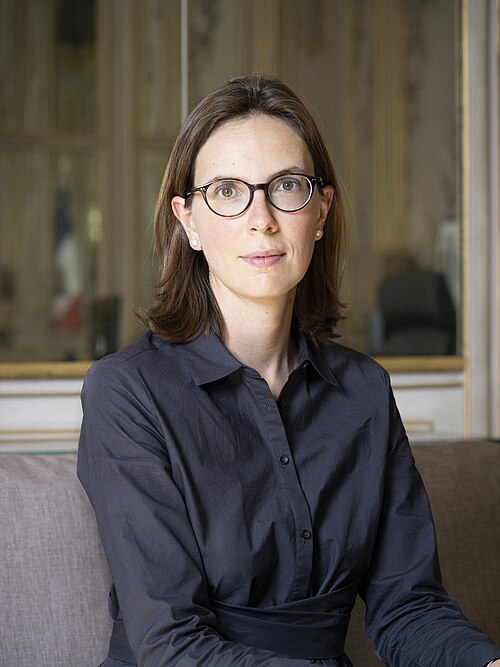 Amélie de Montchalin
Transcription youtube_captions. À recouper avec la source d'origine.
Analyse automatique
Générée par IA — peut contenir des erreurs. Méthodologie
Chapitres
Répartition du ton (temps de parole politique)
Propositif 15 %Attaque 4 %Défensif 2 %
Modèle mistral-nemo:12b · prompt v1 · les citations sont vérifiées mot pour mot dans le transcript ; le taux de réponse directe est calculé à partir des verdicts question par question. Aucun label idéologique n'est produit.
Good morning, I'm Ben Haddad, I'm the director of the Future Europe Initiative here at the Atlantic Council. And it's really my pleasure to host today the Minister of State for European Affairs of the French Republic, Améline Montchalin, for a conversation about France, Europe, and the transatlantic relation. As you know, here at the Atlantic Council, we value European allies, we value U.S. engagement in the transatlantic relationship.
And the purpose of the Future Europe Initiative is precisely to make the case that the European Union is a key and critical strategic partner of the United States. Part of our role is to explain the developments within the European Union, and to engage policymakers and create a bridge and a dialogue between policymakers of the United States and Europe, especially in times of great power competition. As you know, President Macron in France has laid out an ambitious agenda for reform of the European Union, for engagement of partners like Russia, reforming the Eurozone, reforming and stepping up European defense integration, as well as changing enlargement policy.
And these are issues that I think we'll discuss today with the Minister. Let me first turn to Madame Montchalin to start with initial remarks, and then we'll open to a conversation with all of you, and we want this to be as interactive as possible. Thank you very much.
So good afternoon. Thank you for hosting me, and thank you for taking time today to talk about what's happening in Europe, and to also see what the transatlantic friendship can mean from the position I have, which is to carry the European voice of France in Europe, but also, as we see today, in the U.S.
Coming to the U.S. for me holds a very special meaning, because it's actually in the U.S. that I started thinking actively about European identity and the new openings to give the European projects more life.
I was then a student at the Kennedy School in 2013, and at the time, many American students would tell me that, and to my friends, European friends, that we were lucky, because as we had left the whole world, we could now, in the U.S., have a future and have success.
So we wanted to show them, also, the future back in Europe. That's why we created, at the time, the European Conference at Harvard, and I will be here tomorrow to give the keynote to open it. So seven years later, I take this opportunity to come back, look from this side of the Atlantic of what has changed in Europe since 2013, and I think there is probably no better place than to be in the U.S., as Europeans, to step back and ask what do we have achieved at the European level in the last years.
And when I look back, I see that in the last years, Europeans have begun to understand that there can be a European way, that we must pave our own way to stay relevant in the 21st century, and the most important change for me is in the way Europeans are changing the way they look at themselves and starting to see Europe as capable of being strong and of being sovereign. Indeed, we Europeans often don't see ourselves as being powerful. When you look at Europe, you probably see facts.
You see 450 million citizens. You see 27 countries united around a common political project. You see a quarter of the world GDP.
You see the biggest training bloc. And you probably, and we hope, you see diplomatic power. But we, when we Europeans, we look at ourselves, we often didn't see this power.
We saw doubts, divisions, disagreements, difficulty to fight consensus on important decisions. And this is changing. This is changing because also my president, President Macron, is putting a lot of energy to show that we can use the capabilities we have, the power we already have, to take initiative.
One example is the European maritime mission in the Strait of Hormuz. It's also what we do in Sahel. It's also what we've done jointly, also to evacuate typically citizens from China.
It's also what we are trying to do now around coronavirus. These are small examples, but they are examples of the many situations, even crisis situations, where Europe is back and in capacity to take initiatives. But what has changed the most in my view, and what I take from the 11 months I now have as Minister for European Affairs for France, is that everywhere in Europe, there is a willingness to act as Europeans, to make our own independent decisions.
And this is what I take from the many meetings I have been having all around Europe in the 27 member states. I've not been to all of them, but quite to all of them. And everywhere I feel that there is a growing consensus around what we call the agenda for European sovereignty.
This is what I want to tell you about in a few words, and I'm sure we will have plenty of time for questions. So, for me, European being sovereign means three things. The first, it means that we need to have the will to find, as Europeans, the answers to the main challenges of our time.
And to propose a European way to go on climate change. And two days ago, the European Commission proposed its climate law, its way to implement its Green Deal to be a carbon-neutral continent by 2050. It also is an agenda on digital, on digitalization.
How can we promote innovation while respecting human values, privacy, a core of a set of values that we think around also fair taxation is of the essence of the European project. It goes also on social protection. How do we ensure to people that when they work, they can live above the poverty line, and we can ensure to them social progress and social justice.
It also goes to migration, where we want to propose a solution which is both efficient, humane, organized, which is a bundle of solidarity and responsibility. So, that's the first aspect of sovereignty, provide answers to the challenges of our time. The second is, how do we ensure the conditions of our autonomy, our independence?
No sovereign power is dependent from others when it comes to food independence. This is why we want to continue to invest in the common agricultural policy. We have to be independent in terms of technology.
This is why we are heavily investing in a number of strategic value chains in strategic sectors. Take, for instance, electric batteries. We have also to be strategic and autonomous in terms of strategy to defend ourselves.
This is why we are trying to build defense capacity for the Europeans with European funding and with European norms. We also want to have a trade policy that is consistent with our values and collective interest. This is the concept of mutual sovereignty that we have to build with the U.S. when it comes to trade, with the U.K. after Brexit, also with Mercosur.
Making climate an essential clause, as the Paris Agreement is not, you know, an anecdotal declaration setting. It's at the core of the autonomy we want to build and provide with our partners. It also goes with the protection of democracy, notably to protect the elections, the processes that are now being sometimes interfered by foreign powers.
So here again, how do we build autonomy? And third way to think about European sovereignty is to be able to protect our own interests. For instance, in engaging a dialogue with Russia, with a neighbor, whether we like it or not, when we are in Europe.
Also, taking up responsibility for our neighborhood, especially in the Western Balkans. And I can revert to it in the questions you might have. But also taking initiatives as Europeans, whenever our interests are at stake, and making our voice heard on the international stage, to defend multilateralism, to defend the WTO, to defend biodiversity, to defend a number of topics where we feel our interests are at stake, but that we need also to engage our partners.
It's also a way to invent a new relationship with the United Kingdom, in a way that respects European sovereignty. We don't want to punish the British people. We don't want to win and for them to lose.
What we want is to keep a fair trade agreement, and a way to protect our citizens, our farmers, our businesses, who never ask to have a Brexit, and who will not understand that we sign a deal where, for decades after, they will suffer from unfair competition. So this is our agenda for sovereignty. It's also an answer that we need to provide after the European elections.
Citizens, in May 19, they went to the poll stations, they gave a signal, which was not the one many people were expecting. People were expecting the populists, the anti-Europeans, to win. In fact, they didn't.
But if people gave us this trust for us to build a new agenda, a new European agenda, we have to be achieving concrete results. Because for me, what is even more important than the ambitious goals that we have set to ourselves and I've just discussed, it is the obligation to obtain results, because our citizens will not accept that Europe continues to make promises without delivering tangible change. And for me, the biggest threat to Europe is not so much discussion between big powers, the dialogue that Europe is trying to build with China, is not so much to revive the transatlantic friendship, is the lack of trust of its own citizens in the fact that this project is protecting them on a daily basis, very clearly, very concretely.
For me, in my daily life, in my daily job, if I can call it so, we are trying to have a new method of work, to be able to achieve more quickly majorities, to build coalitions where we can go faster from a proposal to an agreement to implementation. It means that I'm trying not to believe that there is magic in Brussels, that it's not just because heads of sales and governments will come to this Europa building, that during the night, they will fight by chance the agreements that nobody could have built before. So gradually, we are trying to enlarge the circles, to change the formats, to innovate diplomatically, so step by step, we increase the circle.
Take carbon neutrality. At the beginning, it was a Dutch and French proposal, two countries. Then we were eight, then nine, then 20, then 24, then at the end, 28.
It's a method. It's a process. And this is the way we can provide for the people more trust and more capacity to show that in details, we can move forward for them.
And not only, as European affairs are seen sometimes, for signing treaties and doing nono-diplomatic relations. This is not about diplomatic relations, it is a part of it, but the most part of the European project is to provide protection and outcome for the people. So when I, just to finish, I also want to share the discussion I have been having here with American officials, congressmen, business leaders, we discussed in details all the topics where Europe and the United States do not see exactly eye to eye at the moment.
We discussed climate, we discussed defense, trade, multilateral institutions, issues like Iran, Syria, and at the end, my main message to all was that we see that the US are increasingly following their national interest, which is perfectly legitimate, but this is the way, and this is the reason why we need also, as European, to protect our interests. And our interest is to have a strong partnership, and is to have a strong alliance. The alliance between Europe and the America will be strong if Europe is strong, if we can generally protect our own interests in a dialogue where we see ourselves as equals.
It's a new situation, we have to draw the conclusions, we need to learn to decide for ourselves, and to propose solutions to our partners, not just wait, that they define the roadmap and that we can just follow. Being allies doesn't mean to be followers, doesn't mean to be aligned, it means to work together, and to fulfill common goals that we have set to ourselves. It doesn't mean, indeed, to cut our long ties and our relationship and friendship with long-standing allies like the US.
To conclude, as you see, this agenda of sovereignty is not opposed to a transatlantic friendship. I even say the contrary, and I think that President Macron has always said that the US is and will remain a major partner, a partner which we need and with whom we share the same values. And I think like Ursula von der Leyen's sentence in a program, we will stay transatlantic and we will become more European.
It's not a but, it's an end. It goes together. Take the example of European defence.
We have decided to invest more in European defence capabilities to improve our capacity to take military action together. By doing this, we are not weakening the transatlantic alliance or NATO, we are making it stronger by making the European components stronger. I think it's a positive evolution.
We are a stronger ally, we are a more independent ally, and we can continue together on the basis of genuine shared interest where they exist. We are ready to take up our own responsibility where they diverge, and I believe it will make the transatlantic relation more balanced, more interesting, probably also more ambitious, because it will then be following the objectives we want to achieve together. With this, you know, it's an introduction of the state of mind, which is mine at the moment, but I'm really happy to have an open, lively discussion with all of you.
I'm very happy to see that you are all very interested by Europe, and I'm ready to share with you what we try to do back on the old continent. Thank you very much. Thank you, Minister.
And you really insisted both on how ambitious the European agenda is and how central it is to President Macron's agenda, but also about innovating methods, innovating formats. And I think it's interesting to have this conversation with you because you sort of embody also the new generation of political leaders that came with President Macron's election in 2017 coming from the private sector and being elected and now minister on these issues that are so central to his term. And I'm sure we're going to talk more about this with all of you.
Thank you. But at first, actually, before going into more strategic issues, obviously Europe is going through two major crises right now that I'd like to ask you about. The first one is obviously the response to the coronavirus, which is a global crisis, not specifically a European one.
But it strikes once again at the heart of the common project, Schengen, open borders, especially something that you would think would underline why the EU is useful, cooperation and being able to have technical exchanges between countries. But it seems on the contrary that it's once again fueling populist anger in Europe. I'd love to have your thoughts on how Europe is responding and should respond to today's crisis.
Thank you very much. At the current moment where we speak, the health ministers of the 27 countries are meeting in Brussels. It's the third meeting they have together in the last two or three weeks.
They are permanently in contact. But it's an area where there is no European competence. It's an area where the European institutions provide the setting, the place, the safe place, if I say so, where we can exchange as governments.
But there is no infrastructure for tackling precisely a pandemic at a European scale. We have systems of civil protection mechanisms that were used typically to repatriate European citizens from China. Just for you to know, the planes were French, but the people were all Europeans.
And we had a system where the European budget was funding 75% of the costs to us to make sure that those investing for the infrastructure, like France repaid in a way to provide this infrastructure for the whole benefits of whole European citizens. So what we are trying to do at the moment is to coordinate. There is no, and to provide the most coordinated framework so as decisions are made consistently with scientific background and without too much dispersion.
Typically on borders, it was always discussed by all the countries together on how to manage the flows of people, how to organize the quarantines, how to make something consistent. If you were in Lombardia two weeks ago, if you are French or German or Slovak, we tried to provide a unified set of measures so as people understand that, you know, things are being done in a consistent manner. We are also at the moment working collectively on the medical equipment, on the masks, on the hydro-alcoholic solutions, to control and maybe you will see that it is a ban to export in between countries.
That was not the objective. The objective is first to repile inventories to make sure that we have in all countries capacity to produce and to export in particular to European countries and not elsewhere. So we are also learning by doing because it's an area where there is no European competence.
But for sure the European framework is very useful to have these discussions ongoing. What I also see is this crisis will also probably lead us to build more sovereignty and autonomy of production in some goods because after Fukushima we also tested how integrated our value chains were but also how fragile they could be because sometimes we lack one manufacturer in one country and you see all consequences for everybody. I think we will probably test again the places, the segments, the value chains where we need to have European production back on the European continent to make sure we can sustain a number of services and goods for the citizens.
So I think we will learn with it. We try to have a balance between precaution but not panic. Also to be clear that we will not close Europe for six months.
We need to provide to the people services, we need the economy to continue to keep functioning. So we are at a stage which is given the number of people infected more advanced than what I know and understand to be the U.S. case.
But that's the way we are proceeding. The other crisis I want to ask you about obviously is once again the consequences of the crisis in Syria and the fighting between Russian and Turkish troops in Idlib and potential new migration crisis in Greece and Bulgaria. We've seen obviously the leaders of the European Union go to Greece, affirm their solidarity.
I'd love to hear your thoughts on first what is you think the risk of a new migration crisis, how the European Union can respond to it, but also more broadly how the EU can be more sort of play a role now in Syria conflict that has been going on for a decade with direct consequences for European security. First, in Syria we need a political transition and this is the constant position we have been holding for many, many months, many, many years even to provide a political framework to de-conflict and to find a framework to exit this condition of extreme violence and dead people and humanitarian crisis. We were supporting the action of the Turks in the Idlib region because we were seeing it as also a way to protect the population against the regime in Russia's action.
What we see at the Greek-Turkish border is a, we all know about it, it was an organized flow of people that were refugees in Turkey for quite a while. There are 3.6 million people which are displaced people in Turkey where Europe, as you know, is investing money to provide to them humanitarian conditions which we try to be as best as possible, as good as possible, regarding sheltering, regarding also schooling of people, of children.
So we saw the regime, the Turkish regime, bringing these people to the border to a place where we all know the border is closed. It was a form of blackmail. It was a way to put pressure on the Europeans for them to potentially go and talk to Mr.
Putin, to take action in a way which we thought was not appropriate. So the message of Europe so far has been we understand the game in which we are being placed. We don't want to play this game.
So we are very strong in not playing the game of the blackmail in a way that were put on our shoulders. We are at the moment today also, we had a special meeting of the foreign affairs ministers at the European level. You will see the communique.
I cannot tell you in detail what it is about because I saw the draft. I cannot tell you what the conclusion point. But the draft was about making sure that the humanitarian response of Europe was strong, could bring support to the population in danger both in Italy but also in Turkey.
It's a question of money. It's not money for the Turkish regime. It's money for the people which are on the Turkish soil under difficult circumstances.
When it comes to the migration part, we are working for now many months for this new migration pact. The proposal of the European Commission is to come in the coming weeks, probably in April or early May maximum. And the plan we are putting is a plan to overcome the big divide and divisions we lived in 2015 at a moment where we couldn't organize both the solidarity and what we call the responsibility.
Schengen is as old as I am. It was signed the same year I was born. At that time, people had a good intuition.
They said we need to provide internal free movement because we will have external strong borders. It's not a question of building a fortress. It's not a question of putting people back in the country.
It's a question of efficiency and of knowing who is entering, who is coming in, who is coming out. Well, if you look after 34 years, the leg on the internal free movement is very strong. The leg of the capacity to have borders, which are borders, is not strong.
So we need to have borders where we know who is entering and who is coming out. Then we have to be in full solidarity with the countries exposed to the entry of refugees. At the heart of the European project, there is this concept of bringing protection to those in danger.
So we will not breach our tradition of respecting the Geneva Convention. We will not breach with the capacity to provide shelter, housing, schooling to people fleeing wars and conflicts. But what we need to do is to be very strong against illegal immigration when traffickers organize this illegal immigration, economic illegal immigration.
And this is where we need borders to be borders where we can understand who the people are, if they are refugees to provide them shelters, or in the country they are if the number of people entering is limited, or if the number of people is high, to make sure that there are enough capacity in the European continent to welcome these people. If countries do not want to take people, they have to contribute to the solidarity with all the means, money, people, infrastructure. This is very clear to us that we cannot have the quota system that was thought in 2015 cannot work.
But everybody must play a role. And this is very strong. This is what we are trying to build.
France, Germany, and many others are supporting the Commission in this finalization of the work. The first entry country, as we name them, Cyprus, Malta, Greece, Spain, Italy, are working also together to see how we can make this all functioning. And again, as I said in my introductory remarks, the question there is efficiency is capacity to implement.
It's not so much a capacity to say nice things. It's to show to the European people we can build trust with them by doing what we say we will be doing. And I want to follow up on this.
You talked about the EU asserting more responsibility on the world stage. And a lot of people are talking about Europeans being able to finally play power politics. Turkey is a complicated neighbor for the European Union.
It's a complicated member of NATO also. And there's a big debate here in Washington, of course, about the relationship with Turkey. We've seen Turkish intervention in Libya recently.
We see the conflict with Greece over energy exploration in the Eastern Mediterranean. And Turkey is yet still a candidate for accession within the European Union. How do you think Europeans should think their relationship with Turkey?
Well, what we, France, are trying to do is to have these debates, is to have in places which, you know, are not public and not, you know, the idea is not to do press conferences about it. But it's to engage a work on, typically, NATO. This is what the president with the famous The Economist interview tried to do, is to say we need to, you know, have a strategic review of our objectives, of what works, what doesn't work.
The question the different crises also, you know, make arise. And be in capacity to have a common reading, a common diagnosis, and a common action, or change, or reforms, if we need to undertake these reforms and changes. Indeed, on NATO, on migration, on a number of questions, we need to engage in the dialogue.
And we need also to have a common view to engage in the dialogue. So this is the work we are undertaking. This is what the foreign affairs ministers are discussing.
We do not seek confrontation. We do not seek, you know, big changes. We seek first to have a common voice.
And this is the whole effort that Josep Borrell is undertaking. If you listen to what Josep Borrell said in the last two days, he said very clearly, OK, we have challenges. We have areas on which clearly we need to be in a capacity to resist to a number of things.
We need to engage more. So, you know, we need to engage with Mr. Erdogan.
We need to engage with Mr. Putin. And it doesn't mean we will be going back to a business as usual.
It doesn't mean we will accept, you know, what things are around the maritime zones. It doesn't, you know, we are engaged in a Berlin process. We're getting Libya.
All these processes must, you know, continue. But we need a dialogue. We need a dialogue line.
Because isolation and indifference will not bring any good to all the discussions we just had. So you just mentioned the dialogue with Mr. Putin and obviously another complicated neighbor.
President Macron has launched sort of a gamble recently by creating, trying to establish a new form of dialogue with Moscow. It's creating, steering a lot of debates both here and obviously in other European capitals. Can you explain to us what the present strategy is and what he hopes to get from this new dialogue?
First, it's not a gamble. We're not playing. It's serious.
And it's the outcome of an analysis we have that the status quo is not satisfying, is not satisfactory. What's happening in Crimea, in Donbass, in many frozen conflicts around, in cyberspace, is not satisfactory. It means that we need to have this moving.
Because we know that there is an option that the Russians already have played in many places, which is the frozen conflict. It's to free the conflict and then make things, you know, inamovable. I was in Kisinau in Moldova a few months ago.
Transnistria has been the same situation since 1993. Is it working? Is it moving?
Is it providing any solution to the people? No. It's frozen.
Our view was we needed to engage without naivety, without the expectation that by magic things would change in the night of a day or overnight. But the idea was if we cut the dialogue line, if we isolate totally Russia, probably the outcomes would be those we see with the status quo, which is not satisfactory. We are trying.
We are trying to engage. We are taking our time. We don't know exactly where it's going.
We are very concrete and strong on the fact that we will not normalize things just for the sake of normalization. But we are step by step engaging. Pierre Vimon, who is an ambassador you might know well, is our special envoy. is both speaking with the Russians, but also explaining and concerting with all the different countries in Slovakia, in London, in Germany, with all the powers in the Baltic States to create a full transparency on what is being discussed.
And we are therefore moving. Our view is that we cannot put such a big power like Russia in a place of isolation. We need to have dialogue.
And again, I'm really insisting on this, without naivety. We know that the cyber interferences are important. We know that what is in Donbass needs to be progressing.
But if you have a Normandy format meeting in Paris, it's also because we engage very forcefully. And to be very clear, we are engaging next to the Ukrainians. We are not organizing this without the Ukrainians.
We are with them. We are talking to them a lot. And we are putting our political capital, with Germany, in this debate so that we can see things moving.
Prisoner exchanges, sailors being back, all these things happened. It's not magic. It's not the end of the game.
But we're trying to have things moving. This is the objective we're following. And we are very honest.
One day, we will see if things are progressing enough or not. But we feel that we cannot just accept the status quo and consider its satisfactory. I'm sure we'll have other reactions or questions in the room.
We have Ambassador Freed here and others who I'm sure will love to follow up on that specific topic. And let me ask you a last question, because you're here in Washington. It's interesting for a Minister for European Affairs to come here to Washington and talk to your American counterparts.
Obviously, the transatlantic relationship has been strained. It's been a key question on both sides of the Atlantic. President Macron has made a point to keep strong personal relationship with President Trump and at the same time making the case for European sovereignty and autonomy.
We're entering, I mean, we're entering fully into campaign mode here in the US and with different visions for the relationship with Europe should be. What do you think Europeans now expect from the United States and expect from this relationship? Well, I think we were allies and we are allies based on values.
The capacity to protect democracy. The capacity to protect freedoms. Also, they believe in progress in technology at the service of people.
I read with great interest the op-ed of Eric Schmidt, where he calls for the federal government to take more action, to invest, to produce innovation at the service of the people, to recreate trust around technology. The word Europe is not in the op-ed, but I can tell you that Europe is doing exactly what it's calling the US to be doing. We are doubling our R&D at the European level for quantum, for 6G, for digital.
We're investing in technology that people can trust. This is why we're setting up this GDPR, these norms on 5G and others to make sure that we can, you know, on biotech, on many issues, we are trying to go in a direction that I think many Americans would see as something they are also expecting for their own, you know, future. So this sharing of values, of willingness to protect democracy, of protecting liberal societies with a number of, you know, limits also to what, you know, progress can bring to society.
I think it's something which provides a very strong basis under which to continue to build a transatlantic relationship which is genuine, and which can also provide progress to other countries around. So this is, I think for me, a very strong engine for future endeavors. If you look, even because of the reforms we are undertaking, attractiveness of France is increasing, and Americans are increasing massively their presence and their investment in France.
And this is also a way that embodies and shows that this relationship can also be both ways and balanced. There are challenges for sure. We just tackle a number of one, a number of one, a number of challenges, a number of situations where we need more dialogue, where we need also to be more acting together, to share more our common objectives and maybe act more together.
But sometimes we Europeans will also provide potentially new ways, openings, that maybe are not those that the Americans will first describe or undertake, but might be also opportunities. Again, no naïveté, a strong belief in things that we built over decades and centuries, and the capacity to work with also bipartisan. This is why also the president, you know, took also energy to create a personal relationship with the American president, because we need to have a strong, as French and as Europeans, but we need to have a strong dialogue with the U.S.
And also to be eyes open on the things where we might not have exactly the same diagnosis at the same moment, but to keep nurturing this relationship. So I think we can open it up to all of you and take your questions. Please introduce yourself before you ask the question.
Don't make a speech. Ask an actual question. Do we have – so let's start here, and then we'll go to Ambassador Fried.
We have a mic coming. Hello. My name is Benjamin Geek.
I'm a student from Germany. And you were talking about the goal of keeping safe borders in Europe. I just wanted to ask about the concrete situation right now on the Turkish-Greek border, excuse me, with rubber bullets being shot at immigrants.
How do you propose of dealing with this concrete situation without betraying European values? We will be talking seriously with the Turks and putting these people under safe conditions. Safe conditions is not, you know, five meters from the Greek border.
These people were, you know, brought actively by the people. I don't know if the regime or not, but actively these people were not coming directly from Idlib. There was in Turkey, it was spread around that they could go and that the frontier was open, which was not.
The border was open. So we need now to work with the Turkish authorities to – and this is the humanitarian response we need to provide to the people beyond, you know, the geopolitics and the pressure. So this is, I think, for me, the route we have to undertake.
And on the islands, in Greece and elsewhere, we have to fully respect the international law, fully respect the humanitarian principles we have, typically for children, for non-accompanied, you know, minors, or I don't know how to say it in English, but yes. We have to provide the humanitarian response. We have to work with the Turks so that the agreements we have signed to provide humanitarian conditions for sheltering, for housing, for schooling is respected, and to engage in respecting the commitments we have both made to provide the best solution to a crisis which is demanding, which is challenging, and which we know are the roots needs to be solved by political response in Syria.
Ambassador Frey, distinguished fellow at the Atlantic Council and former U.S. Assistant Secretary of State for European Union, and a veteran of various unsuccessful attempts at dialogue with Russia.
Look, I applaud your arguments for a strong Europe aligned with the United States and a strong sovereign Europe. Solid arguments, well-delivered. I'm all for it, so don't mistake me.
My question about the dialogue with Russia is that such dialogues usually start out exactly exactly as you laid it out. Status quo is not good, not working, we have to try something. The dialogue, the attempts of dialogue often end with a series of unilateral gestures on the part of the United States or the part of Europe which are simply pocketed by the Russians.
That's not always true. We have managed with different Russian regimes, Gorbachev for one, to make their own progress. So I'm not against an attempt to dialogue in particular.
But the questions are, how are you going to avoid the trap of successive concessions and gestures of goodwill which may not be shared by Putin? Yes. And should attempts at dialogue go in parallel with at least the preparation of additional steps to put pressure on Russia if you're wrong?
So, first, we are keeping the sanctions. We are keeping the whole response that we had after the Crimea and after the Donbass events. That, I think, is very important to keep in mind.
We know by engaging dialogue weakening things that were put in place and where the conditions of going backwards are very well known. We know how and what has to be done for these sanctions to be lifted. I think, you know, it's very interesting because I had the honor but also the task to be chairing the Committee of Ministers of the Council of Europe, which is the institution, which is not the EU, the institution where we have 47 countries of the whole continent, and Russia included.
And I was chairing this Committee of Ministers when Russia delegation at the Parliamentary Assembly was taken back in the organization. Also because we thought that we cannot promote multilateralism everywhere on the planet if we cannot take care of our only true multilateral institution at the European level. Between Gorbachev, as you said, and now a number of things evolved.
Typically, the Council of Europe. Typically, a number of projects on the European continent that were not existing at the time. And in between, I think a number of progress have been made in our capacity to engage a dialogue on a number of issues with Russia.
Our view is that at the moment, Russia tried to be an Asian country, an Asian power. It didn't work. I think it's a realization that we all can have.
That's not probably the future for Russia. They tried to go in places like Middle East, like Africa. And we see also the limitation it provides to all of us.
Our sentiment is Russia is, by definition, a power which has to have, which is a European power in a way. Not the same as the EU, but it's in the grand Europe. It's in Europe.
Our view that we cannot, in the long term, have this power next to us without having in some way a dialogue, a lively dialogue. We are putting and we are trying to find ways to engage in concrete issues, like cyber, where we feel we can make progress. I think the Normandy format meeting that was held a few weeks ago in Paris with President Zelensky, President Putin, President Chancellor Merkel, President Macron were in the same room.
After a number of steps on the conflicting, on the prisoner exchange, on sailors being released, on a number of things, is a progress. For sure, it's not the end of the process. For sure, there are still conflicts, there are still elements of violence, the flow, the organization of Ukraine is not stabilized.
We know that. But our sentiment is, it would be irresponsible, irresponsible, to think that the status quo is satisfactory. I understand what you say.
It was attempted before, sometimes it's failed, sometimes it succeeded so smallly that nobody understood or saw that it was a success. But in the meantime, a number of things also have happened. And we have to take this into account, typically the Council of Europe.
You know, Russia is, Russian citizens have access, through the European Court of Human Rights, to an ultimate recourse if they feel their rights have not been protected. Russia is then, sometimes, often, condemned to protect prisoners, to protect freedom of speech, to protect also capacity for people to demonstrate in the streets. And you know what?
Russia is implementing the decisions. At the individual level, this European Court of Human Rights is protecting a number of citizens. And I think it's a progress.
But this was not achievable if we had not, you know, engaged in a dialogue which is demanding, which is challenging, where we cannot know where exactly it will lead us, but we feel we have the responsibility to keep an open line. And I think Joseph Borrell quotes in the last two days are, for me, very important. Because what he's saying is that, yes, for sure, we have difference of view.
Yes, for sure, we have even sometimes confrontations on many issues with Turkey, with Russia. But as, you know, just neighbors, Russia is a neighboring country, from Finland, from Poland, from all our eastern border of many countries. We cannot just, we have to engage more, and this is what we are trying to do.
We are trying to do it very transparently with a high level of, you know, sharing of information, of, you know, exchanges with our partners. And also because we are, you know, at the Security Council, France is the now only permanent member of the Security Council member of the EU. And we think that for many other things and topics, we need to have this dialogue live.
Without, you know, we are lucid. There is no naïveté in the process. But we think it's of high value to do it.
Nicolas Véran, here at the Peterson Institute for International Economics and also at Bruegel in Brussels. Minister, great to see you in Washington. My question is on your portfolio of Minister for European Affairs.
President Macron made a big speech in the Sorbonne University shortly after being elected. He was actually the first president of France, I think, elected while waving a European flag. I was elected also waving a European flag as a member of parliament.
This was quite new. Exactly. So that was quite something new.
There is a view which is widely shared in this town, I think, and also in a number of quarters of Europe, that the Sorbonne speech delivered nothing, that there is nothing to show for his vision and efforts, and that basically Macron's European vision is a failure. How do you think about this? OK.
That's a very good way to be straight. But I thank you for the question because being straight is useful. If you look at the situation where the president came in 2017, we can more or less describe our European action in three steps.
First step was to shake the ideas debate, was to renew our ambition, to show what we could do as Europeans. After a period during which many people thought, you know, this project is weakened, we have difficulties to find agreements, there was a lot of tensions. So the Sorbonne speech was also a way to say, OK, there are places, there are items, there are ways where Europeans can do things.
And we tried to open the debate. That was for the first probably 18 months of the mandate of the president. Then came a moment where the question was, OK, with these ideas, can we have a team to support these ideas?
And this was the elections, this was the new commission, the choice of Ursula von der Leyen, the choice of the commissioners, the new parliament, this new renew group at the center of the European Parliament. And this was about creating a team to carry for our ideas. Now we are entering phase three.
And phase three is indeed the moment of credibility test. Now that we have the ideas, now that we have the team to implement it, can we deliver? And this is why in my introductory remarks I said, for me the main threat to the European project is not so much the crisis around the dialogue with the other big partners and big powers, it's our capacity to deliver for the people, for the trust of the citizens in Europe to be revived, not on promises, not on words, not on speeches, but on actually capacity to deliver.
And this is the job in a sense I have today, is to create majorities at the parliament, with the renewed delegation, with our partners, but also at the council level. With whom do we implement this roadmap that is now the commission roadmap? The first success, if we're honest, is that 80-85% of the Sorbonne speech is now, if you do the control find in the roadmap of the commission, is now in the roadmap of the commission.
The commissioners, if you look at what the different commissions have said to themselves as objectives and has been endorsed by the European Parliament, 85% of what the president said is in the roadmap. That's first, you know, not a victory, but it's a realization that this speech, these ideas, ideas became ideas that now are widely shared with our German partners, with the European circles. I totally agree with you.
The failure would come if we're not able to move these roadmaps into outcomes. So it goes with the European budget. We need to put the means in front of our ambitions.
This is why, you know, France is a net payer, the European budget, but is ready to contribute more as soon as the content of our action is at the level of ambition we need. We will not pay for, you know, a budget which is below expectations. We are ready to contribute, but we want to contribute for, you know, put means in front of our ambitions.
It goes also with our capacity to transform the coalitions of six, seven countries we have on most of the topics to a majority. And this is why, you know, I'm trying to go and have new agreements point with the Visegrad group, with the Nordic countries, with Spain and Portugal. We are now inventing, my teams are always trying to find names on the formats we are creating.
We are doing meetings with Slovakia, Czech Republic, and Austria. Geographic meetings, non-geographic meetings. So this is what we have to do now is not to so much provide new ideas, but to, with the teams and the people we have, with the great alignment we have with the commission, which was not the case for many, many years.
During many years, France was not so aligned with the commission. And then to move forward and indeed deliver results. We have, France, a big responsibility.
In 2022, we will be having the presidency of the council for six months, from the 1st of January 2022 to June 2022. It's an important moment because it will be both a moment to have French elections. So the moment where the president will have to look at what he has done for five years in France and we will have at the same time the responsibility of chairing the works at the European level.
I think I understand your skepticism or the skepticism which is shared. I think the moment of seeing if it worked or not is in 2022 and 2024. With this new commission, did we achieve to do what was in the roadmaps of the different commissioners?
If we do so, then I think we could go back to the Sorbonne speech and see that many of what was put on the table has been then made real. Let me follow up on this question. On May 8th, May 9th, the EU will celebrate the 70th anniversary of the Schumann Declaration, but also launch a wide conference on the future of Europe.
Can you tell us a little bit what you expect from this conference and this effort? The president proposed this because the Sorbonne speech is made of things we can achieve in the next five years. If we are in a good functioning way, we have time and we have the capacity to put all the speech into agreements and then implementation by 2024.
The question we want to raise jointly is, OK, what do we do next? What are our pointe-fuites? I was going to say in French.
What do we look after? What are our true long-term objectives? Is it about independence?
In what? I provide a number of themes, but are there other things? And we want to have this build with the citizens and with a common EU-wide effort.
Not just, you know, France, Germany and the six founders' countries meeting, you know, as we are used to meet now for many, many years, and defining for the rest of the continent what do we want to do. In many countries, I'm very interested by this topic, is education and training is a big, big expectation of the whole society. If you look, Europe has competence to work on the research, very mildly on higher education.
The only place where it's really active is mobility, is Erasmus. Typically, if we want to create a true European approach to training, retraining, education, at the moment, in our treaty, we have, you know, we set ourselves common objectives, but we don't have the true competence to do it. We just discuss health.
Do we want to put more in common regarding health? On climate, we are doing a lot. Now in proposal, on vision, do we need more competencies at the European level?
We want to engage this debate, but we want to do it at a European-wide level. We want to do it with the citizens. And we want, for the next five years after 2024, to have a roadmap which will not be a sovereign speech again, which is something, you know, designed from the people and with this vision.
In terms of method and process, we want also to be innovative in the way to conduct this conference. Typically, by potentially choosing people randomly to put in the place where it will be discussed people that will not come naturally to discuss about the European project. You know, I, when I go and travel in France, I try to do this quite actively to go in places where the European money, the European projects, the European action is being implemented.
To also show what Europe does. Europe is not about meetings of ministers. Europe is about programs, investment, capacity to put people together.
When I go there, I can tell you half of the room is filled of, if I just say, I'm coming, I'm ready to discuss with you, half of the room is filled of pro Europeans, pro, you know, people that are so very federalist, that think Europe is not doing enough, and are very pro Europeans in all ways. And the whole half of the room is made of people that think that Europe is the cause of all the problems we know, or they know from the time they are born, and they will know from the time they will just end their lives on the surface of the planet. This is not very functional.
And this is not leading us anywhere, because you are putting in the place people without arguments and without the setting to actually think together. We are at the moment in France trying something out on climate. We have this citizen convention on climate.
It's 150 citizens that were chosen randomly to be kind of a representation of French society. You have young people, older people, you have farmers, you have businessmen, you have SME owners, you have employees. So it's a set of people working together on how can we tackle climate change in France.
They are being surrounded by experts. They are put into, you know, confrontations where they can go into the complexity of the choices to be made. And we would like to do the same for the European project, to confront people and to bring in the room people that will not come naturally.
Those people that at the end are the ones for whom we have to deliver. They are the basis of the legitimacy of the European project. It's a project for citizens.
And sometimes, you know, my ministry is embedded in the foreign affairs ministry. I have many homologues which are located in their system at a different place. Some are linked to the prime minister.
So some are standing ministers. Some are linked to the heads of state. And it gives a very different perception to the people of what is Europe about.
In France, because Schumann and Monet were diplomats, there is this perception that Europe is about making, you know, agreements with foreign countries. So it's about foreign affairs. It's about diplomacy.
But in fact, if you look, this is only a small part of what we do. So this is where I think this conference will also be interesting. How do you today see Europe?
What do you expect from it? Why do you want us to build competence? Chancellor Kurz thinks that it's also a way to re-give competencies at the national level, if competencies at the European level are not seen as the right level of action.
So it will be, I think, a very important moment to recreate a debate of ideas starting by and from the people. In turn, we had Conrad. Hi, thank you.
Conrad Tribble from the Department of State. I'm a senior fellow here at the German Marshall Fund for a year. But first of all, congratulations and great that you come to Washington for this kind of conversation as Europe minister.
I think there's not enough of that. You haven't said too much about Germany. The history of European integration is a lot of the history of the Franco-German partnership.
And where is it going now? What is Germany's situation? What does Germany mean to you as you work through this program and the agenda?
How important is that relationship still and how is it changing? Well, it's a lot of my time because I'm the secretary general to the Franco-German relationship. It's one different hat you have in the administrative and diplomatic system.
We are constantly having a dialogue on many details, on many strategic choices with Germany permanently. My ministry, Quai d'Orsay, is in constant contact with the House of Education's Hand. The secretary general is coming to my secretary general every two weeks.
So we are actively engaged. The chancellery with the Élysée. We are talking all the time to each other.
But we realize that with the enlargements, with the changes in dynamics, it's not because France and Germany would be agreeing that things will be okay and done. So we are, on each side, trying to create different illnesses. And this is what I told you about the new formats, the new diplomatic work, the new bilateral work we are undertaking.
Because we realize, typically, carbon neutrality, France and Germany agreed after the Sibiu summit. So in June, it was done. We were agreeing.
There was no automaticity for then things to become a unanimity choice. What we also realize is Poland, now after Brexit, Poland, Germany and France together represent 47% of the EU population. So if you look, Poland will play and is playing a great role.
This is why I took the decision to have a new Weimar summit. So France, Germany and Poland as soon as January. There will be a new summit at the level of Hello States on the 14th of July in Paris.
So Poland, Germany and France will meet on the 14th of July at the highest level. So typically, this is, I think, very important also to create new triangles now that the Brits are not anymore in the EU institutions. But as I said, I think we are, with Germany at the moment, leaving a different synchronization.
We are in the middle of a mandate of five years. We are in a stable position. The president, you know, is in a capacity to be kind of in a freedom area, freedom of movement, agility.
In Germany, it's the end of a cycle. We see a lot of questioning, internal questioning on the priorities, the political dynamics. And this created a discrepancy.
Sometimes it was in the reverse. You had moments where I think Germany was very, you know, waiting for the French to respond, for the French to be organized, for the French to tell and respond to initiatives Germany was taking. So at the moment, the question is not so much confrontation.
It's not so much opposition. It's more a question of momentum and desynchronization in terms of political cycle. So as the president said in Munich, it's sometimes more impatience than confrontation.
It's a willingness to see things moving probably a bit quicker. But we know that by definition, elections will come when they will come. And probably not before the end of the German presidency of the EU.
So not before December, which is still, seen from the eyes of my president, quite a long time to go. Actually, let me follow up. Because you mentioned the Weimar Triangle.
Yes. And so the relationship between France, Germany, and Poland. President Macron was in Poland recently.
It was his first state visit to Warsaw. What does he expect from this relationship that has been also challenging in the last few years? So France, Germany, and Poland have typically a very strong common agenda on industrial policy, on SME, on the whole production agenda of Europe.
And this is very, very important. On competition, you know, when it came to Mercosur, it was a letter signed by Poland, Ireland, Belgium, and France, which is kind of an innovative format again. So we are trying to work topic by topic, subject by subject, find the genuine places where we want countries to move together.
And indeed, typical Brexit, I can tell you, Poland is very close to France when it comes to level playing field, citizens' rights, and even fishery. So we see a number of topics where we have genuine common interests. This is the ones we are trying to, for every country.
I can tell you about Slovakia, Romania, Spain, Portugal. We have, you know, we have common agendas. And we are trying to make the most of the common points we have.
After that, with Poland, we also have a very clear and very open message on the need. And we are supporting fully the Commission and the EU institutions regarding rule of law, regarding LGBT rights. But we consider that we have institutions that have to be strong in dealing with the full respect of the treaty.
We are fully supporting the Commission, fully supporting the Open Course of Justice, fully supporting the Parliament when it comes to its attribution. But on the bilateral basis, we try jointly to put and to push forward agendas where we know we are genuinely aligned. So to make sure that everyone has an opportunity to ask a question, let's maybe take a couple each time.
Yes. We'll start here, the two, second and then third row. Thank you.
I just would like to ask you how the issue of sovereignty and that of freedom did you perceive in your living experience at the different many levels, of the individual or institutional or at the union level, if there is some tangible example you can make of? Thanks. Then just here, second row.
Please introduce yourself. Hi. I'm Marvin Muller, a German student as well.
What are your comments on yesterday's ceasefire agreement between Russia and Turkey for Idlib Syria? We'll take another round of questions. Second question.
It's welcome. It's needed. It's necessary.
After that, again, we need Syria to be put in a political process which will not only depend on, you know, the meetings in Moscow of Mr. Putin and Mr. Erdogan.
So we need to put, again, a lot of political capital to have the political process to move on. This cannot be done if you have, you know, bombs and planes and, you know, warfare. So it's welcome.
It's needed. It's necessary. It's not sufficient at all to imagine a medium-term process.
Regarding your question, I think typically what we've built around privacy, the way Europe has defined its own data privacy agenda is a sovereignty action. And now you have Japan, you have India, you have even, I've seen GAFA here, players saying that the GDPR is a very good and interesting framework under which to work. This is sovereignty.
This capacity to define your own rules and then make these rules being interesting and even taken up by other places, other powers. On freedom, I think all the work being done in Europe around violence against women, for instance, or freedom of the press or freedom of LGBT rights is an agenda based on the fundamental values of freedom and willingness to protect the individual with a set of collective rules that we try to fully implement. Let's take a couple other questions here and then just next to you.
Thank you. Francois from the George Washington University. Thank you for being here.
I wanted to ask you about Syria again. Apologies for that. There is this idea that we, as European countries, are not hoping to receive more refugees, and that's a common thinking of the populist grounds in Europe.
And you were just talking about how the quota system failed. My question is, how is France preparing in the case of a million more seeking refuge in Europe? How is France going to take action?
Is it going to be on the side of those who provide the means, as you mentioned, or the side of a country willing to host? Thank you. MR.
Hi. Jake Nelson from the Department of State. My question is about China.
So this is going to be a big year in EU-China relations with the summit taking place this spring, and then the leaders meeting that Germany has announced during its presidency of the EU, which will take place in Leipzig in September. I'd be curious to know what the French government's expectations and hopes are for EU-China policy under the new commission and the new council, and what role the idea of systemic rivalry and human rights will play in that. So, immigration.
France is currently the first country in terms of number of applications for asylum-seeking. In 2019, France was just at the same level, even at a higher level than Germany. We are a country receiving the highest level of secondary movements.
The current system we see is not functional. Afghan families, when they seek asylum in France, on average, they have asked twice, in two other countries, asylum before. We have no capacity to have a common reading of what is asylum-seeking and what the rules are for Europe.
So it creates a lot of secondary movements. We also don't have a common approach to which country is providing social means, aid, subsidies, social subsidies to people. So we need to reorganize this.
With this reorganize this. With this reorganized, France will, and we are not a country refusing people on our soil. After Lavalette agreement of the question of the boats in the middle of the Mediterranean, lots of people came to France.
I just want to remind all of you, the number of people that were on boats and then welcomed in Europe is less than 2,000. The images we have give the impression we have this multiplied by 10 or 100. It's 2,000 people.
So many came to France, but that's also limited numbers. And I think it's important to always go back to the facts, because the imagery can be very distorted. So we are a country ready to welcome, but we need things to be organized.
We need to stop these endless secondary movements, and we need to also to give people predictability. And for the rules to be clear, at the moment, the same person, the same family that will make an application for asylum in Germany will not have the same answer in France or Italy or Ireland or Sweden. And this creates a lot of disorganization.
So this is for us. Our position is not so much about the number. It's not a principal position.
The principal position is constitutionally, we receive and we take application for anybody in a situation of risk. And this is in our constitution. This will not change.
But we need for the European system to be more functional. When it comes to China, first we welcome this capacity for Europeans to work in a united manner vis-à-vis China. When President Macron went to Shanghai, he was with the European commissioner and the German minister.
And this changed totally the tone and the content of the discussion. It was not just France going. It was France as a European power.
Also when Germany is now talking with China, it's Germany as a European power. We seek reciprocity. We've made good progress on the IGP, the indication of production.
And so this was very important to protect producers on both sides. Now the next step is protection of investment. And this is for us a priority.
We then work also on climate, carbon pricing. And the thinking we have in Europe of the carbon inclusion at the border is something where we think we can do progress also with China. So there is a number of places where it's been discussed for quite a while.
And we expect things to move forward. The key word is reciprocity. And try to have, again, this systematic rivalry is a fact.
Now we can work around this and, again, be lucid without naïfety and find areas on which we can make progress. On human rights, as you know, France has been always very protective of all the citizens and people and individual cases when situations were arising. We have three questions here in the back.
Hi. I'm an intern at the Atlantic Council Middle East programs and from HEC Paris. And I was just wondering, to follow up on the China question, how are you managing to, I mean, how France and also Germany are managing to help countries, for example, Greece and Italy, who are already in the debt trap from China?
It's more of an investment issue. MR. Let's take the two others and then go.
Hello. My name is Miruna. I'm an exchange student here in DC.
Given France's position on EU enlargement, I would like to ask you what should be, what should we be expecting from Europe in terms of Albania's and North Macedonia's accession to the EU, now that the commissioner for enlargement has released progress reports on reforms that say that they might be able to join? Two big questions. Let's take one last question here, and then we'll wrap it up.
Sorry for interrupting you, and many thanks for being here at the Atlantic Council. Just a word to go back on trans-legal relations. Being here in Washington since a couple of months, I see a lot of skepticism among Americans about Europe's global ambitions because often it is pointed out that this is not the first time we've tried to do this.
And so the question is very simple. How do we convince our American friends that this time it's different and Europeans means business? And I must say I'm playing the devil's advocate because I believe it is different and I believe you're making a good case, but I would like to hear your thoughts on this.
So with this and we have five minutes, that's perfect. Maybe seven. So first question on China and the, I will rephrase it a bit, about the investment gap.
I think we have currently a terrible situation in Europe where we are one of the few or maybe the unique continent to export savings while at the same time having to import investment capacity in some countries to fund infrastructure or big projects. If I summarize, yes, in Greece, in Portugal, in Italy, also in Slovenia, in Slovakia, if you travel around, which is part of my job, you see that many interesting projects, productive projects, innovative projects, infrastructure projects, the same for the Western Balkans, by the way, are being funded by China, by Russia, by Turkey, while we in Europe, we have plenty of savings that we then export to buy here US sovereign bonds. This is totally dysfunctional.
And, you know, the banking union, dear to our friend, is a key project, but more than the banking union, for me, we have to create a union for savings and investment. Because what we lack at the moment is not money. There are more than four trillion, four trillion euros on the German saving accounts, which are at zero or negative interest rates.
We have 1.7 trillion in France at below inflation rate in the . That's because you're French.
Well, you're from France. So we don't lack money. We lack the pipes between the savings we have and the productive projects.
And this is at the heart for me of what we need to do for the Eurozone and for the European strength in economic terms, but also in geopolitical terms. We cannot say no to these countries when they welcome Chinese investments if we are not able to provide European money, European investors, European investment to respond to their needs in terms of capacity building or infrastructure or business growth and so on. So for me, the response you see is not so much about China.
It's about our internal capacity to fund with the savings we hire and the investment we need. And this is a very, very important topic. For me, there is no industrial SME strategy that will be successful if we don't put alongside this strategy the funding strategy.
And as we are an aging continent, as we have a high level of saving rate, we don't lack savings. We lack capacity to put the pipes and organize our savings and investment system differently. So on EU enlargement, I was smiling because when you said, as we know the French position, I'm not so sure it's known.
The French position is not a position against enlargement toward the Western Balkan. The French position was to say, we think the European perspective of the region is valid, is historically promised made, and we have no intention to go back on the promise we made. But we were not ready.
And this was a discussion ongoing with the Commission for quite a long time. We were not ready to sign a mandate, which would be the same as the one for Serbia and Montenegro, where we see that for the last six and eight years, this process of negotiation didn't bring a lot of concrete change on the ground, led to the European sentiments to sometimes decline, and led to many foreign powers to have even more influences than they were having before. So what we said is, we are okay, in principle, to reaffirm this European perspective, but we need the process of negotiation to be productive.
We cannot sign for something that we know from the beginning would be very challenging and potentially a failure. A failure not only for Europe, but also a failure for the country that we would put on tracks where the capacity for them to succeed under this track is very limited. This is why we proposed, just after this October meeting, a new methodology for negotiation that the Commission widely undertook and now is proposing, which is more gradual, that if you do the reforms that will bring more concrete benefits to the people, not so much to the administration, but to the people on the ground, that is reversible.
If you stop doing the reforms, there is a price to pay. You lose access to some policies and you can go backwards, which is more politically driven. These intergovernmental conferences about enlargement, there are no governments inside.
There is administration and there is Brussels and EU representatives. We need the countries to be more involved. It's a political dialogue, so we wanted this to be more visible and to have a process which recreate credibility on both sides.
Capacity for us to explain why we're doing it, how it's going, and capacity for the leaders in the region to also explain to the people why we do the reforms, what benefits it brings, and so on. So indeed, the Commission proposed and made the update on the reforms. A number of things happened since October.
Special Prosecutor Office reform in northern Macedonia, a number of progress on the electoral law that we expect for Albania in the coming days and weeks, on the vetting of judges. There are many, many things that have moved in the positive way. So the process now is for the 27 countries to agree on the methodology and we hope it will be done.
And then to have a consensus to translate this new methodology into the actual mandate for negotiation. If this happens, then France will be able to look at the situation a bit differently than it was before. What I want to highlight that in October, the positions on the table were very different.
It was not France against the rest of the planet. Because some countries wanted one country but not two. Some countries wanted the two or nothing.
Some countries were wanting conditions to be put in addition. Some countries like mine were saying, you know, the question is not so much the reforms. It's not so much Albania or the Smithsonian.
It's just the paper of the process of negotiation that we are starting. And the reforms that were needing to be put to an implementation phase. So I think now we have a clearer view.
I think the Commission has done a great job in updating and changing the paradigm of how negotiation will be undertaken. We now need the 27 to agree. And this is at the agenda of our next General Affairs Council on the 24th of March.
So that's, you know, in a few days now, the things ongoing. The last question was why do we, why should we believe that Europe is getting serious in being sovereign and autonomous and independent and so on? Well, I cannot tell for the previous months.
I wasn't there and I couldn't tell if it was genuine or not. I think we've made a number of progress which people were even not expecting as possible. The European Initiative for Intervention, you know, three years ago was seen as a, you know, one of these French rubies of a thing coming back.
And that people will say yes, yes, we know, but, you know, we won't do much of it. I think it's a quite important step. What we've done in Hormuz is a very important step.
It's countries together going to a place where they feel they have to go as Europeans. It's not the whole EU. We know it.
But first, it's an acceptance by the 27 that we can do it by joining forces of those able to be present in Hormuz. In Sahel, I think we've made a very good progress in having a common diagnosis and looking together at a number of questions. If I look at the Defence Fund, OK, it was 13 billion, 6 billion, now it's maybe 7 billion, so it's not done.
But the very idea it can exist, I think, is already a progress. What we've done with China, I think, is also a sign of us being able to think as a common, you know, taking the strength of the internal market and bringing it in the discussion with external powers. This is also quite new.
So I'm not saying it's done and, you know, success is here and we can just applaud ourselves and feel proud and having done the whole way. But I think that gradually there is a realization in Europe that the world is uncertain and that we cannot outsource our capacity to protect ourselves. We cannot outsource our capacity to be, you know, independent in terms of technology.
What we've done with the 5G toolbox is also a way to say we have our own way to look at this question. Our own way is to be very strict on, you know, risk approach and outcome-based approach. This is also a way to affirm sovereignty.
But where I am with you is I don't know what success is. You know, there is not a checklist where we say, OK, that's success. What I know it's a process of joining will, necessity to bring outcome for the people, because at the basis of the project there is the European citizens, and our capacity to feel that we have the right and that we need to speak as Europeans.
And we have our own way and that can be positive to have our own way even and most importantly for our allies. Our allies will not trust us if we're just followers. They need people engaged and people with their own ideas.
Thank you very much. It was active, I think. Yes.
Minister Mourchallon, thank you so much for giving us such a comprehensive tour d'horizon, as we would say, of France's Europe policy and of the European Union. We believe here firmly at the Atlantic Council in bipartisan support for the relationship with the European Union and European allies. You talked about Europeans regaining confidence and a sense of pride, and I think that's a really important vision that you outlined and that we believe in.
And we're so glad to be working so closely also with the French Embassy and Ambassador Etienne here. And I'm sure this is why you chose to join the Atlantic Council instead of just the French infiltration of the Atlantic Council, but that's also maybe another good reason. Thank you for joining us and viewers online on C-SPAN, and please join me in thanking the minister.