Interview with Michel Fournier, 2023 piano clinician at Cassa Musical Arts in Calgary
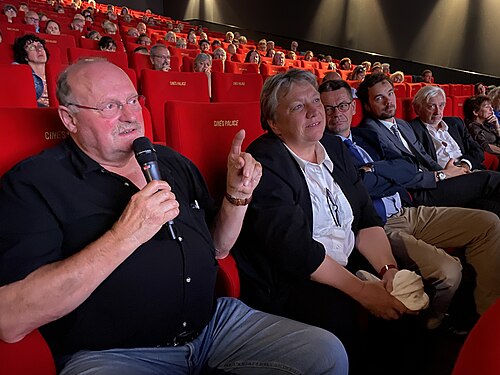 Michel Fournier
Transcription automatique. À recouper avec la source d'origine.
Hi, Michel. Thanks so much for joining us here. We're really excited to have you as our 2023 Clinician for our 30th anniversary.
I'm wondering if you can tell us a few things about ourselves for potential students. So I just have a few very quick questions. The first one of which is, how did you get into music?
Ah, well, as far as I remember, as a very small child, we had old records at home and I kept listening to them over and over. It was not only classical music, but it was all kinds of music. And I remember my mom telling me that she had to stop me to do it because I just wanted to do it.
So it was always part of my life. And then later, I have an older sister. She had piano lessons at her school.
So we got a piano at home and then she was practicing. She was learning music pieces and I was observing her. And even if she got mad at me for doing that, I was playing her pieces like by ear.
And so it bugged her a lot, but I thought it was fun for the music and for bugging her also. And then, well, eventually she became also a professional musician. She's a composer.
So it's pretty much in the family. Wow. It's incredible.
And now that you've, you know, obviously you've now had your formative training many years ago and you've been working for decades as a professional musician, as a pianist. What now motivates you as a musician? I would say learning, learning.
As a musician, as a pianist, I like to learn new repertoire, like knowing new music. Like for, for example, a few weeks ago, a violinist asked me for doing a recital. And there was a piece by George Inesco, Impressions d'enfance, like impressions of childhood, which is really difficult for the piano.
So I look at the score and I said, oh, no, I can't do this. You know, it's too much work and everything. So I slept on that and then I said, oh, I might have a second look at the music.
So I look at the music and then, okay, let's challenge myself. I like to learn, so learn it. So I learned it.
So the process of learning is, is really a big motivation. The challenge of sharing the music with the people, which, which, which I like very much. And also I like to take a repertoire that I've played for decades, like since my twenties and find a new perspective, a new way of approaching the work, discovering things that that I didn't notice before.
And I said, oh, wow, I played this the, uh, in such and such way, but now I see it different. Uh, so, uh, I relate all this to the process of learning and, uh, perhaps, I don't know, evolution. Wonderful.
That's great. So, um, uh, as, uh, as a professional musician who embodies this sense of lifelong learning, uh, hopefully we're all striving for, uh, what is it about teaching that invigorates you the most? What is it that you enjoy most about, about teaching?
Um, it's really, uh, when I, when I'm teaching, uh, well, first I think, um, um, for me, teaching is above all artistic activities that I do professionally. Uh, um, it's the thing, the thing that I think is the most rewarding for me. And, um, uh, what I like is, uh, uh, when I see the face of a student light up, when the, the, the, the student realized that he couldn't do something and then suddenly he can do it.
Uh, this is, uh, uh, biggest reward. Uh, and, uh, I like to, to work, uh, uh, really, of course, with a long-term perspective, uh, with the students that, that, uh, I have on the long-term. Um, but, uh, my goal is always that, okay, after half an hour or after 45 minutes or after one hour, I want to make a difference.
So it's important to me that something will have changed and that I will have make a difference about something, uh, uh, for a student and, uh, you know, uh, over the years, uh, uh, I accumulated, uh, uh, knowledge and, uh, musical experiences. And for me, uh, the most important thing is to transmit, to, to give back, uh, uh, to the next generation or to whoever, uh, takes lesson. You can't not just have knowledge and experience and keep it for yourself.
Fabulous. Um, and so if you have a student who is, uh, who's been working in, or, or if you're meeting another student and, uh, and they're telling you, you know what, I, I'm so inspired by the work I'm doing, uh, the piano that, or, or whatever instrument, um, that I want to become a professional, uh, what advice would you offer them? Uh, the, uh, the, the main advice would be work, uh, discipline, uh, uh, in French, rigueur, I don't know, can you say rigueur?
Yeah, uh, these three things are so important and persistence also, uh, like, uh, sometimes things go well and sometimes it's more difficult, but in difficult moments, uh, you have to keep the faith, uh, the passion and the love of music and, uh, uh, uh, you know, life is not easy by definition, uh, but it can be fun if you decide that, uh, uh, this is what you want. So, uh, don't take no for an answer or, um, something that doesn't work, uh, then okay. It didn't work, but don't abandon say, okay, what did I, why did it not work?
Uh, is it for such and such reason, uh, or whatever? So, so, uh, I think persistence work and of course, passion and love of music. And, uh, uh, if one person, one artist wants to do this, uh, I think it will happen, uh, in whatever field, uh, uh, uh, as soloist, as a teacher, as a musician in the community, but like professionally, I would say the most important is the work, the rigueur, and, uh, the persistence.
That's, that's excellent. Uh, I, I find that deeply inspiring myself. Great.
Um, uh, thank you so much, Michel, for, for answering these few questions. Uh, I know we have a lot of students in Calgary who know you already, uh, from the Calgary Performing Arts Festival. You adjudicated me, uh, in, in Beethoven's first piano concerto before I played it with an orchestra eventually, and your advice was so helpful to me as a, as a musician.
So, uh, well, this is great moving forward to this summer, uh, with you and thank you for sharing your wisdom here today. Okay. Well, thanks to you.
And I'm really looking forward to, uh, work with, uh, all of you and, uh, to work with the students.