Interpreted to English: Press conference with Pål Jonson and Catherine Vautrin
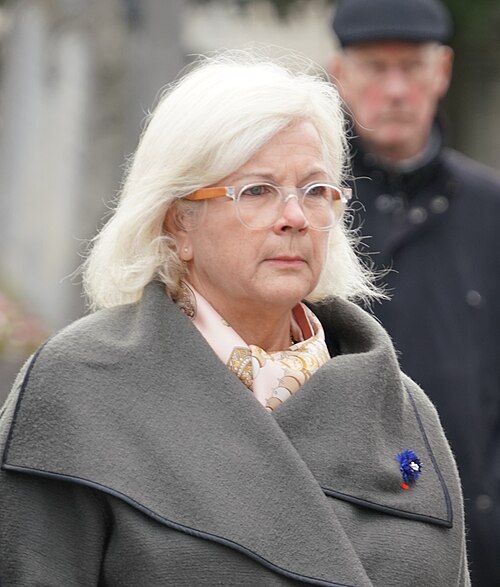 Catherine Vautrin
Transcription Whisper (large-v3), avec identification des locuteurs. À recouper avec la source d'origine.
Analyse automatique
Générée par IA — peut contenir des erreurs. Méthodologie
Chapitres
Répartition du ton (temps de parole politique)
Propositif 95 %Attaque 3 %Défensif 2 %
Questions et réponses
Taux de réponse directe : 92 % (directe = 1, partielle = 0,5, éludée = 0)
- 7:19OuverteRéponse directe
Qu'en est-il des lettres d'intention avec l'Ukraine sur les avions de combat Gripen E et Rafale ?
- 10:16OuverteRéponse directe
Avez-vous discuté du programme Global Eye aujourd'hui ?
- 12:25OuverteRéponse partielle
Quelles sont vos attentes pour le plan de paix en Ukraine ?
- 14:19OuverteRéponse directe
Comment l'Europe peut-elle faire pression sur la Russie pour accepter le plan de paix ?
- 16:17OuverteRéponse directe
La population suédoise et française est-elle préparée à une attaque russe ?
- 19:01OuverteRéponse directe
Avez-vous discuté d'un éventuel achat de frégates françaises par la Suède ?
Affirmations vérifiables (citations exactes)
- 1:03PrésentateurFait
« We're one of the few countries inside Europe with the ability to design everything from submarines, IFVs, artillery systems, and fighter aircraft. »
- 1:53PrésentateurFait
« We are glad and we are honoured that you are participating in FLF Finland, which, of course, Sweden is the framework nation for as well »
- 4:46Invité politiqueFait
« President Macron and the Swedish Premier First Minister, the Swedish Prime Minister, have underlined this as well. »
- 5:04Invité politiqueFait
« Sweden has joined NATO has given us the opportunity to develop the interoperability of our forces. »
- 6:01Invité politiqueFait
« Ukraine is on the front line of the European defense »
- 6:08Invité politiquePromesse
« Sweden, as France, has made the choice of supporting Ukraine for as long as it is necessary. »
- 6:44Invité politiqueFait
« French armed forces will be doing their part, everything they can to maintain security and stability in this area. »
- 8:48PrésentateurFait
« We expect a dialogue with France also in regard to or a dialogue with Ukraine also in how they think this money can most effectively be absorbed »
- 15:36PrésentateurChiffre
« we have a financial framework for also for providing the Ukrainian support for about almost 4 billion for 2026 »
- 15:44PrésentateurChiffre
« another 4 billion euros for 2027 as well »
- 17:35PrésentateurChiffre
« We have tripled our defence investments since 2018 and we have doubled them in the last four years. »
- 18:18Invité politiqueFait
« the world had changed and the world has flipped »
- 18:45Invité politiqueChiffre
« France has increased its defence budget because in 2026 we'll be increasing our budget by 13%. »
- 20:35Invité politiquePromesse
« We could deliver a frigate in 2030, an entirely equipped one, including defensive measures. »
Temps de parole
- Présentateur48 %
- Catherine Vautrin37 %
- ?6 %
- Auditeur2 %
≈ 31,9 interruptions / 10 min (chevauchements et interjections détectés).
Modèle mistral-small-latest · prompt v1 · les citations sont vérifiées mot pour mot dans le transcript ; le taux de réponse directe est calculé à partir des verdicts question par question. Aucun label idéologique n'est produit.
Good
morning, everybody.
Madam
Minister, warmly welcome to Sweden, warmly welcome to Stockholm and to Karlberg Castle. It's a great honour to host you and your team here today, and congratulations on your appointments. It's a lot of hard work being a defence minister, but you're a very experienced politician, so I know you will do great things.
Let
me also say that we are also, Sweden and France, have a really good and close defence cooperation. It, of course, builds on the strategic partnership agreement that President Macron and Prime Minister Christoson signed a year and a half ago, and I think we have done a lot of progress since then in deepening our bilateral cooperation. I think Sweden and France have a special responsibility when it comes to defence industrial production. We're one of the few countries inside Europe with the ability to design everything from submarines, IFVs, artillery systems, and fighter aircraft.
So that's something that unites us, and I'm glad to see that we're doing a lot of concrete progress on defence industry collaboration. I'm thinking in particularly in about the program such as ELSA, but I'm also thinking what we're doing on the land domain in NLAW and Acheron, and possibly also the Global Eye, and also Aster 30, which is, of course, a very capable air defence system. So there's many things that unites us when it comes to defence innovation, defence industrial production, and we have a deep collaboration, and Sweden is still ready to take this work even further. I also want to express appreciation to France's commitment also to the northern flank of the alliance.
We are glad and we are honoured that you are participating in FLF Finland, which, of course, Sweden is the framework nation for as well, and as you all know that this, meaning that we have a special responsibility for NATO's activities when it comes to deterrence and defence in the north, and together, of course, with the UK, Italy, and the other Nordics, we are very focused on making sure that the alliance strengthens its activities even further to exercise deterrence and defence also on the northern flank, and FLF Finland, that will be a very important point, and together also, I know you're doing very good things also in Estonia when it comes to contributing to the alliance mobility to deterrence and defend, and also in the Baltic Sea.
Finally, let me also say that we discussed a lot about also our cooperation also inside Europe when it comes to supporting Ukraine. Sweden is very committed,
of
course, as you know, this is our top priority as far as security and foreign and defence policy go to supporting Ukraine as well, and we discussed also the avenues for cooperation, what we could do also to strengthen the Ukrainian side so it can negotiate from a position of strength.
So,
once again, thank you very much for productive discussions today, and I'm very encouraged of what Sweden and France can do together, both when it comes to strengthening the northern flank of the alliance, when it comes to the defence industry collaboration, but also being committed to supporting Ukraine for the long haul. Thank you.
Mr.
Minister, dear Paul Johnson, thank you very much for your welcome.
I'm
also very happy to be in Stockholm today for my first visit in Scandinavia.
Of
course, I came to exchange views with you on the security situation in Europe,
on
our common priorities to support Ukraine, but also on several elements
regarding
our cooperation.
As
you have just said, I would like to remind everyone that Sweden is a partner
with
whom our cooperation is deepening at an accelerated rate, and we appreciate the number and richness of our cooperative areas. Our wish this morning is to reflect a link of confidence, solidarity, and strategic convergence, which is becoming closer and closer.
President
Macron and the Swedish Premier First Minister, the Swedish Prime Minister,
have
underlined this as well. Our cooperation is being reforced, both in cooperation against terrorism in the Nordic region, in the Baltic area, and also I want to underline that the fact that Sweden has joined NATO has given us the opportunity to develop the interoperability of our forces. You mentioned quite rightly, as far as the industrial base, there are two countries, both have solid industries as far as defense, industries that are on our territories and where we share as well the importance of developing our industrial cooperation.
I'm also thinking, of course, of the anti-air defense systems, and, of course, the naval domain, you as I have seen that these are high-value-added areas for our territories
and
our defense bases need to be able to get closer. As far as Ukraine,
we
have mentioned, and so have you, that the fact that Ukraine is on the front line of the European defense, Sweden, as France, has made the choice of supporting Ukraine for as long as it is necessary. And since 2022, we see a constant European solidarity involving concrete support to Ukraine. and here I would like to underline the mobilization Sweden has shown. You mentioned the Nordic area, the Arctic as well. France as well will continue acting to maintain stability in this zone.
French
armed forces will be doing their part, everything they can to maintain security and stability in this area.
And
I will remind you that in 2025, the exercises we've had and the Arctic response exercise
in
2024 allow us to continue working on this subject. So this morning, we had very constructive exchanges and discussions. And once again, thank you for your welcome, Mr. Minister.
Thank
you, Ministers. All right, now we will take some questions from the audience. Please say them in English and a maximum of two questions at a time, starting with Dagens Nyheter, over there.
Hello, I'm Pia Gripenberg of Swedish Daily Dagens Nyheter. And I have for both of you regarding the letters of intent that Sweden and France have with Ukraine on fighter jets. And I wonder,
can
Ukraine actually have both the Gripen E and the Rafale and then that catch how shall it be in finance? And this letter of intent shall they be seen more as a political sign out towards Russia rather than an actual business deal?
So in regards to the fighter aircraft to Ukraine, the Ukrainian side has been very clear from the onset that they expected to have a mixed fleet of about 250 aircrafts. And we have been aware of this and we've been communicating because both Sweden and France are, of course, together with 14 other countries in the Air Force coalition. So everything we can do to help the Ukrainian Air Force is of great interest for us. As you know, this is not yet a business deal between any of the countries. It's a letter of intent, but it's a strong political message. I think on both sides that we want to make this happen.
I think it's in Europe's interest for Ukraine to have strong air defense capabilities as well. And we'll be discussing complementarity and so forth during today's discussion. We also touched a little bit on the financing. And I think we both agree that now is the time is right to make sure that we use the Russian mobilized funding for providing support for the Ukrainians. Our view is, of course, that the Ukrainians must also have a say on how this money is used as well. So we expect a dialogue with France also in regard to or a dialogue with Ukraine also in how they think this money can most effectively be absorbed in the Ukrainian armed forces, defense industry, or the budgets.
And
all that to that by saying that these letters of intention signed by
Ukraine
with Sweden and then with France last week
are
entirely complementary. And they are so complementary that last week in Paris, President Zelensky signed short-term acquisition agreements as well as drones, for example, and then more long-term ones such as Rafales. And we have to say that we are looking at a timeline that is a bit longer with a country that obviously needs to rearm even after a ceasefire or even better, a peace deal
to ensure
its security. And that's the spirit that these accords were reached in.
Reuters?
You
want to? Reuters.
Reuters
agency. You for both ministers, please. You mentioned the global ideal. Have you had the chance to discuss that today? And are you making any progress towards an order?
It's
no secret we did discuss it. Of course, we signed similar to an MOU at La Boche in July. And I think the possibility of global I would be a good capability for France to have when it comes with the sensors and the surveillance.
to
it as well.
So
we have indeed have discussions to it. But I will let the minister, of course, provide the details for it as well.
I
think it's a good European capability and at the unique position right now.
Effectivement, la France
a
regardé.
Yes, France has
launched the global I program with great interest because France needs to replace its matériel.
So
for France,
working
with Sweden is
a
cooperation centered around our values, our shared history,
and
centered around
our
exchanges, which are exchanges that go beyond the acquisition of matériel.
So
what we want is to naturally build this relationship, which is making a lot of progress, and which obviously allows us to exchange experience, training, complete training. And it is in this spirit that we are moving towards the acquisition of a program such as global I. So as you can see, we are not just clients, we are just like we hope Sweden will be in another domain by buying our frigates, for example. We are first and foremost partners,
and
as partners, we have industrial defense capabilities, industrial base and industrial debates that global I will be very important for.
And
then SVT.
Yes. What
are your expectations for the peace plan currently being negotiated about Russia's invasion of Ukraine? And what do you see as the biggest challenge?
Obviously
this weekend, I was not in the discussion that occurred, but
everyone
can just hope for peace in Ukraine. And this peace can only occur, of course, with the accord of the Ukrainians. And that means that at the negotiating table, the European partners have to be there as well. This is a subject that must gather all actors.
Ukraine
means European security in some sense. So obviously,
the
Europeans need to be a party to the discussions. And of course, the Ukrainians do as well.
I
think that the importance of making sure that this is a fair and sustainable peace is very important. Of course, everything about Ukraine should be done together with Ukraine. The other principle that those things that entail a European role, then we as Europeans also need to be engaged at the table. I think there has been, during the last 48 hours, slightly more alignment in regard to that process, but also some of the principle stands that we have. A fair and sustainable peace is very important. And also making sure that the Ukrainians and we as Europeans are fully involved. Otherwise, it's going to be very difficult to have any success in regards to the negotiations.
How can Europe put pressure on Russia to accept the proposal to a peace deal that Ukraine together with Europe now has presented? And also, you know, Ukraine has pretty clear red lines when it comes to a peace deal. Do Europe have the same red lines as the Ukraine? Thank you to both ministers.
If I may, the road to peace in Ukraine goes by increasing sanction pressure on the Russian side, especially the energy we know that can make a difference. We are therefore, of course, we are now at the 19 sanctions package already adopted by the EU. We are open for having more sanctions on the Russian side. The other thing that we are closely connected to is identifying more ships that are connected to the Russian Shadow Fleet, which is,
of
course, operating in the Baltic Sea, but also elsewhere. And we appreciate what France did just the other week on also in regarding to apprehending a vessel connected to the Shadow Fleet. The other aspect, of course, is to making sure that the Ukrainians can negotiate from a position of strength and making sure,
of
course, therefore, we've been focusing on increasing our military support to Ukraine as well and making it a long-term commitment. As you know, we have a financial framework for also for providing the Ukrainian support for about almost 4 billion for 2026 and another 4 billion euros for 2027 as well.
I will
just add that
in
these conditions, of course,
we
need to make sure that Ukraine is at the table and accepts the proposals that are made,
in
particular as far as rebuilding Ukraine, which is one of the key elements in the very short term for this country.
One
question over there.
Etienne
Fontaine for Agence France-Presse. The heads of the Swedish and French Armed Forces recently expressed their concerns about the possibility of a Russian attack on a NATO country.
Do
you think that population of both countries are prepared for such a possibility?
Well, in regards to Sweden, I think there is an awareness in the Swedish public and the opinion polls also indicate during the last five years that our security environment has deteriorated very quickly due to Russia's full-scale invasion into Ukraine. Therefore, we've done a lot of measures also to increase that awareness. You might know that the Swedish Civil Contingency Agency sent a pamperflip to 4.7 million Swedish households what to do in case of a crisis or a wartime situation. We are, as well, on the biggest armament process of Sweden since the 1950s. We are greatly helped by having all eight parties in the Swedish Parliament also supporting that as well.
And that means that we have a bipartisan agreement on the fence and I think that's good for the political leadership and the continuity as well. And we have tripled our defence investments since 2018 and we have doubled them in the last four years. So I think those are signs of the awareness among the political side but also on the general public when it comes to the severely deteriorated security environment. And as you might know, sir, we have actually called this one of the worst times of European security since the end of the Second World War.
And
I can add
that
explaining the changes in the European situation and the world situation to our populations is naturally the role of
the
President of our Republic, which is what he did the 13th
of
July in his speech to our armies.
He
informed our citizens that the world had changed and the world has
flipped,
excuse the expression, but
this
is the importance of this is that the responsibility of our politicians is to anticipate and predict things and prepare. This is what my colleague,
the
Swedish minister, has said as far as how the Swedish nation is
being
prepared, organizing. France has increased its defence budget because in 2026 we'll be increasing our budget by 13%.
Swedish Radio.
Maybe a question for you both. Have you discussed the potential deal of Sweden buying French frigates? And is the government trying to
make
the case for French frigates in Sweden?
We
touched upon the Swedish frigate program as well. But right now where we are in that process is that no decisions have been made. But the Swedish procurement agency, FMV, has done a market survey while looking what frigates there are that are available that also could suit our quite ambitious timeline, as you know. And we expect to be given an advice by the FMV and the armed forces to the government. And I think and I hope that we can make a decision by early next year in regards to our new frigate programs. As you know, the ambition is to have two frigates ideally by 2030 and another two by 2035.
What I can say, of course, is that the air defence component of that is going to be important as well. And it's going to be a step for us to integrate it into NATO's common air, IEMD, Integrated Missile and Air Defence System as well.
France
could meet the Swedish request. We made an offer last October.
We
could deliver a frigate in 2030, an entirely equipped one, including defensive measures. And, of course, we propose a partnership with Swedish industry,
in
particular Saab.
Our
model
already
exists.
We
have a frigate
that
is operational now,
the
Amaral Granat frigate, which will be here in the beginning of next year.
So
France is at the disposal of the minister to answer any questions
the
minister or his team might have on this subject. But once again,
we
are prepared to deliver in 2030 if our offer meets Swedish requirements.
This
concludes this press conference.