The Nigel Farage Show - Marine Le Pen Special Interview - 15/03/2017
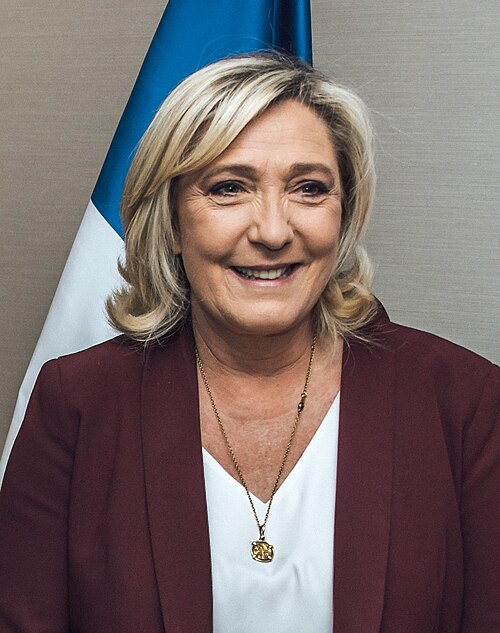 Marine Le Pen
Transcription Whisper (large-v3), avec identification des locuteurs. À recouper avec la source d'origine.
Analyse automatique
Générée par IA — peut contenir des erreurs. Méthodologie
Chapitres
Répartition du ton (temps de parole politique)
Propositif 50 %Attaque 30 %Défensif 20 %
Questions et réponses
Taux de réponse directe : 97 % (directe = 1, partielle = 0,5, éludée = 0)
- 0:18OuverteRéponse directe
Que signifie le Brexit pour l'Union européenne et pour cette élection française ?
- 1:38RelanceRéponse directe
Vous voulez renégocier puis soumettre à référendum, comme Cameron : faites-vous l'inverse de lui, ayant déjà décidé de sortir de l'UE ?
- 3:33RelanceRéponse partielle
Soyons clairs : avez-vous décidé qu'il est juste que la France quitte l'Union européenne ?
- 5:54FerméeRéponse directe
Avez-vous un plan et l'expertise pour sortir de l'euro et rétablir le franc sans catastrophe financière ?
- 8:14RelanceRéponse directe
Pensez-vous vraiment avoir une chance équitable face aux médias et à l'establishment français ?
- 10:50FerméeRéponse directe
La Première ministre britannique vous a-t-elle snobée en recevant Macron ?
Affirmations vérifiables (citations exactes)
- 9:38Marine Le PenChiffre
« we have broken our record of 50 billion euro in deficit in January, »
- 13:20Marine Le PenChiffre
« Those who don't want migrants will be charged 250,000 euros for every migrant refused. »
- 18:22Marine Le PenFait
« And if we leave everything open, we are setting the conditions to have more and more migrants who will once again build this terrible jungle as in Calais because Calais is the last border before Great Britain. »
- 18:46Marine Le PenPromesse
« This is one of the first things that I would implement when I'm elected. Immediately, I would suspend Schengen agreement and I would restore our borders »
- 20:35Marine Le PenChiffre
« Yes, I believe that a French person should have priority of access to jobs versus those who have come to France for jobs because we have 7 million unemployed. »
- 22:27Marine Le PenChiffre
« We have to stop spending 9 billion euros with the European Union. We give them 21 billion euros per year and they give us 13 million back. »
- 26:40Marine Le PenFait
« So much so that I excluded from the National Front my very own father, the very founder and leader of the National Front for 40 years. And this was not an easy decision. »
- 29:54Marine Le PenFait
« No, not at all. I don't think so. I borrowed money from a Russian bank. Fine. What am I supposed to do? I'm supposed to pay it back. »
Temps de parole
- Marine Le Pen73 %
- Présentateur26 %
≈ 0,8 interruption / 10 min (chevauchements et interjections détectés).
Modèle claude-sonnet-5 · prompt v1 · les citations sont vérifiées mot pour mot dans le transcript ; le taux de réponse directe est calculé à partir des verdicts question par question. Aucun label idéologique n'est produit.
Je suis Nigel Farage et aujourd'hui, exclusifiquement pour l'OBC, je vais interviewer Marine Le Pen, le candidat français présidentiel et le front-runner dans l'élection. C'est une élection deux-round, la première en April et la deuxième en mai. Marine, merci d'agir à faire ça.
C'est un plaisir.
Britain leaving l'Union Européenne, qu'est-ce que ça veut dire pour l'Union Européenne? Qu'est-ce que ça veut dire pour France et en particulier pour cette élection?
Well, obviously, it's a very strong signal. There is at least one way of finding the keys to the jail because we had been told that it was not possible to leave the EU and the UK has just demonstrated that when the people want it, well, it can set up the conditions to exit the EU. So thank you for sort of showing us the way out of this huge prison. which is the EU for the peoples and it is very lucky for the UK and everybody knows that because beyond the strategy of fear implemented before Brexit, today, the UK is already reaping the benefits, all the benefits of this bold decision that the people made.
It makes it possible to be free and to move forward without the EU poking a knife in your ribs and obliging you to go where you don't want to go. So it means that you can control your borders, your economy, you can negotiate the trade agreements that are in the interest of your country.
Now, your position in regard to this election is what you've said is that you will renegotiate France's relationship with the European Union and then put it to a referendum of the French people. It's interesting because David Cameron said exactly the same thing. He said he would renegotiate with the European Union. He would put it to a referendum. But he, of course, was doing it with the belief that the United Kingdom would then stay part of the European Union. Are you doing a mirror opposite of David Cameron? Are you doing this? Because actually in your heart you've decided the time has come for France to leave the EU.
Well, I think that's the fundamental difference between Mr Cameron and myself. Mr Cameron decided to go ahead with the referendum for election reasons. The idea was to appeal to those in his movement who felt closer to UKIP than to a pro-European vision. And so thank you for reminding us that Mr Cameron would never have contemplated the possibility of the UK leaving the EU and the negotiation was not really a negotiation. It was a farce. And this is not at all my frame of mind for the negotiation. I was quite clear with the French in this regard.
I told them we want to restore the four sovereignties, the territorial, monetary, economic and legislative, the superiority and the law prevailing over European directives. And there will be a referendum. And if the negotiation fails and if the French do not want to leave the EU, as I said, I would step down because nothing in the 144 commitments can be implemented in the prison of the EU, whether it be in terms of the economy, in terms of corporations, in terms of tax, fighting immigration, or when it comes to preserving our identity, nothing is possible within the EU today.
So let's be absolutely clear. You've decided that it's right for France to leave the European Union.
If I cannot restore those four sovereignties, and if I do restore them, I won't be the only one involved in the negotiation because a great many countries just like France are suffering, as was the case of the UK. There is Greece, Italy, Spain, Portugal. and I am convinced that France, which is a great country, could lead this negotiation and other countries will join in to support the claims. And if we do succeed, the EU will no longer be the EU, just like the USSR that would accept private property or multiple parties or freedom of the press. That would no longer be the USSR.
In that case, the EU would change its nature and it will become a Europe of nations and cooperation that we would like to have. And in that case, it would give all the European countries the freedom that they have been lacking and that make us slaves.
Yes, I mean, in a sense, your renegotiation, if you win this election, is to go to Brussels and say, change everything or we're leaving.
That's exactly right. Change everything and give us back what you have taken from us. Give the people back sovereignty it deserves. People who cannot decide on its immigration policy, who comes in, who stays on the territory, who cannot make any laws without asking for a technocratic super national authority, a people who cannot do economic patriotism for its national corporations, a people who cannot decide on its trade agreements with such and such a country,
is not a free people. We have fought, we have fought it out for a long time.
The UK has fought it out, so has France, in order to become free countries, fully free countries, and I am not going to give up.
Now, of course, part of that is leaving the Euro. And I think, you know, I mean, frankly, almost everybody, apart from Mr. Juncker and Mr. Verhofstadt, would agree that the Euro has been a catastrophe for the Mediterranean countries. And I think of Greece and Portugal and Spain, and we know it's not working. Let me ask you something. Do you have a plan? Do you have the expertise around you to get out of the Euro and to reinstate the French franc? Because if I was a middle-class French voter, let's say that I owned a decent property, I had a business, and I'd be thinking, well, what Marine Le Pen says to me about sovereignty, yeah, that makes sense.
You know, we believe in the nation state, we believe in governing ourselves, but we're in the Euro. How can she guarantee me that we'll leave the Euro without something terrible happening to our finances?
Well, of course, we have the expertise. We have a great many professionals, economists, people who work in banks, including in central banks, and they have been working on the Euro exit plan for many months. But for 15th century, France had had the national currency, so we do know how that works. But with the Euro, the financial powers have set up the conditions of an artificial panic to keep the currency. So the Euro is the currency of the banks, of the multinationals. We shall implement all the conditions to allow the French not to suffer from going back to the national currency, but to have immediate benefits that are immediate benefits for all.
The only real question, and I have an answer, by the way, is can the Euro survive without France? My answer is no. And that is why I have all the establishment against me, all the pro-European system against me, all the financial institutions and the banks, know that the Euro is the cement of the European Union. If France comes back to its national currency, then the Euro will no longer exist. And that is a good thing. The currencies will come back to their level of natural value, which is very logical and fairer in terms of international trade.
Well, no, the truth is, it isn't just the Eurozone that can't survive without France. The European project can't survive without France, because after all, this was a project of reconciliation back in the 1950s. And if I'd been alive in the 1950s, I would have supported the idea that nations should be friendly together. But I wonder, you know, given that if you're elected, you effectively will bring down everything the political class in Europe have worked for since the signing of the Treaty of Rome in 1957. Do you really think that you're going to have a fair opportunity with the French media, with the establishment, to get your message out?
Well, the French media will fight me until it happens. And when it does happen, part of the media will explain that I was right from the start. That's not a problem. Take a look at Donald Trump in the media. Part of the media are fighting him, and they will continue to fight him. But in France, 95% of the people don't trust the media anymore. You have to be aware that it's not the media who decide. If that were the case, it would not be a democracy. Why am I fighting for the restoration of the national currency? Well, because I believe it's in the interest of the people. It's as simple as that. It's not for dogmatic reasons.
If the euro had contributed to the wealth that had been promised, the jobs, the growth, I would say, well, it seems to work. But not only do we have a tragic situation economically, we have broken our record of 50 billion euro in deficit in January, but there's also a kind of war between nations. There's a lot of tension between European nations. They trade insults. Their leaders call each other names, a coward, liar, whatever. So I think that's not good.
I think that restoring peace will involve restoring nations that are fully backed in their sovereignty and that can therefore talk to one another and will come up with great projects like Airbus or Ariane that have been very successful because they have nothing to do with the EU.
Now, two weeks ago, Theresa May, our prime minister, rolled out the red carpet for Emmanuel Macron as he went through the front door of No. 10 Downing Street, met the prime minister, did a press conference on the steps. It seemed to me perhaps to be quite overt, open support from the British prime minister for the man that is likely to be your rival in the second round. So the question is, has the British prime minister snubbed you? Has she said that you can't go and meet her?
Well, that seems to be the signal that I received.
I find it difficult to understand the consistency of the ideas and convictions in this approach because Mr. Macron is, of course, the key salesperson of globalization. He is for everything, deregulation of everything, opening up of borders, mass immigration. He went to Algeria and explained it was necessary to build a bridge, as it were, between Europe and Algeria. So that is actually quite the opposite of what Brexit stands for and the choice which was made by the British people. So I do not understand this discrepancy, this contradiction between what Theresa May stands for because she has decided to be the person who will implement Brexit and her meeting with Emmanuel Macron.
Have you asked for a meeting? I mean, have you actually said, please, can I come and see you?
No, I didn't ask to meet her. But if I'm elected, I will have to meet her. I will have to meet her.
Well, that's true. And actually, with Donald Trump, number 10 wanted nothing to do with Donald Trump whatsoever because they thought he would lose. And when you win, if you win, then that would certainly change.
She's good at getting it wrong, but that's rather reassuring.
Well, what about looking at the future? So Britain is leaving the European Union. And let's say that, you know, you in May succeed in becoming the French president. How do you see the relationship between France and the United Kingdom going into the future?
I see no reason why France and the United Kingdom should not have excellent relations. We are old allies and economically we have a great many exchanges to implement. What I cannot stand in the behavior of the EU with regards to the United Kingdom is blackmail, constant threat. This structure is no longer moving without blackmail and threat. You have to pay. We are going to charge you. Those who don't want migrants will be charged 250,000 euros for every migrant refused. It's a very forceful Europe. It's Europe imposed by Merkel.
And I believe that between two nations as old as ours that are free and confident, will have excellent relations as well as trade relations, as was the case in the past.
This is very interesting because, you know, much of your manifesto talks about unfair competition, talks about French businesses effectively being undercut, talks about the need to protect French business in the modern world. Do you see, I mean, is there potential in the case of the United Kingdom for us and France to have a trade deal together?
Yes, of course, there is potential economic patriotism that I want to set up. It's quite simple and straightforward. Local authorities in the French state must obviously use French suppliers. It makes common sense. They spend money from the French people and therefore it makes sense that they should be able to take part in public tendering and French companies should be preferred in order to create French jobs. But, again, the money spent by the French state is not all the French economy. Thank goodness.
And so when a nation does not perform a dumping, that is environmental dumping or health and safety dumping or social dumping that could be dubbed as scandalous as is the case, for instance, in Germany in Germany with a swine breeding, then I see no reason why there should be custom duties between our countries. Custom duties are like microsurgery when a strategic industry is in jeopardy in one country and which emanates from dumping which is not acceptable. In that case, you can set up custom duties depending on the products and depending on the countries but it should not be general. I think that France should also conquer the world and the euro is a major handicap.
It is interesting to hear you saying that because Monsieur Hollande talks about the United Kingdom outside the European Union. I mean, he's not going to be there, I know, but it shows the thinking of some of the French political class. He talks about the UK outside and about big tariffs on both sides. And I note that we are one of the biggest buyers of French agricultural produce, of French wine, and actually the United Kingdom for France is a very, very important market.
Do you think the French establishment in opposing Brexit and in supporting a tough deal with Britain after Article 50, do you think they are actually putting the interests of the European Union above the interests of French workers?
Well, today, French political leaders are subjected to the leaders of the European Union. Therefore, their behavior is systematically threatening, bellicose, vis-à-vis all those who wish to exit the model. Look at the way in which François Hollande treated Donald Trump. Look at the way in which François Hollande spoke about the British people after Brexit. Look at the way in which he treats Vladimir Putin. He is someone who doesn't stand for anything and is insulting and threatening and scorning all the people who make a different choice. It makes no sense.
There is no reason not to take the British decision in our stride and work with the UK in negotiations that will take place tomorrow between two nations that have long-standing trade relations.
Well, I hope you're right. But what about the crucial question, the border at Calais? We've had French minister after French minister say that if Britain leaves the European Union, the British border at Calais goes back to Dover. Do you have a view on that issue?
Well, they do not seem to have a very humanistic vision. What do they want? More and more deaths on the shores of our countries, on the shores of Britain? It makes no sense. Once again, changing Calais into Lampedusa. I don't know. France must control its own borders. We should stop having people making it all the way to Calais. Great Britain is in charge of its borders. We're in charge of ours. And if we leave everything open, we are setting the conditions to have more and more migrants who will once again build this terrible jungle as in Calais because Calais is the last border before Great Britain. Some people say that the UK should open up its borders to avoid any problems.
I say that France has to control its borders to avoid having a Calais again.
So, if France leaves Schengen, if France leaves the Schengen area?
Of course, immediately, right away. This is one of the first things that I would implement when I'm elected. Immediately, I would suspend Schengen agreement and I would restore our borders because we can no longer continue to live with this pressure exerted by immigration. And it's going to resume now that the weather is improving.
Now, it is. And I have to appeal to you, though, on behalf of one group of immigrants, because there are about a quarter of a million British people, mostly retired, some in business, mostly retired. They're living in France. They're living in Britain and Normandy and wherever it may be. What happens to a quarter of a million British people who are living in this country if you get elected?
Well, there again, all this is another strategy of fear. Quite obviously, after Brexit, nothing will happen to French citizens living in the UK and nothing will happen to British citizens that have settled in France who have homes there. Having your own migration policy does not mean not having any foreigners on your soil. It means having demands with regards to people living on your territory. When people live on your territory and are not criminals, if they don't dispute our laws, our ways of life, our customs, our values and so on, I see no reason why we shouldn't continue to welcome them in the French style.
But once again, we are confronted with immigration, which has a completely different nature. So I do not want to have a workers' directive whereby foreign preference is given because foreign workers are cheaper than French workers. Yes, I believe that a French person should have priority of access to jobs versus those who have come to France for jobs because we have 7 million unemployed. But this has nothing to do with any form of hostility or hatred towards foreigners. It's just common sense. With 7 million people unemployed, we must give our fellow citizens the means and ways of living decently.
Well, there are 300,000 French people living in London alone. I call them refugees. They've left France because they fear. They're nearly all very successful people. They're professional people. They're people that are doing very well. They're earning good money. They've come to London because they don't fear super taxes. They've come to London because the cost of employing people is so much cheaper in the United Kingdom because of the huge level of French social costs. I mean, do you think if you're elected that some of those French people living in London would be tempted to come back to France or would they stay in London?
I'm convinced that quite a few will come back to France because France will become France again. It will be a safe country where they want to bring up their children. They are fleeing France because they are worried about the lack of safety and sectarianism in France. When I set up my economic policy, obviously taxes will go down because one of the reasons that leads to the rise in welfare expenses, social expenses is unemployment since they are creating jobless people. Social expenses rise accordingly and my economic model which will restore jobs in this country will bring the number of the unemployed down and quite a few expenses will go down.
I want to do this quickly because taxes in France are quite substantial but we need savings. We have to stop spending 9 billion euros with the European Union. We give them 21 billion euros per year and they give us 13 million back. Excuse me. Immigration is also very costly because we handle everything. Medical care, schools, housing. various subsidies, social fraud, social fraud which seems to be a sport in France practiced by more and more people and for which there is not enough cracking down. So this will, we will need to alleviate the pressure exerted on household and corporate taxes.
Yeah, the, the, the, I mean talking about sort of community and how happy people feel, you know, London's mayor is a Muslim which I would have thought is an example of integration and success. But I want you to clarify something for me because there are a lot of leaders of Eurosceptic movements around Europe who have a somewhat different perspective on this. But is the religion of Islam, in your opinion, incompatible with our Western lifestyle?
No, I don't think so. Because I think that compatibility has to do with an individual approach. Sectarianism is incompatible. Radical Islam is incompatible. And I will fight that because I want to eradicate it from my country. But you can be French and Muslim without a problem. But what needs to be fought are those who have a political vision of Islam. Those who want to impose the laws of Islam and place them above the laws of the French Republic, above the rules that govern the constitution and the ones that govern our civilization. But not all people are like that. Far from it. Some are just people who have faith and they are free to believe in what they want.
That is French style freedom as well. So you have to make a distinction between the two. I'm not involved in any religious war. I am fighting totalitarian ideology, which is Islamist fundamentalism. And it has disseminated. It has been recruiting. It has been extending its influence with the blessing of our leaders for years and years.
I mean, parts of France are very troubled. And I think I get the impression traveling through France, as I do, that the French as a nation are worried, that they're concerned about what's happening in their communities. And they look at you and they look at what you're saying. And a lot of them say, yeah, you know, Marine Le Pen, she's brave. She's standing up. She's saying what we think. But there's always been this one lingering difficulty. And it is that the Front National, in its history, whether fairly or unfairly, had always been seen to have links or members or activists that said anti-Semitic things or things that caused outrage. I mean, have you changed the Front National?
Is it now a different party from when you first became leader?
Well, first of all, when you want to get rid of your dog, there's a saying in France that says, when you want to get rid of your dog, you say it's rabid. Now, every political party who has stood for patriotic hope against the system has always been accused of getting it wrong. Some people have spoken unbearable words in my movement. But you shouldn't judge me on those words. You should judge me in terms of the way I reacted to that. And every time someone said something unacceptable, I immediately excluded that person from the movement. And things have been very clear. Believe me, I did not hesitate when I did that.
So much so that I excluded from the National Front my very own father, the very founder and leader of the National Front for 40 years. And this was not an easy decision. I believe that we could not tolerate unacceptable words that would lead to a caricature of our movement. What we're doing is important. Our mission to save France is so important, not so much for France, but for the whole world. I believe that the world needs France, this special voice, this special way of seeing things with a sense of balance, diplomatic relations. And I could not accept some things even coming from my own family, from my father, despite his role. This is a mission. This is a mission.
And I could not accept that this mission should be compromised by unacceptable provocation.
Yes, well, don't worry. I know all about being judged by one's supporters. I've had years of it. So I completely understand that. But looking at the world and looking at France's role in the world, how we view Russia, how we view Putin is one of the great key debates going on across the whole of the West. I mean, you are one of those people, I think, who does not view Putin as a threat to the West and our way of life.
No, but in fact, I believe that the EU has obeyed the US administration under Obama by waging a cold war, a very harsh war to Russia and to the risk of bringing Russia closer to China, which would have gone completely against our European interests. Russia is not a danger to us. Russia is not attacking France. Russia does not have aggressive social or environmental dumping against France. Russia does not threaten our identity or our geostrategic interests. So why should I be hostile to Russia? Russia is a great nation. It has a role to play. And objectively speaking, in Syria, it has played an important role in fighting against Islamist fundamentalism.
Russia must be a trade partner, a geostrategic partner. I see no reason why it shouldn't be on a par with the US. As a matter of fact, I don't have any preference for the US or Russia. I believe that France has to entertain very good relations with these two great nations, the US on the one hand and Russia on the other. And I'm very happy to see that the US and Russia could improve and pacify their relations because we are stuck between the two. And it is not in our own interest to have more tension and more conflict.
No, but is the accusation that politically you've taken money from Russian sources, does that not damage you in terms of this argument?
No, not at all. I don't think so. I borrowed money from a Russian bank. Fine. What am I supposed to do? I'm supposed to pay it back. I took out personal loans from French banks and the banker hasn't come to my home to decide what school my children should go to or what color my curtains should be. By the same token, it's a Russian bank that has lent me money and that doesn't matter at all. It could have been American or a bank from Mali or from Guatemala. This obliges me to nothing. It's the only bank that I found. It was from Russia. Even Anglo-Saxon banks don't want to take any risks of lending me money, perhaps because they are undergoing some political pressure from the banking system.
And this is quite revealing in my case.
You think the big banks are against you, do you?
Well, I don't know, but I requested a loan from banks worldwide and French banks lend money to all the candidates, including the candidates from the far left, Mr. Mélenchon, but not to me. I asked banks across Europe, across the world, and I did not find any banks that would lend me money. At some point, I figured, well, there must be a problem. Although I'm leader in the polls, I don't see any reason why I should be an exception unless they are under some form of pressure.
Well, somebody else who's arguing for better cooperation with Russia and trade with Russia is Donald J. Trump, the 45th president of the United States. What is your view on Donald Trump?
Well, I was the only one in France who spoke out during the campaign and said that I wanted Hillary Clinton to be defeated. And actually, some words spoken by Trump converge with my views of the interests of France. Refusal of the transatlantic treaty, TTIP, and his will to stop systematic interference of the U.S. abroad. And, of course, this has been at the origin of a great many forms of dysfunction and imbalance in Iraq, Libya, and so on. So, when Donald Trump says I want to be the president of the U.S. and not the president of the world, well, all I can do is applaud. Fine, that's very, very well. He wants to re-industrialize the U.S.
He wants intelligent protectionism, economic patriotism. I want that for my country, too. So, once again, I had no reason to howl with the wolves, with all the other political leaders who, all of them, without exception, turned against him. They supported Hillary Clinton. And I had no reason because, in my view, that would serve the interests better.
So, Brexit, Trump, the Italians vote against them in a referendum, and the prime minister resigns. Is this a global revolution?
Yes, yes, of course. There is a revolution going on, a revolution of nations. Actually, it is the great return of nations, and a great return of the peoples of the world, and a return of democracy. It is not the end of the world. It's the end of a world. And that's quite surprising because the Anglo-Saxon world made up the U.S. and the U.K. and others who are the ones who design free trade, globalization, and blurred borders. And these are the countries that have just said stop. That is enough. And they are doing this very pragmatically. Enough is enough? Okay, fine. That's very good. But in the Reagan years, it was a different situation.
But with Reagan and Margaret Thatcher, it was a different world. And they gave the impetus for this movement which became ultra-liberalism with globalization, with no regulation. And now the British and the Americans are saying, well, this is against the interest of our people, so let's stop. And I'm ready to work with them to build another way of bringing about trade relations and working with nations. But once again, the nations will need to be full nations.
As I say, I'm not sure the Anglo-Saxons should take all the blame for what happens. I think people in Brussels perhaps take more of the blame for wanting to abolish nation state.
The Anglo-Saxon world has implemented liberalism and the European Union transformed it into ultra-liberalism. That is to say, fully deregulated trade where the laws of the market should prevail above everything, including above the interest of the people. This was a kind of drift and it became a great big globalization movement. And now we have the same objectives. So let us seize the opportunity.
We've got a month to go to the first round. 23rd of April is the first round. And you are currently in the lead in the opinion polls for the first round. What is it? What quality do you have that makes you right to be the French president?
Well, first of all, I'm deeply French.
I am deeply imbued with the key aspirations of my country, with its historical background, its freedom, its sovereignty, its freedom that De Gaulle defended and that is totally betrayed by those who claim to be their heirs.
And I'm totally free because if you look at the other candidates, you see that they serve other interests.
They want power to serve the interests of the insurance market or the interests of the pharmaceutical companies. In fact, they are puppets of large financial powers. And actually, they're not bothered with the interest of the people and the interest of multinationals and banks are very often opposed to the interest of the people. So I think that this is one of the qualities I have. I owe nothing to anyone. I don't have any friends in the pharmaceutical firms or banks whom I must please and for whom I must change the tax system. So if the French choose me, they will be choosing a free, convinced and I believe courageous woman. And it's necessary to be courageous.
Without courage, nobody would go into this game and survive for 10 minutes. I would agree with that. The question is whether it's the right courage. You are probably going to win the first round and go through to the last two. But isn't the truth of it that the coalition against you will be so great that whilst you win the first round, you simply can't win the second round?
I think it's a choice of civilization in the hands of the French people. It's no longer a left-right split as usual. The real question for the French is this. What do we want? Do we want France to remain France? Do we want France to be recognizable based on a political system where secularity is at its center, where sectarianism is not a virtue, where the people are not categorized according to their origin or religion and so on? A country under the powerful threat of terrorism. Those are the choices that the French people will have in their hands and I believe I am the person who can defend French civilization. France with everything it has in terms of solidity and outlook.
The other candidates have a post-national vision, post-national vision. They want to be the president of the French Republic and as such be vice chancellor of Mrs. Merkel. They want to be the governor of a European region. This presidential election in France is like a referendum against or for wild unbridled globalization for or against the French national journey. And that's why it's difficult to say in advance that Marine Le Pen will face everyone and it's very unlikely that she will win. You don't know what's going to happen. No one knows. And if the French understand what's at stake in this election, undisputably, I stand a very good chance.
Do you think in your heart you're going to win?
Yes, yes, I believe so. I believe that the French people is prepared for that choice because it has seen other people make choices that the elite and media were not happy with. And other people had the courage to be free. Bernanos, a French writer, says hope is a risk you should run.
Marine Le Pen, thank you very much indeed.
Thank you. Thank you.